


Партнерка на США и Канаду по недвижимости, выплаты в крипто
- 30% recurring commission
- Выплаты в USDT
- Вывод каждую неделю
- Комиссия до 5 лет за каждого referral
Вы, конечно, будете использовать the Future Simple tense, например: If you come to Russia you will see many beautiful places.
Не забывайте в придаточных предложениях времени и условия употреблять Present Simple для выражения будущности.
2. Listen to the tape.
These cards will help you. Read the model and follow it.
Card-1
You have got a pen-friend. You’d like to invite to Russia. You live in the central European part of Russia. Her address is Manchester, house number 36, Calm Street, post code is MON 125, Kitty Mangrove. To make your pen-friend interested in visiting Russia describe the beauties of your region.
These words will help you:
- the Great Russian Plain; the most populated part of Russia; the capital of the country Moscow and a number of large cities; woods and forests in the north; boundless steppes in the south.
Card-2
You have got a pen-friend. You’d like to invite to Russia. You live in the north of Russia. Her address is Manchester, house number 36, Calm Street, post code is MON 125, Kitty Mangrove. To make your pen-friend interested in visiting Russia describe the beauties of your region.
These words will help you:
- the Arctic Ocean; lands covered with ice and snow; the arctic and severe climate.
Card-3
You have got a pen-friend. You’d like to invite to Russia. You live in Ural. Her address is Manchester, house number 36, Calm Street, post code is MON 125, Kitty Mangrove. To make your pen-friend interested in visiting Russia describe the beauties of your region.
These words will help you:
- the Ural = the Ural mountains natural climate; the hot summer and frosty winter to separate Europe from Asia; blue mirrors of the likes.
Card-4
You have got a pen-friend. You’d like to invite to Russia. You live in the Caucasus. Her address is Manchester, house number 36, Calm Street, post code is MON 125, Kitty Mangrove. To make your pen-friend interested in visiting Russia describe the beauties of your region.
These words will help you:
- the southern point of Russia; the Black Sea; the mild climate; the hot and sunny days; the tops of the mountains are covered with snow.
Card-5
You have got a pen-friend. You’d like to invite to Russia. You live in the Far East. Her address is Manchester, house number 36, Calm Street, post code is MON 125, Kitty Mangrove. To make your pen-friend interested in visiting Russia describe the beauties of your region.
These words will help you:
- one-sixth of the world’s forests Siberia; the European north of the country; the main Siberian rivers-the OB; the Yenisei, the Lena; the wild and virgin nature.
3.Teacher:
Work in groups at your cards. (Ученики пишут пригласительные открытки).
Kitty Mangrove
36, Calm Street
Manchester
MON125
USA
Dear Kitty,
I was glad to get your letter. You ask me to describe my place. As you know I like in the Caucasus. It is very beautiful here. I live on the Black Sea coast and in summer I can swim in the sea. We have mild climate and enjoy it greatly. In spring, summers and even in autumn we have a lot of hot and sunny days though the tops of the mountains are covered with snow. Our nature is very beautiful and bright. I invite you to visit my country. I’ll be glad to see you. I hope to hear from you soon
Bye,
Masha.
Teacher: One of you reads the letter all the rest listen to him and be ready to answer my questions.
Questions:
- What region has been discussed? Where does Misha invite his pen-friends? Why would you like to go to the Caucasus (the Urals)? Has Misha mentioned all the information? Can you add anything?
Teacher: We’ve been talking about Russia; our Country is a great one and a great future is waiting for it. To talk about the future of Russia we should review the Future Continuous and the Future Prefect tenses.
4. Take your seats at the computers.
Choose the icon Professor Higgins.
Click Start
Click Grammar
Click Theory
Read and translate.
(Повторение грамматического материала: будущее длительное, будущее завершенное.)
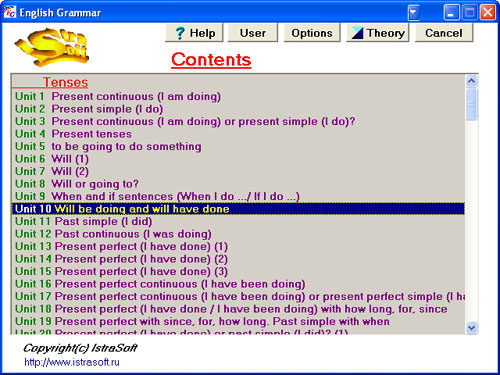
Unit 10
Will be doing and will have done
1. Сначала изучите ситуацию:
Анна звонит своей подруге. Она хочет пригласить ее в кино:
- Mary, what about going to the cinema at 12 o'clock?
- I'm sorry, but I can't. I promised mom to help her in the garden. I'll be planting flowers this time tomorrow.
- Then what about going to the cinema at six?
- Well, at 6 o'clock I'll be cleaning my room, but I'll have cleaned it in half an hour, so we can go to the cinema at 7 o'clock.
'll be planting, 'll be cleaning - формы Future Continuous Tense
Эти формы Future Continuous(will be doing), похожие на Past(was doing) и Present Continuous (am/is/are doing), мы используем, чтобы сказать, что действие будет совершено в определенное время в будущем.
В следующих примерах сравните will be doing с другими формами continuous:
- My friend has her English lessons every day at 5 o'clock.
- Yesterday at 5 o'clock she was having her English lesson. (см. Unit 12)
- It is 5 o'clock now she is having her English lesson. (см. Unit 1)
- At 5 o'clock tomorrow she will be having her English lesson.
2. В первом примере ’ll have cleaned является глаголом Future Perfect Tense. Мы используем это время (will have done),чтобы сказать, что что-то уже произошло перед определенным моментом будущего.
Вот несколько других примеров.
- He says that before he leaves (this is a certain moment in the future),
- He’ll have seen every show in the town.
- By this time next month, all the roses will have died.
- When you are my age you'll have learnt much about the weakness of man.
3. Вы можете также использовать Future Continuous Tense (will be doing) в других случаях: чтобы сказать о действиях, которые уже запланированы или решены:
- Here is John's schedule for the next Saturday:
-in the morning he will be working in the garden.
-in the afternoon, when it is very hot he will be repairing his car in the garage.
- And what is he doing in the evening? He is taking Mary to the cinema.
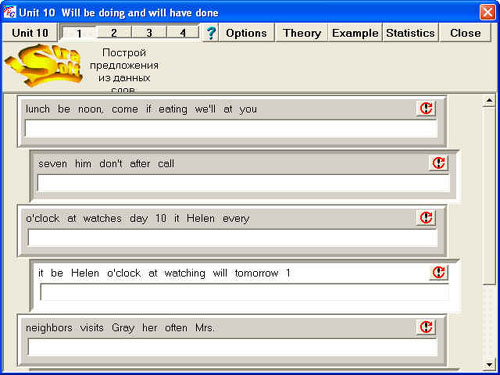
Teacher: If you have no mistakes, it’s excellent, 1-2 mistakes-good, 3-4 satisfactory, more mistakes-poor.
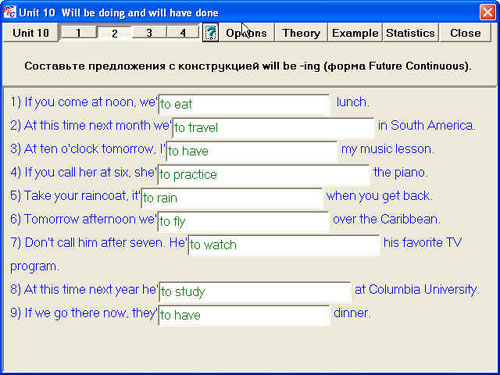
If you have no mistakes, it’s excellent, 1-2 mistakes-good, 3-4 satisfactory, more mistakes-poor.
Teacher: Any country and its future depends on its people of the country. And should think what will you do to make our country more developed.
5. Read and translate the dialogue on the cards. Work in pairs/ make up an analogous dialogue about the future of the country using the Future Simple, the Future Continuous, the Future Prefect.
Model:
- I think that by 2010 our country will have solved economical problems. Yes, if everybody does his best, will achieve great results. What will you do to attain it? I will study well. For example: Tomorrow at 5 I’ll be working at my English report about the future of Russia at the library.
Words:
a highly developed country to solve problems economical environmental political social development to join to achieve (attain) some results/success to do one’s best prosperous-процветающий wealthy successful democracy democratic(Ученики составляют диалоги) Pupils’ dialogues:
1. I think that by 2010 our country will have solved economical problems.
- Yes, if everybody does his best, will achieve great results. What will you do to attain it? I will do my besting studying. To solve economical, environmental, political problems we shoed know the background and political situation of our country; it means we should study the History and Geography of Russia.
2.I think that by 2010 our country will have solved economical problems.
- Yes, if everybody does his best, will achieve great results. What will you do to attain it? To make Russia a highly developed country we should work at self - development and study well at school.
3. I think that by 2010 our country will have solved economical problems.
- Yes, if everybody does his best, will achieve great results. What will you do to attain it? If we want see Russia wealthy and prosperous we must-study the rights of the R. F., become lawyers and put all thieves (even those ones who are in the government) into prison.
6.H/W: Написать мини-сочинение на тему Будущее России (80 слов).
7.Подведение итогов урока.
Урок с использованием компьютерных технологий в 11 классе.
Тема: времена английского глагола группы Simple.
Цель: Развитие грамматических навыков учащихся при подготовке к Единому государственному экзамену по английскому языку, 11 класс.
Задачи:
закрепить навык узнавания формы глагола изучаемого времени; формировать навык внимательного чтения вопроса на основе установки, данной на экране. формировать моторный навык написания грамматического материала, где ученик сам должен набрать правильный ответ; закрепить зрительный образ отрабатываемого материала.Оснащение урока:
таблицы времен английского глаголы группы Simple; оформленная доска; компьютеры.Ход урока
I. Вступление
– Good morning everybody! I am glad to see you in this classroom today and we have a good chance to use new technologies at our English class today. We are also pleased to welcome our guests.
II. Повторение употребления Present, Past, Future Simple
Блоковая подача этого материала, так как ранее он уже изучался
– Look at the tables and remember:
When do we use this tense? How is the tense formed? What definite words do we use in this tense? Give your own example. Give a negative sentence. Make up General, Special, Alternative and Tag questions.III. Выполнение упражнений на компьютере (курс профессора Хиггинса)
Present Simple (Unit 2)

|
Из за большого объема этот материал размещен на нескольких страницах:
1 2 3 4 |
