

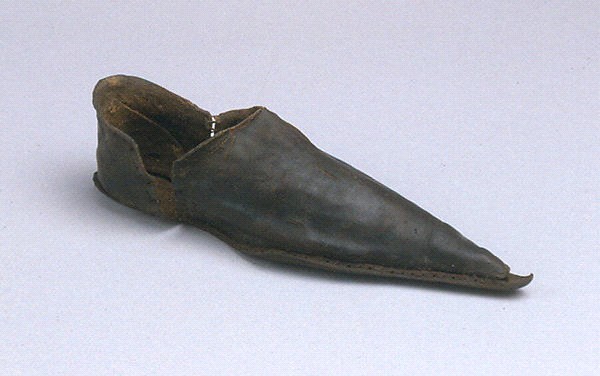
Саксонцы и викинги носили простые кожаные сапоги, но в 15-м веке богатые люди начали носить туфли с длинными остроконечными носами. Их называли “crakows”, потому что считалось, что они появились в г. Краков. (Однако только богатые люди могли их себе позволить). / Saxon and Viking people wore simple leather boots and shoes but in the 15th century rich people wore shoes with long pointed toes. They were called crakows because they were believed to have originated in Krakow. (However only the upper classes wore them. Ordinary people had shoes with round toes). However, at the end of the 15th century, long toes went out of fashion and the wealthy began to wear shoes with square or round toes.
In the Middle Ages peasants wore wooden clogs for working in muddy conditions. In the towns people wore wooden platforms called pattens under their shoes. (They had straps to hold them on). Some pattens were several inches thick. Shoemakers were called cordwainers. The word is derived from cordovan - the name of leather from Cordova, Spain.
In the 16th century some people had deliberate cuts in their shoes called slashes. Sometimes they were slip on shoes but sometimes they were tied with latches. Early Tudor shoes did not have heels. However, in the late 16th century women in England began to wear shoes with high heels.
In the early 17th century it was fashionable for men to wear boots. However, in the late 17th century some people began to wear shoes with buckles.
В 18 веке уже существовало много разных типов обуви. У богатых людей на обуви были пряжки из серебра. Кроме того, в XVII и XVIII веках состоятельные женщины носили обувь из атласа или шелка. Часто обувь вышивали. На открытом воздухе люди носили галоши, сандалии из дерева или кожи. / In the 18th century there were many different styles of shoes. Rich people had buckles made of silver! Furthermore, in the 17th century and 18th century wealthy women wore shoes of satin or silk. Often they were embroidered. Outdoors people wore overshoes like sandals of wood or leather over their shoes to protect them [http://www. localhistories. org/shoes. html].
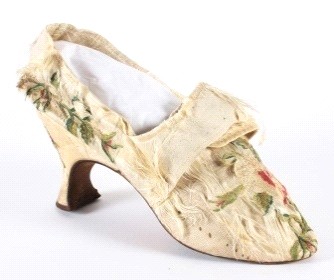
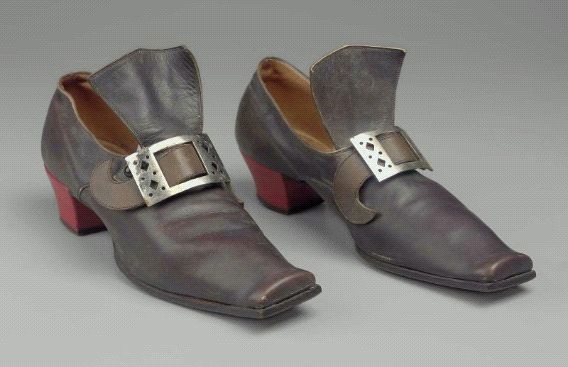
Shoes with buclkes Shoes made of fabric
Национальная русская обувь / National Russian Footwear
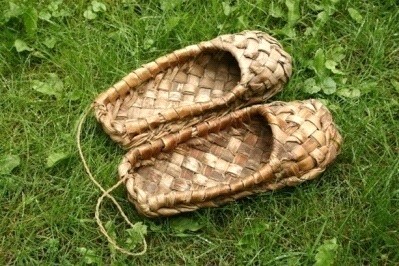
Лапти - традиционная обувь русских крестьян. Слово “лапти” произошло от слова “лапа”, что в древние времена означало “нога”. До начала 20-го века лапти носили в каждой русской деревне, но в наши дни едва ли можно найти кого-нибудь в них. Люди надевают их только на особые случаи. / Lapti are traditional shoes of Russian peasants. The word "lapti" apparently originated from the word “lapa”, which meant “foot” in old times, and now means a paw. Until the beginning of the 20th century lapti were worn in every Russian village, but nowadays one can hardly find anyone wearing them. People save them for special occasions, like celebrations or costume shows.
The popularity of lapti was easy to explain: they were very cheap, and not many peasants could afford another, better footwear. Lapti didn't last long and frayed in a week or two, even faster in spring or fall due to the rainy weather. Lapti were made of bast – a part of the tree bark, with the help of a wooden last and wooden or iron hook, a so-called "kochedik".
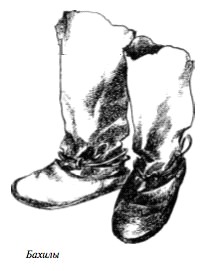
Bakhily are men’s working and fishing footwear made of leather. These were soft leather jackboots with high tops to knees or thighs. Soft leather soles were stitched to the boots with an axed thread, and then the boots were turned out. The tops were also made of soft leather, with one seam behind, and were fastened onto the leg with a strap. The strap was put through a small loop or a ring stitched to the back part, and was twined up round the leg and tied under the knee. To make them more durable and protect feet from moist bakhily were dubbed with tar and fish oil; additional straps of leather were lined to the toe and the back part. Bakhily were usually worn for fishing, hunting or any other crafts. They were known as footwear of townsfolk (far back to the 10th century).
Валенки (также “волнушечки” или “катанки”) - мужская и женская зимняя обувь, содержащая овечью шерсть. Это высокая войлочная обувь с высокими верхушками, с круглыми носами и плоской подошвой без каблука. Подошву часто выстилали кожей, чтобы не допустить промокания. Валенки могли быть серыми, коричневым, черными и, реже, белыми. / Valenki (also volnushechki, katanki or felt boots) are men’s and women’s winter footwear filled of sheep wool. These are felt footwear with high tops, round toes, and flat soles without high heels. The soles were often lined with leather to prevent the boots from soaking wet. Valenki could be grey, brown, black, or, more rarely, white. Special masters, called katali or pimokaty, fooled them.
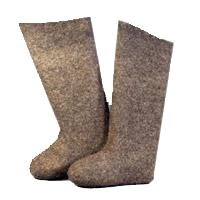
In every province, there were a few villages that specialized in felting boots. Along with that, there were large centers of felt boots manufacturing; their products were distributed far beyond the limits of one province. In spite of being very famous as Russian national footwear valenki are comparatively young footwear in Russia. They appeared in Siberia in the mid-18th century and came to European Russia in the early 19th century. In the 19thcentury, valenki were holiday footwear of wealthy peasants. White embroidered valenki were holiday footwear only of very rich peasants.
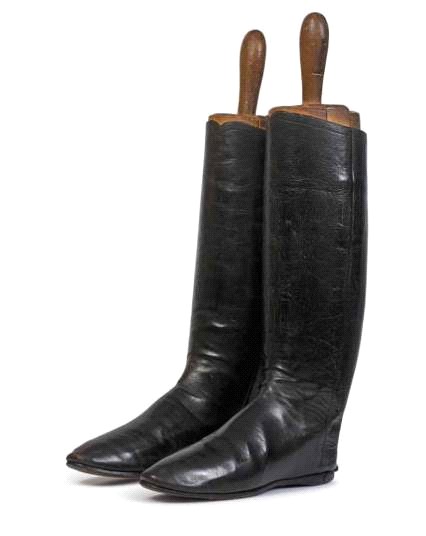
Обувь 19-го века / 19th Century Boots and Shoes
В начале 19 века обувь делали одинаковой для обеих ног, т. е. не было разделения на левую и правую. Сапоги были распространены как среди мужчин, так и среди женщин. / In the early 19th century shoes were made with a right foot and a left foot instead of being interchangeable. Men very often wore boots in the 19th century and it became acceptable for women to wear them too.
However, at the end of the century it became fashionable for women to wear shoes again. In the 19th century shoes had laces rather than buckles. In the early 19th century a new type of boots was named after the Duke of Wellington (New Zealand). At first, they were made of leather but from the 1850s they were made of rubber [http:///culture_art/traditions/877], [http://russiapedia. /of-russian-origin/lapti/].
In the 19th century boots and shoes were mass-produced for the first time and they were cheaper. However, in the 19th century boots and shoes were still a luxury and some poor parents could not afford to buy them for their children. In many towns at the end of the 19th century a charity called the Boot Fund was founded to help provide boots and shoes for poor children. Nevertheless as late as the 1920s children played in the streets of British towns barefoot because they couldn't afford shoes.
Обувь 20-го века / 20th Century Boots and Shoes
В XX веке был огромный выбор обуви. В 1920-х годах женская обувь часто украшалась бисером. / In the 20th century with rising living standards there were huge varieties of styles of shoes. In the 1920s women’s shoes were often decorated with beads.
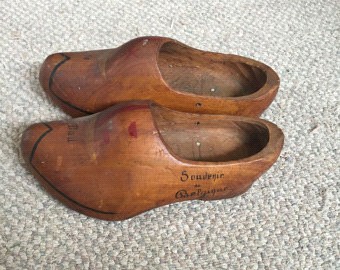
During the Second World War, because leather was in short supply some people wore clogs rather than shoes.
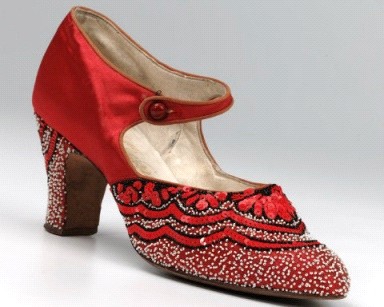
Clogs right from 1945 Shoes with beads
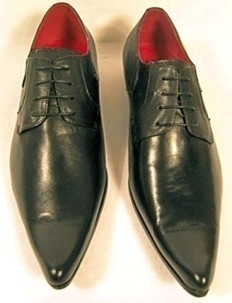
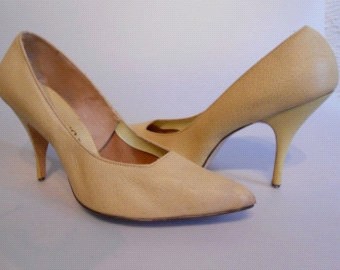
Then in the late 1950s stiletto heels became fashionable for women. In the 1950s some women wore slip on shoes called mules.
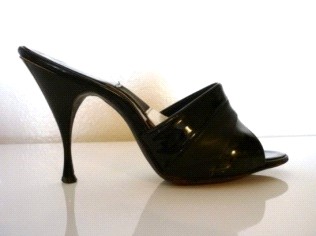
Vintage 1950s Mules Winkle pickers
stilettos
Для мужчин в конце 1950-х годов была популярна обувь с длинными остроконечными носами. / For men in the late 1950s shoes with long pointed toes called winkle pickers were popular.

|
Из за большого объема этот материал размещен на нескольких страницах:
1 2 3 4 5 6 |
