

c) между дешевой и дорогой (4.000-8.000 рублей) / between cheap and expensive (4.000-8.000 roubles)
d) очень дорогая (свыше 15.000 рублей) / very expensive (over 15.000 roubles)
e) очень дешевая (500-3.000 рублей) / very cheap (500-3.000 roubles)
4. На что вы обращаете внимание при покупке обуви? (возможно 2 варианта) / What do you pay attention when you buy a new pair of shoes? (2 variants are possible)
a) цена / its price
b) красота / its beauty
c) качество / its quality
d) удобство / its comfort
5. Ваша повседневная обувь … (возможно 2 варианта) / Your casual shoes are... (2 variants are possible)
a) красивая / beautiful
b) удобная / comfortable
c) красивая и удобная / beautiful and comfortable
d) зависит от дня недели / it depends on the day of the week
e) зависит от моего настроения / it depends on my mood
f) зависит от одежды / it depends on my clothes
Исходя из вышеуказанного, можно сказать, все вопросы - довольны легкие, и не составляет никакого труда ответить на них. / Well, as you see, questions are quite easy and it isn't difficult to answer them.
3.2. Результаты анкетирования / The results of our head count
Итак, каковы же результаты нашего анкетирования? / What results do we have?
1. 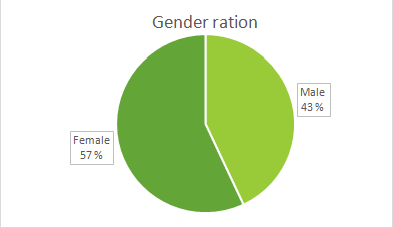
Девочки лидируют – 57 % опрошенных, в то время как мальчики занимают вторую позицию – 43 %. / Girls are leaders in our questionnaire - 57 %, while boys occupy the second place here - 43 %.
2. 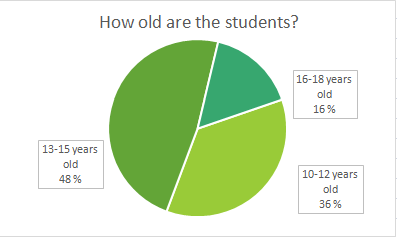
Как мы видим, все учащиеся от 10 до 18 лет приняли участие в анкетировании. Преимущество – у учащихся в возрасте 13-15 лет – 48 %. / As we can see, many students of our school (from 10 to 18!) took part in our head account. That's good! Students aged 13-15 years old have the advantage - 48 %.
3. 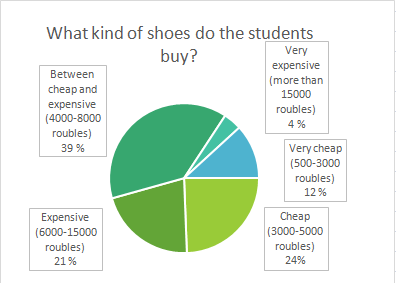
Большинство учащихся покупает обувь, которая относится к “между дешевой и дорогой” – 39 % и дорогой – 39 %, в то время как только 4 % опрошенных позволяют себе очень дорогую обувь. / According to the head account, most of our students "buy shoes somewhere between cheap and expensive" - 39 % while only 4 % can afford very expensive shoes.
4. 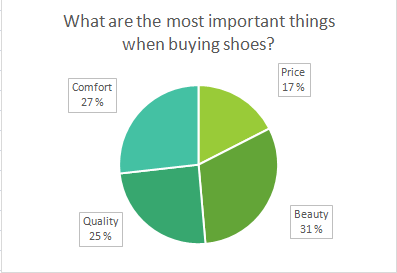
Лидером в вопросе № 4 является красота! 31 %! Это невероятно! Красота правит миром! И только 17 % опрошенных обращают внимание на ценовую категорию. / The "leader" in these answers is beauty! 31 %! That's unbelievable! Beauty rules the world! Only 17 % of students pay attention to price.
5. 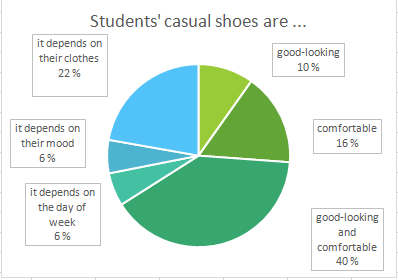
Повседневная обувь наших ребят – красивая и удобная – 40 %, в то время как последнее место делят критерии “зависит от настроения” и “зависит от дня недели” - по 6 % соответственно. / Our students' casual shoes are mostly good-looking and comfortable - 40 %.
IV. Заключение / Conclusion
Подводя итоги, следует отметить, что поставленные в исследовании цели достигнуты, а именно: / To summarize everything up let’s answer the aims we put at the very beginning of our project. They were:
1. проанализировать эволюцию изменения обуви / to analyze the history of shoemaking and shoewearing;
2. сравнить обувь, которую носили в старину, и повседневную обувь, а также обувь для особых случаев / to compare ancient and present shoes, everyday shoes and shoes for special occasions;
3. рассмотреть и проанализировать аспекты и критерии, на которые обращают внимание учащиеся нашей школы при покупке очередной пары обуви / to have a look at our students' aspects and criteria they take into account when buying a new pair of shoes.
Были опрошены 100 учащихся нашей школы – им было предложено ответить на 5 вопросов, 3 из которых напрямую связаны с темой обуви. Среди опрошенных девочки лидируют – 57 %, в то время как мальчики занимают вторую позицию – 43 %. Как мы видим, все учащиеся от 10 до 18 лет приняли участие в анкетировании. Преимущество – у учащихся в возрасте 13-15 лет – 48 %, 10-12 лет – 36 %, а на возрастную категорию 16-18 лет остается всего лишь 16 %. / According to our project, 100 students of our school were asked 5 questions related to the theme of shoes. Girls are leaders in our questionnaire - 57 % took part in our head account, while boys occupy the second place here - 43 %. All students of our school (from 10 to 18!) took part in our head account. That's good! Students aged 13-15 years old have the advantage - 48 %, 10-12 years old - 36 % and 16-18 years old - 16 %.
Выводы исследовательской работы следующие: / The outputs of our work are:
1. Большинство учащихся покупает обувь, которая относится к “между дешевой и дорогой” – 39 % и дорогой – 39 %, в то время как только 4 % опрошенных позволяют себе очень дорогую обувь. / Most of our students "buy shoes somewhere between cheap and expensive" - 39 % while only 4 % can afford very expensive shoes (very cheap - 12 %, cheap - 24 %, expensive - 21 %).
2. Лидером среди критериев при покупке обуви является красота - 31 %. И только 17 % опрошенных учащихся обращают внимание на ценовую категорию ( “удобство” составляет 27 %, качество – 25 %). / The "leader" In buying shoes is beauty - 31 %. And only 17 % of students pay attention to price (comfort - 27 % and quality - 25 %).
3. Повседневная обувь наших учащихся – красивая и удобная – 40 %, в то время как последнее место делят критерии “зависит от настроения” и “зависит от дня недели” - по 6 % соответственно. / Our students' casual shoes are mostly good-looking and comfortable - 40 %, while simply good-looking is 10 %, comfortable - 16%. 22 % of students pay attention to their clothes while choosing a pair shoes to put on, 6 % take into account their mood and the day of the week respectively.
Итак, обувь в своем становлении “прошла” длинный путь. Древняя обувь была очень простой. Ее целью было защитить ноги людей, ведь тысячелетия назад люди носили ее не для красоты, а для безопасности. И не все люди могли позволить себе обувь - только богатые. В наши дни все носят обувь, которая может быть разных цветов и из разного материала. С течением времени обувь перешла от предмета роскоши (так как в древние времена только богачи могли позволить себе покупать и носить обувь) к предмету необходимости. / Well, shoes have gone a long history in their making. Ancient shoes were very simple. Their aim was to protect people's feet, people wore them not for beauty but for safety. And not all people could afford having shoes - only rich ones. Nowadays all people wear shoes of different colours and different material. With the passing time shoes have passed on from being an item of luxury (as in ancient times only rich and wealthy people could afford buying and wearing shoes) to an item of necessity.
Мода также сыграла важную роль в эволюции обуви. Человек сам по себе индивидуален и уникален. Экстравагантность обеспеченных людей можно было выразить в обуви, что послужило началом рождения обувной промышленности. Сегодня же обувь можно классифицировать как повседневную, ортопедическую, спортивную и т. д. / Fashion also played an important role in the evolution of the shoe. The human psyche craves for an individual and unique identity. The nobility and upper classes saw shoes as an opportunity to fulfill this desire. The shoes got more and more extravagant. Cloth, velvet and tapestries began to be used. This was the birth of the shoe industry as we know it today. Today shoes are classified according to their use. They are casual and dress, work, sport and corrective [http:///4646358].
Подводя итоги, можно в очередной раз сказать, что обувь ОЧЕНЬ важна в нашей жизни. Невозможно представить нашу жизнь без обуви. Люди любят обувь, покупают дешевую и дорогую - все это, исходя из вкуса и размера кошелька каждого человека. / And now we'll repeat again and again: shoes are VERY important in our life. It is impossible to imagine our life without shoes. People like shoes, they buy cheap and expensive ones - all this according to their tastes and pocket money, of course.
V. Библиография / Bibliography and net sources
1. http://www. localhistories. org/shoes. html
2. http:///culture_art/traditions/877
3. http://russiapedia. /of-russian-origin/lapti/
4. http://www. localhistories. org/shoes. html
5. https:///shoes-with-good-arch-support-for-women-12533932.html
6. https://www. /styleandgrooming/fashion/10-shoes-for-every-occasion/slideshow
7. https://en. wikipedia. org/wiki/Boat_shoe
8. https://en. wikipedia. org/wiki/Sandal
9. https://en. wikipedia. org/wiki/Boot
10. https://en. wikipedia. org/wiki/Slipper
11. http://www. /shoe-encyclopaedia/dress-code/
12. https://en. wikipedia. org/wiki/Dress_shoe
13. http://www. aofas. org/footcaremd/how-to/footwear/Pages/10-Points-of-Proper-Shoefit. aspx
14. https://www. /style/10-ways-care-for-your-shoes
15. https://www. /beauty-fashion/shoes-accessories/shoes/care-for-shoes
16. http:///4646358

|
Из за большого объема этот материал размещен на нескольких страницах:
1 2 3 4 5 6 |
