


Партнерка на США и Канаду по недвижимости, выплаты в крипто
- 30% recurring commission
- Выплаты в USDT
- Вывод каждую неделю
- Комиссия до 5 лет за каждого referral
8. (you / not very tall) __________________________________________
9. (I / hungry) _______________________________________________
10. (it / warm today) ___________________________________________
11. (I / afraid of dogs) __________________________________________
12. (my hands / cold) __________________________________________
13. (Canada / a very big country) _________________________________
14. (diamonds / cheap) _________________________________________
15. (I / interested in football) ____________________________________
16. (Rome / in Spain) __________________________________________
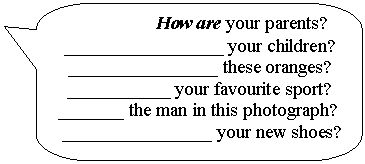
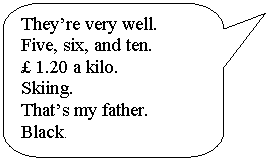
plete the questions. Use What …/ Where …/ Who …/ How … .
IV. Put in am/is/are (present) or was/were (past).
1. Last year she was 22, so she is 23 now.
2. Today the weather _______ nice, but yesterday it ________ very cold.
3. I _______ hungry. Can I have something to eat?
4. I feel fine this morning but I __________ very tired last night.
5. Where ________ you at 11 o'clock last Friday morning?
6. Don't buy those shoes. They _______ very expensive.
7. I like your new jacket. _________ it expensive?
8. This time last year I ________ in Paris.
9. Where _______ the children? 'I don't know. They ________ in the garden ten minutes ago.
ОБОРОТ THERE + BE
I. Put in am, is or are.
1. There ________ a new modern library at the University.
2. There _______ many students at the lecture yesterday.
3. _______ there a telephone in that room?
4. There _______ no meeting yesterday.
5. There _______ no books on the table.
6. There _______ two pictures on the wall.
7. There _______ three shops in this street.
8. There _______ many beautiful parks in Moscow.
II. Put in there is/there isn't/ there are /there aren't/ are there.
1. Kenham isn't an old town. There aren't any old buildings.
2. Look! ______________ a photograph of your brother in the newspaper!
3. 'Excuse me, ____________ a bank near here?' 'Yes, at the end of the street.'
4. _____________ five people in my family: my parents, my two sisters and me.
5.'How many students _______________ in the class?' ' Twenty'.
6. 'Can we take a photograph?' 'No, _____________ a film in the camera.'
7.'____________ a bus from the city centre to the airport?' 'Yes, Every 20 minutes.'
ГЛАГОЛ TO HAVE
I. Put in have (not) or has (not).
1. Sarah ___________ a car. She goes everywhere by bicycle.
2. They like animals. They ___________ three dogs and two cats.
3. Charles isn’t happy. He ___________ a lot of problems.
4. What’s wrong? I ____________ something in my eye.
5. Where’s my pen? I don’t know. I _____________ it.
6. They don’t read much. They _____________ many books.
II. Write questions.
1. (you/an umbrella?) _________________________________________
2. (you/passport?) ____________________________________________
3. (your father/a car?) _________________________________________
4. (Carol/many friends?) _______________________________________
5. (you/any brothers or sisters?) _________________________________
6. (how much money/we?) _____________________________________
ПРОСТОЕ ПОВЕСТВОВАТЕЛЬНОЕ ПРЕДЛОЖЕНИЕ
I. Is the word order right or wrong? Correct the sentences that are wrong.
1. Everybody enjoyed the party very much. _______________________ _____________________________________
2. Tom walks every morning to work. ___________________________ _____________________________________
3. Jim doesn’t like very much football. _____________________________ _____________________________________
4. I drink three or four cups of coffee every morning. __________________ _____________________________________
5. I ate quickly my dinner and went out. ____________________________ _____________________________________
6. I phoned Tom immediately after hearing the news. _________________ _____________________________________
7. Sue was here five minutes ago. Where is she now? _________________ _____________________________________
II. Put the parts of the sentence in the right order.
1. (the party / very much / everybody enjoyed) ______________________ _____________________________________
2. (we won / easily / the game) ___________________________________
3. (quietly / the door / I closed) ___________________________________
4. (Diana / quite well / speaks / German) ___________________________
5. (Tim / all the time / television / watches) _________________________ ______________________________________
6. (again / please don’t ask / that question) _________________________ _____________________________________
ВОПРОСИТЕЛЬНЫЕ ПРЕДЛОЖЕНИЯ
I. In this exercise you have to write questions. A friend has just come back from holiday and you are asking him about it.
1. Where / go? Where did you go?
2. Food / good? Was the food good ?
3. how long / stay here? ___________________________________
4. stay in / a hotel? _______________________________________
5. go / alone? ___________________________________________
6. how / travel? __________________________________________
7. the weather / fine? _____________________________________
8. what / do in evenings? __________________________________
9. meet / any interesting people? ____________________________
II. This time you have to make questions with who or what.
1. Somebody hit me. Who hit you?
2. I hit somebody. Who did you hit?
3. Something happened. What _____________________________?
4. Someone lives in that house. Who ________________________?
5. Somebody gave me this key. Who ________________________?
6. Henry gave me something. What _________________________?
7. Tom meets someone every day. Who ______________________?
8. I fell over something. What ______________________________?
9. Something fell on the floor. What _________________________?
10. This word means something. What _______________________?
III. Put the questions to the underlined words.
1. I’ve known him for many years. _____________________________________________
2. He works at the library every Saturday. _____________________________________________
3. Our teacher always speaks English in class. _____________________________________________
4. Our lessons usually last two hours. _____________________________________________
5. They are discussing this question. _____________________________________________
6. He was in Tomsk last week. _____________________________________________
7. I go to bed at eleven o’clock. _____________________________________________
8. There are three rooms in my flat. ______________________________________________
SIMPLE TENSES
plete the sentences using the verbs from the box.
go sleep | live work | play read | eat enjoy |
1. He ___________ the piano.
2. They ____________ in a very big house.
3. She ___________ a lot of fruit.
4. We __________ tennis every week.
5. I __________ to the cinema a lot.
6. She __________ eight hours a night.
7. You ___________ a lot of books.
8. He usually ____________ hard.
9. Julia __________ parties very much.
II. Write the negative sentences.
1. I play the piano very well. ______________________________________
2. Jane plays tennis every week. ___________________________________
3. They know my phone number. __________________________________
4. We work very hard. ___________________________________________
5. He has a bath every day. _______________________________________
6. You do the same thing every day. ________________________________
plete the sentences. Use the present simple.
1. Sue always arrives at work early. (Sue /always /arrive)
2. _______________________ TV very often. (we /not /watch)
3. How often _____________________ your hair? (you /wash)
4. I want to go to the cinema but ________________to go. (Chris /not /want)
5. __________________ to go out this evening. (you /want)
6. I enjoy travelling but ___________________ very much. (I /not /travel)
7. What _______________________? (Jill / do)
8. The president is not popular. The _________________ him. (people/not/like)
9. How many __________________ in that house? (people /live)
IV. Make the sentences from the words given. Use the present simple.
1. (always/early/Sue/arrive) _______________________________________
2. (basketball/I/play/often) _______________________________________
3. (work/Margaret/hard/usually) ___________________________________
4. (Jenny/always/nice clothes/wear) ________________________________
5. (dinner/we/have/always/at 7.30) _________________________________
6. (television/Tim/watch/never) ___________________________________
7. (like/chocolate/children/usually) ________________________________
plete the questions.
1. Where ________________________? 2. What time ________________ in the morning? 3. How ____________________ to work? 4. ___________________________ his job? 5. Where _______________________? 6. ___________________________ football? | I work in a bookshop. At 9 o’clock. By bus. Yes, he loves it. In London. Yes, I do. |
VI. In this exercise you have to read a sentence about the present and then write a sentence about the past.
1. Ann usually gets up at 8.30.Yesterday she got up at 7.30.
2. Tom usually wakes up early. Yesterday morning ______________
__________________
3. He usually walks to work. Yesterday ________________________
4. Tom is usually late for work. Yesterday ______________________
5. He usually has a sandwich for lunch. Yesterday _______________
____________________________
6. He usually goes out in the evening. Yesterday evening _________
____________________________
7. Tom usually sleeps very well. Last night _____________________
plete the sentences. Put the verb into the correct form, positive or negative.
1. It was warm, so I ___________ off my coat. (take)
2. The film wasn’t very good. I __________ it very much. (enjoy)
3. I was very tired, so I ____________ to bed early. (go)
4. Sue wasn’t hungry, so she ___________ anything. (eat)
5. We went to Kate’s house but she _____________ at home. (be)
6. The hotel wasn’t very expensive. It _____________ very much. (cost)
7. The bed was very uncomfortable, so I ___________ very well. (sleep)
8. I was in a hurry, so I _____________ time to phone you. (have)
VIII. Read about Lisa’s journey to Madrid. Put the verbs from the box in the correct form.
fly get have leave drive arrive park go have go wait depart arrive take |
Last Tuesday Lisa flew (1) from London to Madrid. She __________ (2) up at six o’clock in the morning and ___________ (3) a cup of coffee. At 6.30 she ___________ (4) home and __________ (5) to the airport. When she _________(6), she __________ (7) the car and then ____________ (8) to the airport cafe where she __________ (9) breakfast. Then she __________ (10) through passport control and __________ (11) for her flight. The plane _________(12) on time and ___________ (13) in Madrid two hours later. Finally she __________ (14) a taxi from the airport to her hotel in the centre of Madrid.
IX. Ask questions using the past simple.
1. (where/go?) _____________________________________________
2. (go/alone?) ______________________________________________
3. (how long/stay here?) ______________________________________
4. (stay/at a hotel?) __________________________________________
5. (the weather/fine?) ________________________________________
6. (what/do in the evenings?) __________________________________
7. (meet/anybody interesting?) _________________________________
СТЕПЕНИ СРАВНЕНИЯ ПРИЛАГАТЕЛЬНЫХ И НАРЕЧИЙ
plete the table with comparative and superlative forms.
Positive | Comparative | Superlative |
clean little small good careful fat heavy bad beautiful many interesting large long |
II. Rewrite each sentence using an opposite adjective.
1. Gold is more expensive than silver. Silver is cheaper than gold.
__________________________________________.
2. Lambs are younger than sheep. Sheep ____________________________________ .
3. Steel is heavier than aluminium. Aluminium ________________________________ .
4. California is wetter than Arizona. Arizona ___________________________________ .
5. Listening is more difficult than reading. Reading __________________________________ .
6. The Third World is poorer than the West. The West _________________________________ .
plete the sentences. Use a comparative.
1. Helen's car is not very big. She wants a bigger one.
2. My job isn't very interesting. I want to do something more interesting.
3. You are not very tall. Your brother is ____________________________
4. David doesn't work very hard. I work ____________________________
5. My chair isn't very comfortable. Yours is _________________________
6. Your plan isn't very good. My plan is ____________________________
7. These flowers aren't very nice. The blue ones are ___________________
8. My bag isn't very heavy. Your bag is ____________________________
9. It isn't very warm today. It was _________________ yesterday.
10. These tomatoes don't taste very good. The other ones taste ___________
11. Britain isn't very big. France is _________________________________
12. London isn't very beautiful. Paris is _____________________________
plete these sentences. You have to use the comparative of words in brackets + than.
1. Her illness was more serious than we first thought (serious).
2. Sorry I’m late. It took me ________ to get here _______ I expected. (long)

|
Из за большого объема этот материал размещен на нескольких страницах:
1 2 3 4 5 6 7 8 9 |
