


Партнерка на США и Канаду по недвижимости, выплаты в крипто
- 30% recurring commission
- Выплаты в USDT
- Вывод каждую неделю
- Комиссия до 5 лет за каждого referral
Respondent: | Attention area of then cycle: | Why / how? |
6 | Planning |
|
3 | Actions / organization |
|
4 | Control |
|
7 | Correction |
|
1 | Several stages |
|
11 | Difficult to answer | |
32 |
Figure 6. | Also rating of compliance with EQAVET cycle was conducted in respondents organizations in two ways:
It has the following results: |
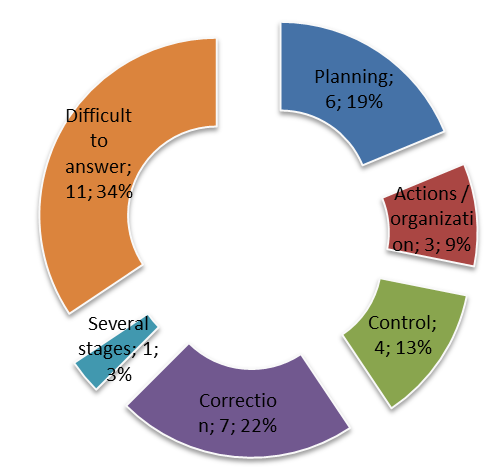
Table 2. Rating EQAVET compliance cycle in educational institutions of the respondents
The number of respondents | Feature compliance EQAVET cycle | Rating 5 |
1 | No | 0 |
1 | Not applicable to the university | 0 |
4 | Difficult to answer | 1 |
1 | There is a problem | 3 |
3 | As part of the quality management system | 4 |
22 | Yes | 5 |
32 | 4,03 |
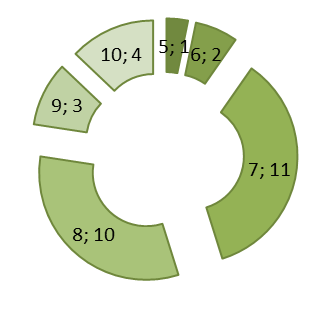
Table 7. Ratings (rating) of the measures to improve the quality of education through consistent planning, implementation, verification and correction action taken
The assigned rating (rating) | The number of respondents |
|
5 | 1 | |
6 | 2 | |
7 | 11 | |
8 | 10 | |
9 | 3 | |
10 | 4 | |
No answer | 1 | |
Average – 7,53 Given the lack of response 7,74 to the exclusion of the lack of response | 32 |
Attention is drawn to the lack of communication between the rating through the cycle EQAVET and evaluation / rating of measures to improve the quality of education:
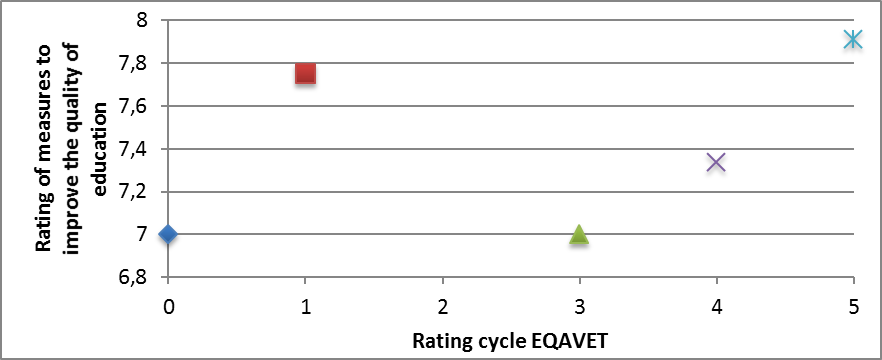
Figure 7.
As can be seen from Figure 1, the lowest scores (ratings) measures to improve the quality of education with consistent planning, implementation, verification and correction of the actions taken, put the respondents who denied the observance of EQAVET cycle in their educational institutions or difficult to answer - it is logical. It is also logical that above all appreciated the measures to improve the quality of education, respondents who have confirmed compliance with EQAVET cycle in their educational institutions.
However, significantly lower scores (ratings) measures to improve the quality of education delivered respondents who noted the observance EQAVET cycle within the quality management system (QMS) - and it is a paradoxical phenomenon that may require further study and / or communication between MCS and EQAVET.
Collect the information of the respondents in the table below.
Table 8.
Planning descriptors | Used: yes - no | |||
Used | Not in the proper amount | Not applicable | Difficult to answer | |
Studies on process (teaching and pedagogics) and product (learning outcome). | 26 | 6 | 0 | 0 |
Focus on local needs and value added to the customer | 18 | 9 | 3 | 2 |
Transparency in the intake (criteria) | ||||
Design of new courses adapted to market needs | 29 | 3 | 0 | 0 |
Plan the internal resources e. g. teachers to intended learning outcome and to student population | 25 | 7 | 0 | 0 |
Conclusion: we can say relatively weak concentration on the actual needs / requests, presumably due to insufficiently transparent criteria of labor market needs.
Table 9.
Implementation descriptors | Used yes - no | |||
Used | Not in the proper amount | Not applicable | Difficult to answer | |
Run courses according to syllabus / set procedures | 25 | 7 | 0 | 0 |
Have internal standardized procedures for QA | 25 | 7 | 0 | 0 |
Have formulated indicators for success (completion rate, placement rate in related jobs, utilisation of acquired skills, % of drop-out, % of unemployment) | 30 | 2 | 0 | 0 |
Invest (appropriate) time and resources for the delivery | 16 | 14 | 2 | 0 |
Secure internal cooperation. | 20 | 12 | 0 | 0 |
Conclusion: The respondents as a "bottleneck" named lack of time and resources to provide high quality education.
Note: lack of time teachers in most cases due to low remuneration and the respective running-and the lack of motivation for further education.
Table 10.
Evaluation descriptors | Used yes - no | |||||
1 | 2 | 3 | 4 | 5 | Average | |
Be willing to take criticism from both external and internal stakeholders | 0 | 3 | 1 | 19 | 9 | 4,063 |
Assess the activities and take the time for analysis | 1 | 1 | 8 | 17 | 5 | 3,75 |
Involve stakeholders in the analysis / evaluation | 1 | 0 | 6 | 10 | 15 | 4,19 |
Have regular meetings and evaluations | 1 | 2 | 12 | 17 | 0 | 3,406 |
Conclusion: The respondents as a "bottleneck" and called the assessment of the lack of time for analysis that echoes the output descriptors for implementation.

|
Из за большого объема этот материал размещен на нескольких страницах:
1 2 3 4 5 6 7 8 9 |
