


Партнерка на США и Канаду по недвижимости, выплаты в крипто
- 30% recurring commission
- Выплаты в USDT
- Вывод каждую неделю
- Комиссия до 5 лет за каждого referral
· are rolling schedules of fuel treatments specifying the total area where we aim to reduce fuel, and the location and sequencing of individual burns and other treatments
· are guided by priority fuel management areas, to ensure our fuel management program continues to drive down residual risk
· cover all fuel treatment on public land, including areas of lower risk
· address factors such as public safety and access.
The actual residual risk reduction we achieve across the landscape depends on the extent to which we can implement our fire operations plans: how much fuel management we are able to conduct (given the weather and other operational constraints), the amount of area where we can reduce fuel, the arrangement of the burns or other treatments in the landscape and other factors. Over time, the residual risk will also be influenced by bushfires.
To inform fire operations planning, each year we identify priority fuel management areas, areas of public and private land where it is most important to reduce the current fuel hazard and bushfire risk. When identifying these areas, we take account of recent bushfires and fuel management activities. We also produce information to indicate the current suitability of each public land burn unit for planned burning, considering among other things the time since last fire, the sensitivity of the vegetation to fire and the requirement to maintain or improve ecosystem resilience. We will work with other agencies (mainly CFA and local governments) and private landowners to help ensure they are aware of the priority areas on which to focus their fuel management activities.
We recognise that planned burning can affect communities, infrastructure and public administration facilities, and economic, environmental and cultural heritage and social assets. We will continue to identify measures to mitigate these impacts though fire operations planning and burn planning—without compromising our strategic fuel management objectives—and to implement our procedures to mitigate risks to priority environmental assets.
DELWP will ensure our fire operations planning process:
· is informed by the fuel management strategy and priority fuel management areas
· complies with the objectives of FMZs.
Balancing our fuel management approach
While the primary aim of our fuel management strategy is to reduce the risk of bushfire impacts on life and property, we also aim to maintain and improve ecosystem resilience.
An ecosystem’s resilience is reflected in its capacity to withstand and recover from a range of disturbances, including fire. We measure ecosystem resilience by looking at the whole landscape and at multiple fires with various frequencies of burning.
We currently measure risk to ecosystem resilience across the landscape using tolerable fire intervals (TFIs). TFIs are the minimum and maximum recommended times between fire events for a particular group of vegetation communities with common ecological requirements for fire, and common fire behaviour characteristics. These groups of vegetation communities are known as ecological fire groups (EFGs). TFIs are an interim measure: we are working on other measures, including growth stages of vegetation.
Burning within these intervals can assist in maintaining healthy and resilient ecosystems. Burning repeatedly outside these intervals increases the risk that there will be fundamental changes in the abundance and composition of species and in the type of vegetation in the EFG. It may also increase the risk of weed invasion, erosion and the loss of nutrients in the soil. We are currently investigating ways to better understand the impacts of burning outside the minimum and maximum TFIs.
Multiple major bushfires can also result in EFGs being burnt under minimum TFI and can negatively affect fire-sensitive ecosystems and species. Elements of our fuel management strategy try to reduce the impact of these outcomes.
Initial work on the measure (growth stage of vegetation) is showing promising results in measuring ecosystem resilience. The growth stage of vegetation depends on when it was last burnt, or subject to other disturbance. Each vegetation type passes through distinct stages following disturbance, each stage differing in the quality of the habitat it provides for plants and animals. Lack of diversity of growth stages in a landscape may reduce the ecosystem’s capacity to resist damage and maintain its basic structure and type after being disturbed by fire.
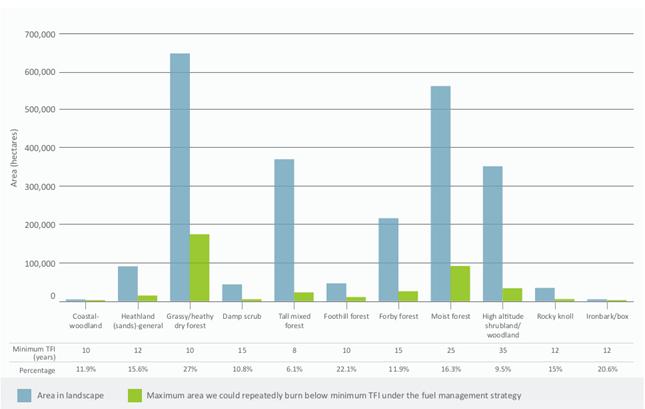
Figure 2 shows the area of the EFGs in our landscape we expect to repeatedly treat by planned burning below their minimum TFI under the fuel management strategy.
Under the strategy, we expect that the average fire return interval will be lower than minimum TFI for 383 000 ha, or about 14%, of vegetation in the landscape. The majority of this area will be in asset protection zones and bushfire moderation zones. We expect to burn repeatedly below minimum TFI in up to 27% of grassy / heathy dry forest and up to 22% of foothill forest.
We recognise there is a trade-off between reducing bushfire risk to life and property and maintaining ecosystem resilience across the landscape. We will continue to work to better balance the two code of practice objectives. In some areas we modified our strategy to accommodate the needs of some plant and animal species (for example, the Colquhoun grevillea species in the case study on page 21, the habitat of which needs a particular fire regime that minimises its risk from planned burning). Our risk analysis shows these adjustments do not significantly raise modelled residual risk in the landscape. Accommodating the needs of individual species is a good, initial step towards a more sophisticated approach to including environmental values in strategic fuel management.
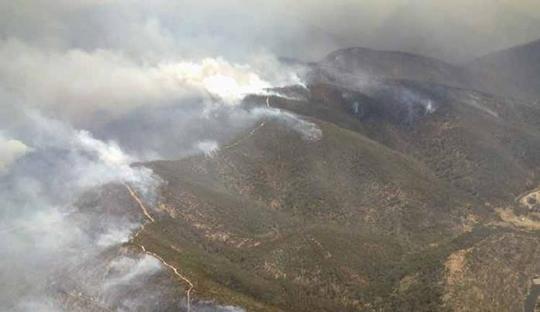
Picture caption: A bushfire near Aberfeldy © Michael Beckers DELWP
Picture caption: Colquhoun grevillea © Kerry Seaton DELWP
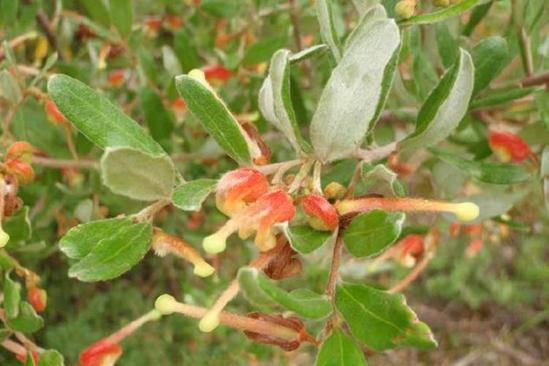
Colquhoun grevillea
The Colquhoun grevillea (Grevillea celata) is a low shrub growing to 1.8 m tall. It is endemic to a small area of our landscape. It is listed as vulnerable under the federal Environment Protection and Biodiversity Conservation Act 1999, and as threatened under the state Flora and Fauna Guarantee Act 1988.
The National recovery plan for the Colquhoun Grevillea identifies inappropriate fire regimes as a threat to the species. It also suggests fire should be applied no more frequently than at 10 year intervals.
Under our fuel management strategy, some populations of Colquhoun grevillea are in bushfire moderation zones, where the frequency of planned burning is eight years. In these areas, we will extend this frequency to 10 years. These adjustments do not significantly raise modelled residual risk in the landscape, meaning in this instance we can both reduce residual risk and meet the needs of this threatened species.
Figure 2: EFGs proposed for repeated planned burning below minimum TFI
Picture caption: Brush-tailed rock-wallaby © Lucy Clausen DELWP
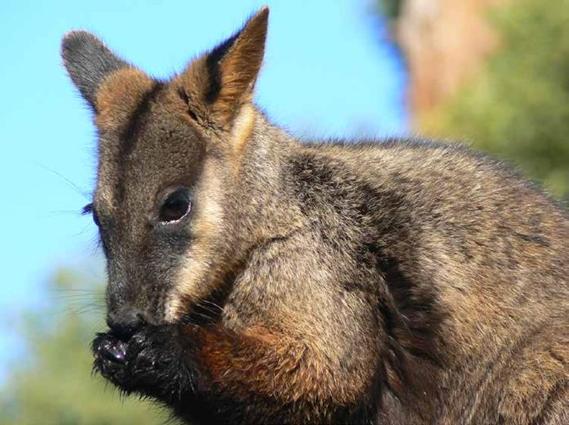
Brush-tailed rock-wallaby
The Brush-tailed rock-wallaby (Petrogale penicillata) is a small wallaby weighing up to 8 kg. It is listed as vulnerable under the Commonwealth Environment Protection and Biodiversity Conservation Act 1999 and as threatened under the state Flora and Fauna Guarantee Act 1988. It is considered critically endangered in Victoria. Within our landscape, a small colony of 20 to 30 animals lives in the Little River Gorge near Wulgulmerang. This is the largest remaining colony of the Brush-tailed rock-wallaby in Victoria.
Like many animals living in small and isolated populations, the rock-wallaby is particularly susceptible to a one-off event such as a bushfire, which can kill individuals or affect habitat by reducing their available food. It is very difficult to manage fire where the rock-wallaby lives, and the impact of planned burning on the habitat of the rock-wallaby is not well-understood.
Under our fuel management strategy, the Brush-tailed rock-wallaby colony at Little River Gorge and surrounding areas are in a landscape management zone. This zone provides us with the opportunity to do planned burning in areas surrounding the colony to reduce risk from large, intense bushfires. It also allows us to do burning trials or to not burn the actual habitat of the rock-wallaby until we better understand the implications of planned burning.
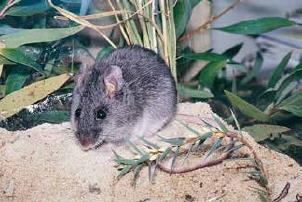
Picture caption: Smoky mouse © Linda Broome
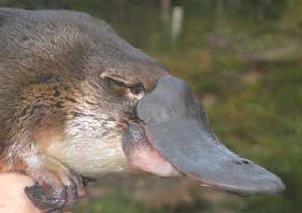
Picture caption: Platypus at Valencia Creek © DELWP
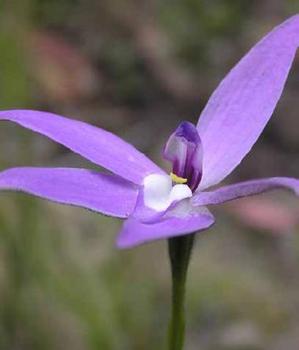
Picture caption: Wax-lip orchid © Faye Bedford DELWP
Other bushfire management strategies
As well as implementing our fuel management strategy, we will also undertake prevention, preparedness, response and recovery actions on public land. We will also continue to share bushfire risk information and work in partnership with other agencies (including CFA, local government, Emergency Management Victoria and Victoria Police). These actions will strengthen bushfire management across our landscape.
Preventing bushfires
Preventative actions minimise the occurrence of bushfires, particularly those started by people when weather conditions are extreme. To improve bushfire prevention, DELWP and PV will:
· prioritise compliance activities (as part of the Gippsland Arson Prevention Program), including community education and enforcement patrols with Victoria Police and other land and resource managers, to reduce intentional ignitions

|
Из за большого объема этот материал размещен на нескольких страницах:
1 2 3 4 5 6 |
