

Партнерка на США и Канаду по недвижимости, выплаты в крипто
- 30% recurring commission
- Выплаты в USDT
- Вывод каждую неделю
- Комиссия до 5 лет за каждого referral
9. When was the 14th Amendment passed by the Congress? What changes did it introduce?
10. Why did former black slaves lose most of their newly obtained rights by the end of the Reconstruction?
UNIT 7
PART I
MINERS, RAILROADS AND CATTLEMEN
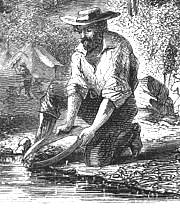
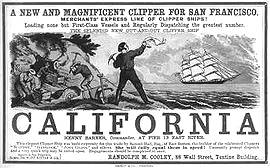 In January, 1848 a group of workmen was building a sawmill beside a stream in California for a pioneer and landowner named John Sutter. One day a foreman in charge of the workers James Wilson Marshall found pieces of shiny metal. Marshall quietly brought what he found to Sutter, and the two of them privately tested the findings. The tests showed Marshall's particles to be gold. Sutter was dismayed by this, and wanted to keep the news quiet because he feared what would happen to his plans for an agricultural empire if there were a mass search for gold. However, rumors soon started to spread.
By the middle of the summer a gold rush had begun. With the news of gold, many families trying their luck at Californian farming decided to go for the gold, becoming some of California’s first miners. Early gold-seekers, called "forty-niners," (as a reference to 1849) traveled to California by sailing boat and in covered wagons across the continent, often facing substantial hardships on the trip. From the East Coast, a sailing voyage around the tip of South America would take five to eight months, and cover 33,000 km. Many gold-seekers took the overland route across the continental United States, particularly along the California Trail. Each of these routes had its own deadly hazards, from shipwreck to typhoid fever and cholera.
A person could work for six months in the goldfields and find the equivalent of six years' wages back home, which attracted people of all types and ethnicities including single men and women, families, and married men. Some hoped to get rich quick and return home, and others wished to start businesses in California. It is estimated that almost 90,000 people arrived in California in 1849 – about half by land and half by sea. Of these, perhaps 50,000 to 60,000 were Americans, and the rest were from other 1855, it is estimated at least 300,000 gold-seekers, merchants, and other immigrants had arrived in California from around the world. Approximately 150,000 arrived by sea while the remaining 150,000 arrived by land.
In the next 20 years gold discoveries attracted fortune-seekers to other parts of the far the late 1850s they were mining in the mountains of Nevada and Colorado, by the 1860s they had moved into Montana and Wyoming and by the 1870s they were digging in the Black Hills of the Dakota country.
The effects of the Gold Rush were substantial. First mining settlements were just untidy collections of tents and huts, but later some of them grew larger into permanent communities. San Francisco grew from a small settlement to a boomtown, and roads, churches, schools and other towns were built throughout California. The business of agriculture, California's next major growth field, was started on a wide scale throughout the state. A system of laws and a government were created, leading to the admission of California as a free state in 1850 (as part of the Compromise of 1850). However, the Gold Rush also had negative effects: Native Americans were attacked and pushed off traditional lands, and gold mining caused environmental harm.
 Thousands of miles separated western mining settlements from the rest of the United States. At the end of the Civil War in 1865 settlements in the East stopped a little to the west of the Mississippi and Missouri rivers. Beyond these last farms, thousands of miles of flat land covered with tall grass stretched west to the foothills of the Rocky Mountains. Early travelers who passed through this region described it as a “sea of grass”, for hardly any trees or bushes grew there. Geographers call these grasslands the Great Plains, or the Prairies, of North America. In the 1840s and 1850s thousands of settlers crossed the Great Plains to reach the farms of Oregon and the gold fields of California. To them this region was not somewhere to settle and make new homes but a place to pass through as quickly as possible. They saw it as dangerous and unwelcoming and were happy to leave it to the Amerindians. Yet within twenty-five years of the end of the Civil War, practically all of the Great Plans had been divided into states and 1890 the separate areas of settlement on the Pacific Coast and along the Mississippi River had moved together. The frontier, that moving boundary of white settlement, had disappeared.
Settlement was stimulated by the Homestead Act of 1862 which granted free farms of 160 acres (65 hectares) to citizens who would occupy and improve the land. Any head of a family who was at least twenty one years of age and an American citizen could claim a homestead. So could immigrants who claimed to become US citizens. All that homesteaders had to do was to pay a nominal filing fee, move onto a piece of public land, live on it for five years and the land became theirs. If a family wanted to own its homestead more quickly than this it could buy the land after only six months for a very low price of $1.25 an acre. The Homestead Act led to the distribution of 80 million acres of public land by 1900.
An important part in “closing” of the frontier was played by railroads. During the Civil War Congress had become anxious to join the gold-rich settlements along the Pacific Coast more closely to the rest of the United States. In 1862 it granted land and money to the Union Pacific Railroad Company to build a railroad west from the Mississippi towards the Pacific. At the same time it gave a similar grant to the Central Pacific Railroad Company to build eastwards from California. The whole country watched with growing excitement as the two lines gradually approached one another. Both moved forward as fast as they could, for the grants of land and money that each company received from the government depended upon how many miles of railroad track it built. Finally, on May 10, 1869 the Central Pacific and the Union Pacific lines met at Promontory Point in Utah. The first railroad across the North American Continent was completed. Soon it was joined by 1884 four more major lines had crossed the continent to link the Mississippi Valley with the Pacific Coast. These transcontinental railroads reduced the time that it took to travel across the United States from weeks to days.
As the railroads pushed west, enterprising cattle ranchers in Texas saw a way to make money. They began to drive their longhorn cattle north across the open public land, and used the new railroads to transport them to eastern cities where buyers were hungry for meat. Feeding as they went, the cattle arrived at railway shipping points in Kansas larger and fatter than when they started. Soon, this “long drive” became a regular event, the cattle traveled along regular routes called “trails”. Cattle-raising spread into other western territories, many cities flourished as centers for the slaughter and dressing of meat. Very soon meat from the Great Plains was feeding people in Europe as well as the eastern United 1881 more than 110 million pounds of American beef was shipped across the Atlantic Ocean every year. The grass of the Great Plains was earning the US as much money as the gold mines of its western mountains.
Ranching introduced a colorful mode of existence with the picturesque cowboy as its central figure. Although the reality of a cowboy life was far from romantic, its mythological hold on the American imagination has remained strong. The cowboy was hero, outlaw, gunslinger, and even poet of the plains. The man himself, the clothes he wore, and the horse he rode were all outgrowths of life on the range. The long days in the open, riding alone with the cattle, gave him self-reliance. The danger of stampeding cattle, of undependable horses, of hostile Indians, and of bitter winter blizzards demanded endurance and courage. The whole job of driving, roping, and handling cattle required expert horsemanship. The cowboy’s life was one of exhausting work, poor food and low pay. But to many young men it seemed free and exciting. Many cowboys were former Confederate soldiers who had moved west after the Civil War. Some were black ex-slaves from southern plantations. Others were boys from farms in the east who wanted a life with more adventure than farming could offer them.
DISCUSSION
1. When and how was gold discovered in the USA?
2. Why did John Sutter want to keep this news secret?
3. Who are “forty-niners”? Why are they called so?
4. The first Gold Rush took place in California. What were other territories that later attracted gold-seekers?
5. What were the effects of the Gold Rush? Did the discovery of gold influence the development of California?
6. How did the settlement of the Great Plains begin? Was it encouraged by the government?
7. When was the first railroad across the North American Continent built? Why did the railroad companies try to work as fast as they could?
8. How did the development of transportation help Texas cattle ranchers to make money?
9. Was American beef exported to Europe?
10. What do we learn about the life of American cowboys?
PART II
THE AGE OF BIG BUSINESS
In 1860 there were 31.5 million people in the United 1900, the population had grown to 76 million people. A large part of this came from immigration. Between 1860 and 1900, 14 million immigrants entered the country. They brought their customs, languages, and religions to the already changing nation.
The story of the American people is a story of immigrants. More than 75 percent of all the people in history who have ever left their homelands to live in another country have moved to the United States. In the course of its history it has taken in more people from other lands than any other country in the world. Since the founding of Jamestown in 1607 more than 50 million people from other lands have made new homes there. Immigration was encouraged when people were needed – to settle the newly annexed lands of the Northwest Territories, to help build canals and railroads, and to serve as soldiers in the Union armies. The new immigrants were usually poor and found themselves on the bottom of the social and economic scale.
Between 1840 and 1880 more immigrants than ever before arrived. Most came from northwestern Europe. Poor crops, hunger and political unrest cause many Europeans to leave the lands of their birth at this time. More of them went to the United States than to any other country. This movement was known as the “old” immigration, because these people came from the same areas as the earlier immigrants. The largest group – nearly 3.5 million came from Germany. Around 1.4 million people came from Scandinavian countries of Denmark, Finland, Norway, and Sweden. Almost 2 million people arrived from Great Britain and nearly the same number from Ireland (the Irish potato famine of and death of 750,000 people contributed to mass migration of the Irish).
Beginning around 1880, patterns of immigration began to change. More and more people entered the country from southern and eastern Europe, they came from Italy, Austria-Hungary, Russia, Poland, the Baltic countries of Latvia, Lithuania, and Estonia, the Balkan countries of Rumania, Bulgaria, Greece, and Turkey. This movement was known as the “new” immigration, because up to that time few people from these areas had come to the United States. Between 1880 and 1900, about 100,000 “new” immigrants came to the United States each year. From 1900 to 1914, the numbers generally reached 500,000 a year. Large numbers of “new” immigrants moved into the cities of the northeastern United States. They often sought jobs that had been advertised in Europe by American businesses. Most of these immigrants were unskilled laborers. Some took jobs with steel manufacturers or the railroads, others worked in the coal mines or in the garment industry. They tended to live among people from their own country who shared a common religion, customs, and language.
Many Jewish people came to the Unites States at this time. In 1880s Jews were being killed all over eastern Europe in bloody massacres called “pogroms”. Many thousands escaped by leaving for the Unites States, between 1880 and 1925 about 2 million Jews entered the country.
The first large group of people from China entered the United States in 1849 during the California Gold Rush. In the 1860s, Chinese workers played an important part in building the Central Pacific Railroad. More Chinese came in the 1870s. Many moved into the mining areas of the west. Some set up businesses in California, Nevada, and other western states.
So many immigrants wanted to enter the United States in the late 1880s that the government found it difficult to keep check on them. To control the situation it opened a special place of entry in New York harbor. This place was called Ellis Island and all intending immigrants were examined there before they were allowed to enter the United States. During its busiest times this federal immigration center dealt with almost 2,000 immigrants a day. Between 1892, when it was opened, and 1954, when it closed its doors, more than 20 million people waited anxiously in its halls and corridors. Immigration officers asked these people questions to find out if they were criminals or mentally abnormal. Doctors examined them for diseases. A letter chalked on their clothing – H for heart disease or E for eye disease – could end their hopes of a new life in America.
Many people born in the United States became alarmed at the large numbers of immigrants entering the country. They often looked at the new immigrants with fear and hostility. They were disturbed because many of the immigrants had little education and that is why could not take part in democracy. They accused immigrants of taking jobs away from American-born workers, of lowering standards of health and education, and of threatening the country’s traditions by brining in “un-American” political ideas like communism and anarchism. Some people in the East did not like the fact that many of the newcomers were Catholic or Jewish. In the West, there had been opposition to Asian immigrants for some time. Their language, appearance, and customs were unfamiliar to most Americans. Chinese workers had been brought to California to build the railroads. The fact that Chinese laborers were willing to work for less pay caused American workers to dislike them. Chinese communities in the West were attacked and their buildings were burnt down. In certain areas of the West, local laws were passed against the Chinese. They could not hold certain jobs or marry whites. They were usually forced to live in certain parts of cities.
In 1882 the strength of anti-Chinese feeling caused Congress to ban most Chinese immigration. Japanese and other Asian immigrants were refused entry as well and by 1924 no Asian immigrants were permitted into the United States.
In 1920s Congress passed laws to limit all kinds of immigration. The one which had most effect was the Reed-Johnson Immigration Act of 1924. This law was an answer to the fears of Americans who were descendants of earlier north European immigrants. It said that in the future no more than 150,000 immigrants a year would be let into the United States. Each country which sent immigrants was given a “quota” which was based on the number of its people already living in the United States. The more it had there already, the more new immigrants it would be allowed to send. This system was designed mainly to reduce immigration from southern and eastern Europe and Asian countries. The 1924 Immigration Act marked the end of one of the most important population movements in the history of the world.
The United States entered a period of great change after the Civil War. The years from 1860 to 1900 witnessed a dramatic industrial growth of the country. The progress of industrialization, which had begun in the 1820s, speeded up after the Civil War. The number and size of businesses 1900 certain large industries were so important to the American economy that this period became known as the “Age of Big Business”. America became, in the quantity and value of its products, the leading manufacturing nation in the world. Many factors contributed to this dramatic industrial growth. The United States had an abundance of basic raw materials and energy sources. There was a large supply of labor, the result of two great migrations: the movement of American farmers into the cities and the movement of European peasants across the ocean to American industrial centers. American industry benefited as well from a remarkable technological inventiveness – “Yankee ingenuity” – which created the necessary machinery for industrial growth. An energetic and ambitious group of entrepreneurs developed new financial and administrative structures capable of organizing large-scale production and distributing manufactured goods to a national market. And finally, the federal government worked to promote national growth.
The United States had an abundance of natural resources. Some of them were needed for industrial growth. Coal and iron were the most important raw materials in the 19th century. Americans discovered vast deposits of both in the 1880s and 1890s. Large coal deposits were found in Pennsylvania, West Virginia, Kentucky, Ohio, and several other states. At the western end of Lake Superior the Great Mesabi iron deposits were discovered in 1887 and soon the Mesabi became one of the largest producers of iron ore in the world. The ore lay close to the surface of the ground in horizontal bands up to 500 feet thick. It was cheap, easy to mine, and free of chemical impurities. Before long Mesabi ore was being processed into high quality steel at only one tenth of the previous cost. Another rich source of iron ore was discovered around Birmingham, 1900 ten times more coal was produced by the United States than in 1860 and the output of iron ore was twenty times higher. These increases were both a cause and a result of a rapid growth of American manufacturing industries in these years.
Another resource necessary to the growth of Big Business was labor. Between 1860 and 1900, the population of the country grew rapidly. Because of this, the number of people seeking jobs grew as well. Former slaves were among those who joined the free labor market. Some southern blacks began to seek jobs in cities. Immigrants were another source of labor during these years. They came to work in the clothing industry, on the railroads, and in the steel mills.
New inventions also helped business to grow. Americans have always been proud of their ability to find practical solutions to practical problems. During the 19th century they developed thousands of products to make life easier, safer or more enjoyable. In the last decades of the 19th century inventions appeared at a dizzying pace. Many of them were in the field of communication. In 1866 Cyrus W. Field succeeded in laying a transatlantic telegraph cable. In 1867 a typewriter was developed by Christopher Sholes. In 1876 the telephone, invented by Alexander Graham Bell, was introduced in Philadelphia; and by the 1890s the American Telephone and Telegraph Company had installed nearly half a million telephones in American cities. Thomas Edison made some major improvements on the telegraph. Soon telegraph lines reached every part of the country and were used by business to carry out widespread operations. Thomas Edison also made other contributions. In 1879 he introduced the first practical light bulb. A short time later, he invented a dynamo to generate electricity. Then, in 1882, Edison set up the first central power plant in New York City. Electricity soon became an important source of power for homes, offices, and industry. Another important technological breakthrough was the development of steel. In the late 1850s Henry Bessemer of England and William Kelly of the United States separately discovered a new way to make steel from iron ore. This process made it possible to make more steel at less cost, and the steel industry grew rapidly.
Meanwhile, in the United States, inventors such as Charles and Frank Duryea, Elwood Haynes, and Henry Ford were designing their own automobiles. The Duryeas built and operated the first gasoline-driven motor vehicle in America in 1903. Three years later, Ford produced the first of the famous cars that would bear his name. His idea was to start assembling automobiles from exactly the same parts and he tried it out with an automobile called Model T. The use of identical parts in manufacturing is called standardization. Ford added it to the idea of a moving assembly line. In 1913 Ford started to use assembly line methods to make the complete Model T. As the cars moved along on a conveyer, dozens of workmen each carried out a single the time a car reached the end of the line it was complete. Making a car in this new way took 1 hour and 33 minutes. Previously it had taken 12 hours and 28 1900 automobile companies were turning out more than 4,000 cars a year. A decade later – when manufacturers were finally able to streamline operations so as to bring the cost down, and when American roads began to be improved – the industry had become a major force in the economy, and the automobile began to reshape American social and cultural life. In 1895 there had been only four automobiles on the American 1917 there were nearly 5 combining standardization and assembly line Ford showed manufacturers how to produce goods cheaply and in large quantities. Because of this he is seen as the father of the 20th century mass production.
The first American companies to grow to a large size were the railroads. They served as a model for the development and organization of Big Business. The railroads were the first to develop ways of raising the money needed to run a large scale business and ways to manage large companies. From 1860 to 1900 the railroad network grew rapidly. Railroads were built in every area of the United States. They linked together buyers and sellers all over the country.
Oil refining was one industry that developed the same kind of large-scale operations as the railroads. At the end of the Civil War, John D. Rockefeller set up a refinery in Cleveland, Ohio. As a result of the oil boom in Pennsylvania, many people were building refineries and his company was one of 30 in Cleveland. In 1867 he formed the Standard Oil Company. Within a few years Standard Oil owned most of the other refineries in Cleveland as well as some in other cities. To cut costs, Standard Oil made its own barrels, built its own warehouses, and had its own network of pipelines. To save even more money, Rockefeller made deals with the railroads that shipped oil products to market and asked for lower rates. Because Standard Oil made and shipped its products for less, it was able to sell them for less. Smaller companies could not compete, and most of them sold out to Rockefeller. Others were driven out of business. Before long, Rockefeller controlled 90 per cent of the oil refining business in the United States and served as the leading symbol of monopoly.
The steel industry also grew to become part of Big Business. One of the most important leaders in this industry was Andrew Carnegie. Carnegie was a Scottish immigrant who came to America at the age of thirteen and began his life working for one dollar twenty cents a week in a Pittsburgh cotton mill. From there he moved to a job in a telegraph office, then to the one on the Pennsylvania the time he was thirty he already had an income of over forty thousand dollars a year from far-sighted investments. Carnegie concentrated his investments in the iron and steel the 1860s he controlled companies making bridges, rails, and locomotives for the railroads. In the 1870s he built the biggest steel mill in America on the Monongahela River in Pennsylvania. He also bought coal and iron ore mines, a fleet of steamships to carry ore across the Great Lakes from Mesabi to a port he owned on Lake Erie, and a railroad to connect the port to his steel works in Pennsylvania. Because of these actions, Carnegie’s costs were low, and he could sell his steel for less. Other companies could not compete, and Carnegie soon controlled the industry.
The meat-parking industry, too, was changing. Before the 1860s, cattle had been shipped by rail to cities around the country. There they were slaughtered and sold. Some business leaders felt that costs could be cut if the animals were slaughtered near where they were raised. Then the meat, rather than the whole animal, could be shipped to the cities. To do this, however, a way of preserving the meat during shipment had to be found. This problem was solved in the 1870s when the refrigerator railroad car was introduced. Gustavus , other companies followed Swift. The leading meat-packing companies soon controlled the industry.
The growth of Big Business led to the further development of certain forms of business organization. Most small businesses were started with money from one person’s savings. However, large business needed millions of dollars. To solve this problem, corporations (groups of investors who buy shares of stock in a company) were formed. As they grew bigger and more powerful, they often became “trusts”. By the early 20th century, trusts controlled large parts of American industry. The biggest trusts were richer than most their wealth and power they controlled the lives of millions of people.
By 1900 the United States was the richest and the most productive industrial country in the world. About 20 million of its 74 million people earned their living from jobs in industry. And although the economy was booming and prosperity was spreading, up to a half of all industrial workers still lived in poverty. New York, Boston, Chicago and San Francisco could now boast of impressive museums, universities, public libraries – and crowded slums. Industrial workers labored from dawn till dusk in factories, mines and workshops. Wages were often low. In 1900 the average industrial worker was paid 9 dollars for working 59 hours a week. In cotton spinning mills the usual working week was 62 hours for wages of 10 cents an hour. Often the work was unhealthy and dangerous. In one plant belonging to the United States Steel Corporation 46 men were killed in 1906 – by burns, explosions, electric shocks, suffocation, falling objects or by being crushed. If workers were killed or injured like this, neither they nor their families received compensation. When the owner of a coal mine was challenged about the dangers and hardships that his workers faced, his reply was short and cruel: “They don’t suffer,” he said. “Why, they can’t even speak English.”
Workers tried to form trade, or labor, unions to improve the conditions of their lives. These attempts often failed. Employers dismissed union members and put their names on a “blacklist”. Employers were determined to allow neither their workers nor anyone else to interfere in the way they ran their businesses. Sometimes they persuaded politicians to send soldiers to break up strikes or hired their own private armies of “detectives” to control their workers.
The late 19th century was a difficult period for American farmers. Food prices were falling, and the farmer had to bear the cost of high railroad shipping rates, expensive mortgages, high taxes and tariffs on consumer goods. Several national organizations were formed to defend the interests of small farmers – the Grange in 1867, the National Farming Alliance in 1877 and the Populist Party in the 1890s. The Populists demanded the nationalization of the railroads, a progressive income tax and monetary reform.
But Americans were not complacent about conditions. In the early years of the 20th century popular magazines published sensational articles by “muckrakers” – investigative journalists who exposed shady business practices, corruption in government and poverty in cities. In 1906 Upton Sinclair attacked the meatpacking industry in his novel “The Jungle”. It gave a horrifying description of life among immigrant workers in the slaughter houses of Chicago. Middle class readers were shocked to learn what went into their breakfast sausages. They were even more shocked when government investigators said that what Sinclair had written was true. The meat companies begged the government to inspect their premises in order to convict people that their products were fit to eat. The Congress quickly passed a new federal law meat inspection law.
People began to demand that the nation’s leaders should deal with other scandals exposed by muckrakers. Their pressure brought about an important change in American economic and political life. Before 1900 most Americans had believed in “laissez-faire” – the idea that governments should interfere with business as little as possible. After 1900 many Americans became “Progressives”, they believed that, where necessary, the government should take action to deal with the problems of society. The Progressive movement found a leader in the Republican Theodore Roosevelt, who became president in 1901. One of his main beliefs was that it was the duty of the president to use the power of the federal government to improve conditions of life for the people – to see that the ordinary man and woman got what he called “a square deal”. Roosevelt was particularly concerned about the power of the trusts. He wanted to force the big railroad companies to charge all their customers fair rates, instead of allowing large customers like oil and meat-packing trusts to pay less than farmers and small businessmen, so he strengthened federal regulation of the railroads and enforced the Sherman Antitrust Act against several large corporations, including the Standard Oil Company. In 1902, Roosevelt ended a coal strike in Pennsylvania by threatening to send in troops – not against the workers but against noncooperative mine owners. This was a turning point in American industrial policy: no longer would the government automatically side with management in labor disputes. The Roosevelt administration also promoted conservation. Vast reserves of forest land, coal, oil, minerals and water were served for future generations.
In 1908 Theodore Roosevelt supported William Howard Taft, his Secretary of War, for the presidency and retired as president in 1909. Roosevelt tried to regain the position in 1912 but was defeated in the presidential election by Woodrow Wilson, the candidate of the Democratic Party. Although Roosevelt and Wilson belonged to different political parties, some of their ideas were very similar. Woodrow, too, supported the Progressive movement. As Governor of New Jersey he had fought successfully to make sure that the state was run for the benefit of its people. He had reduced bribery and corruption there, and he had introduced reforms such as laws to give workers compensation for injuries at work. President Wilson believed that the federal government had a responsibility to protect small businesses against large corporations. As part of his “New Freedom” program () he reduced customs duties to encourage trade between the USA and other countries, reformed the banking system and introduced a system of federal taxes on high incomes. He toughened antitrust laws against huge corporate mergers and created the Federal Trade Commission to police unfair business competition. Wilson also passed laws restricting child labor, granting low-cost loans to farmers, and setting a maximum eight-hour working day for rail-road workers. Although not all of Wilson’s plans of reform were accepted, the Progressive movement changed and improved American life in many ways.
DISCUSSION
1. Why is it said that the story of American people is a story of immigrants?
2. What is the “old” immigration?
3. How did the patterns of immigration change in 1880s?
4. What industries gave jobs to newcomers?
5. What was done by the US government to keep the situation under control in the 1880s when too many people wanted to move to America?
6. Why did American-born people often look at the new immigrants with fear and hostility?
7. What actions were taken by the Congress to limit immigration?
8. What were the factors that contributed to the dramatic industrial growth of the US?
9. What were the most important raw materials of the 19th century? Speak about the Mesabi iron deposits.
10. What were the sources of labor force in the late 19th century?
11. What are the examples of “Yankee ingenuity”?
12. What do we learn about John D. Rockefeller and the Standard Oil Company?
13. What do we learn about Andrew Carnegie?
14. What do we learn about Gustavus Swift?
15. What were the new forms of business organization that appeared in the US at that period of time?
16. Speak about life and work conditions of American industry workers in the early 1900s. What was the attitude of “captains of industry” towards them?
17. What problems did American farmers face?
18. How did muckrakers’ articles change American society?
19. Why does the coalmine strike in Pennsylvania serve as the turning point in American industrial policy?
20. What were the changes introduced by Theodore Roosevelt and Woodrow Wilson?
GUIDED TALK
Develop the following points using the words given below.
1. The story of the American people is a story of immigrants.
to leave one’s homeland, to make new homes, to find oneself on the bottom of
the social and economic scale
2. The late 19th century was the period of heavy influx of immigrants to the United States.
poor crops, political unrest, famine, to leave the land of one’s birth, the “old” immigration, the “new” immigration, unskilled laborers
3. The Government opened a special place of entry for the immigrants.
to keep check on smb., to be examined, immigration officer, to be mentally abnormal, to examine for disease
4. Many Americans were alarmed at the large number of immigrants.
to look at smb. with fear and hostility, to be disturbed, to accuse smb. of smth., to threaten the country’s traditions, unfamiliar, to be willing to work for less pay
5. The strength of anti-immigration feeling caused Congress to limit the number of immigrants.

|
Из за большого объема этот материал размещен на нескольких страницах:
1 2 3 4 5 6 7 8 9 10 11 12 13 14 15 |
