


Партнерка на США и Канаду по недвижимости, выплаты в крипто
- 30% recurring commission
- Выплаты в USDT
- Вывод каждую неделю
- Комиссия до 5 лет за каждого referral
Often the Japanese prefer tо speak in their own language in the informal negotiations that take place away from the formal negotiating table. What is really bothering them becomes clear at these sessions rather than at the formal sessions where English is used.
.• Identify key decision-makers. Early in the process, the most influential groups and individuals in Japan's policymaking process on the issues tо be discussed should be identified. Attempts to influence domestic positions through these key decision-makers should be quietly undertaken. They are potentially рагt of the solution.
• Maintain firm, substantively consistent positions. Researchers have found that а "firm but conciliatory" approach works best with the Japanese. Be firm about your interests but flexible as to means of satisfying them." In Tokyo, tо criticize your opposing negotiator is tо criticize yourself; to criticize yourself is to criticize your opposing negotiator.
• Developing а relationship is important. U. S. negotiators can gain by paying attention to protocol and conduct considered appropriate by the Japanese. The sincerity of one' s intentions are appreciated. The effort tо establish personal relationships may take а long time, but it is worthwhile.
• Threats don' t work. At best, the U. S. negotiators will strike а whipping boy (the Japanese negotiator). Some Japanese politicians welcome threats since they bring the special interest groups huddling around them.
• Trade-offs are hard. To give а little on one issue (involving agriculture, for example) to get а little on another (involving manufacturing) means that the Japanese negotiator must go back for instructions tо at least two ministries, and officials in the ministries must go to the concerned РАКС committees. Soon all participants will be at loggerheads.
• Escalating issues works only in unusual circumstances. Often, American negotiator attempt tо force the prime minister tо agree tо handle the issue himself. That tactic is successful only if the issue is of sufficient magnitude that the prime minister can invoke public interest and support, the only weapons he can wield tо change а РАКС committee's decision.
• Give-and-take is the best negotiating ploy. Each PARC committee must be given something if it is asked tо give up something. The gift need not always be equivalent tо what is tо be taken away. The committees must have something tо carry back tо their constituents.
• Make greater use of the country embassy in Japan and its officers. The importance of establishing strong relationships with Japanese counterparts is mentioned above. This takes time and effort and can most likely be done with someone in your country embassy in Tokyo, someone with whom the Japanese have worked daily over the years. The Japanese will put on а wonderful show for the negotiator who flies in from somewhere, but no differences will be resolved because the Japanese negotiators have already called to the airport and learned when he is scheduled tо depart. The more important the issue, the higher ranking the delegate dispatched tо resolve it. The higher ranking the delegate, the less likely that he will know anything about Japan. The less he knows about Japan, the harder it is tо resolve the issue. The longer it takes tо resolve the issue, the more importance it seems tо take on. Greater use of embassy officers might help tо break the circle. These are only the most important recommendations. As the discussion of bargaining moves, cultural elements, and individual negotiators implied, the negotiators should avoid static images of Japanese behavior. So there do exist effective ways tо negotiate agreements between representatives of different countries and Japan.
EXERCISE 6. Increase your skills in translating and rendering.
Translate one of the passages of the texts from Russian into English in written form. Look through the text and render it in English.
|
1. Если сравнивать разные народы или разные эпохи по особенностям этикета, то меркой здесь может служить энергия, которую люди затрачивают на взаимные приветствия. Были времена, когда людям приходилось совершать при встрече чуть ли не целый ритуальный танец. Потом от церемониального поклона остался лишь обычай обнажать голову, который, в свою очередь, свелся до условного прикосновения рукой к шляпе или до простого кивка головой.
На подобном фоне сейчас учтивость японцев выглядит как экзотика. Собеседники то и дело кивают друг другу, даже когда разговаривают по телефону. Встретив знакомого посреди оживленной улицы, японец способен замереть, согнувшись пополам. Но особенно поражает приезжего поклон, которым его встречают в японской семье. Хозяйка опускается на колени, кладет руки на пол перед собой и прижимается к ним лицом. Причем нередко в подобном положении для иностранца остается неразрешимой загадкой — кто эта женщина: хозяйка дома или всего лишь служанка?
2. После приветствия гость снимает обувь и садится на татами, а хозяин садится напротив и начинает вести беседу. Хозяйка же молчаливо выполняет роль служанки, а все остальные члены семьи в знак почтения вообще не показываются на глаза. Правила поведения в японском жилище слишком сложны, чтобы можно было их быстро усвоить. Для начала главное — ни на что не наступать, ни через что не перешагивать и садиться, где укажут. Сидеть, скрестив ноги, считается у японцев развязной позой, а вытягивать их в сторону собеседника — верхом неприличия. По этой причине провести несколько часов в японской комнате, сидя на пятках, для иностранца с непривычки бывает нелегко.
3. Быть учтивым для японца — значит не только скрывать свое душевное состояние, но порой даже выражать совершенно противоположные чувства. Если фразу «у меня серьезно заболела жена» японец произносит с улыбкой, то дело тут не в каких-то загадках восточной души: он просто хочет подчеркнуть, что его личные горести не должны беспокоить окружающих. Обуздывать, подавлять свои эмоции ради учтивости считают логичным. Нередко можно слышать, как иностранные бизнесмены сетуют на недостаток искренности друг у друга, однако, каждый по-своему. Если у европейца или американца под словом «искренность» понимается прямота, отсутствие притворства или обмана, то для японца быть искренним — значит всей душой стремиться к тому, чтобы никто из партнеров не «потерял своего лица», то есть не был чем-то обижен или оскорблен. Это, таким образом, не столько искренность, сколько тактичность.
4. Сохранение традиционных манер поведения особенно характерно для народов Малайзии, где веками, передаются нормы взаимоотношения родителей и детей, уважительного отношения молодых людей к пожилым, чинопочитание в зависимости от занимаемого общественного и имущественного положения. Неприлично показывать на кого-то указательным пальцем. Надо, сжав правую руку в кулак, показать на человека
большим пальцем. Брать и передавать можно только правой рукой, а еще лучше обеими руками, слегка наклонившись вперед.
Проходя мимо сидящих за разговором людей, надо слегка наклониться вперед, руки опустить вдоль туловища, причем правая рука должна быть чуть ниже левой. Перед старшим по возрасту нельзя пройти мимо, не согнувшись слегка и не опустив руки. Принцип послушания и подчинения особенно сильно сказывается в отношениях между детьми и родителями. С родителями нельзя спорить, говорить повышенным тоном, тем более грубить им. Прежде чем подойти к родителям, сын должен надеть головной убор, выбросить сигарету. В присутствии родителей нельзя сидеть на стуле «нога на ногу» или широко расставив ноги.
5. Спокойная учтивая манера разговора, стремление не обидеть, не унизить собеседника, даже делая ему выговор, является выражением такой характерной черты малайского стереотипа, как «желание быть приятным». При знакомстве мужчинам предписывается делать «приятное выражение лица», а женщинам - слегка опустить голову и также сделать приятное выражение лица, изображая радость по поводу знакомства. Улыбаться следует как можно чаще - при встрече, при знакомстве, за столом, но особенно при обращении с просьбой. С соседями обязательно поддерживаются добрые отношения. Если у соседа кто-то заболел, случилось несчастье, то глава семьи обязан тотчас же навестить его и помочь, чем можно.
Не принято, чтобы мужчина знакомился с женщиной на официальном приеме, заседаниях. Их должны представлять друг другу муж или отец, в гостях - сам хозяин. В крайних случаях можно представиться самому. Более молодой представляется старшему по возрасту, а человек более низкого происхождения или социального положения - человеку более высокого. Обычно незамужняя женщина представляется замужней женщине.
Наиболее сложна форма приветствий на официальных приемах. В начале и в конце торжества все участники приветствуют друг друга. Обычный приветственный жест таков: вытягивают вперед правую руку с плотно сжатыми четырьмя пальцами и немного приподнятым вверх большим пальцем и быстро касаются ею ладони партнера. Затем приветствующий быстро прикладывает правую руку к груди и опускает ее вниз. Гость, занимающий более низкое положение, совершает целую серию жестов, демонстрирующих свое почтение и уважение: он пожимает обеими руками ладонь высокого гостя и, наклонившись немного вперед, прикладывает нос к тыльной стороне его ладони, шумно вдыхая воздух (своеобразный поцелуй).В гости положено приходить вовремя или на несколько минут раньше. На торжественные приемы как мужчины, так и женщины должны являться в парадной национальной одежде. В отличие от европейского стола, угощения у малайцев подаются все сразу. В их основе - рис с приправами. Малайцы едят руками, вилок и ножей к столу не подают. Ложка имеется лишь для того, чтобы смешивать рис с приправами. После риса подают десерт или чай со сладостями.
PART 7. France
EXERCISE 1.
A. Check your understanding
Read and translate the text carefully, looking up any new words in a list below or in a dictionary. Then retell it.
1. cherish – лелеять (надежду), хранить нежно (в памяти)
2. cherished –желанная, взлелеянная
3. inhibit - запрещать
4. ascribe – приписывать
5. excessive – чрезмерный
6. statute law – писанный закон
7. stubborn – упорный, упрямый, неподатливый
8. grandiose – грандиозный, напыщенный, помпезный
9. virtue – достоинство, сила, хорошее качество, добродетель, целомудрие
10. conviction that – убеждение
11. to come to accommodation– прийти к примирению, урегулировать спор
The Cherished Independence of the Individual,
Avoiding Negotiations.
The classic French personality analyzed by sociologists such as Michel Crozier and political scientists like Stanley Hoffmann represents а style of authority and interpersonal relationships dominated by а dislike of face-to-face discussions leading to compromises through participation of all parties involved in а problem." The purpose served by this social pattern is to preserve the autonomy of the individual, who values independence and resists the compromises that would be required by constant interaction with others. It also frees the French from the awkward necessity of adopting the role of а demandeur, which is associated with subordination and the loss of а cherished independence of the individual. At the end of the 1960s, Crane Brinton still found the French unwilling to take risks and cited their reputation for caution, conservatism, reluctance venture into the unknown or the untried. Such pattern tends to produce fairly rigid, hierarchically-based systems in which authority is exercised from а comfortable distance and is kept abstract, impersonal, and aloof. Thus, everyone is constrained by elaborate rules, precedents, legal procedures, and self-imposed inhibitions that also inhibit change and accommodation. One result of this trait is that the French have developed perhaps an excessive respect for legal documents and concepts, while their system of statute law encourages a lack of flexibility.
Another important characteristic ascribed to the French is their penchant for relying on highly rational logic and general principles as they analyze and attempt to resolve problems and conflicts. A
Frenchman might demonstrate an excessive devotion to principle. On the other hand, the French have also been justly proud of their ability to understand and grasp general intellectual and philosophical principles, an extraordinary capacity for analysis, the power to perceive at once the principle implicated in a problem.
Many others observers have noted, however, that these admirable intellectual traits present some inconveniences, a tendency to argue about principles not about interests and a fascination with grandiose, elegant schemes rather than feasible projects. Thus, the French can often seem especially stubborn and blind to what others see as reality, in part because of Frenchman’s dependence on a formal logic.
The abstract French personality is not one that lends itself easily to negotiation, bargaining, and compromise. The absence of important domestic practices or even conceptions of liberal, pluralist bargaining means that the French consider negotiation an unfortunate necessity in the domain of international relations. When the French do engage in negotiation, it is with much reluctance and skepticism about both the process itself and the virtue of compromise as a method of resolving the conflicts between parties. The psychological resistance to compromise is reinforced by a certain sense of intellectual and logical superiority, which can produce a conviction that individual, group, or (French) national position is more likely to be logically correct and that compromise is irrational on grounds of principle.
A. Increase your vocabulary.
Work with the synonyms and the words with a close meaning:
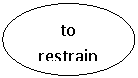
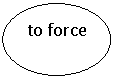
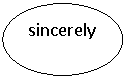
I. In this section you should use your dictionary. Match the words in the given list (1-22) with their equivalents in the bubbles (a - aс.). Find out as many words as you can.
1. to resist; 2. to free; 3. awkward; 4. a caution; 5. a reluctance;
6. to venture; 7. fairly; 8. aloof; 9. to constrain; 10. a lack;
11. implicated; 12. to elaborate; 13. a trait; 14. extraordinary;
15. implicate; 16. admirable; 17. a fascination; 18. feasible;
20. stubborn; 21. a reluct; 21. grandiose; 22. to reinforce;
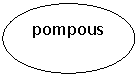
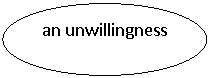

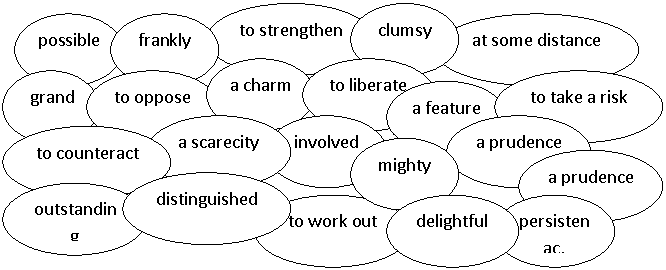
П. Substitute the words in italics for the most suitable ones from the list of the equivalents mentioned above.
1. The French value independence and resist the compromises to preserve the autonomy of the individual that is why they dislike face-to-face discussions during negotiations.
2. This also frees the French from the awkward necessity of adopting the role of а demandeur.
3. The French are known for caution, conservatism, reluctance venture into the unknown or the untried as well as to be unwilling to take risks.
4. Such pattern tends to produce fairly rigid, hierarchically-based systems in which authority is exercised from а comfortable distance and is kept abstract, impersonal, and aloof.
5. Thus, everyone is constrained by elaborate rules.
6. The result of this trait is that the French have developed an excessive respect for legal documents and concepts, while their system of statute law encourages a lack of flexibility.
7. On the other hand, the French have an extraordinary capacity for analysis and grasping the principle implicated in a problem.
8. Such admirable intellectual traits of the French present some inconveniences, a tendency to a fascination with grandiose, elegant schemes rather than feasible projects.
9. The French can often seem especially stubborn and blind to what others see as reality because of their dependence on a formal logic.
10. The French do engage in negotiation with much reluctance and skepticism about the process itself.
11. The psychological resistance to compromise is reinforced by a certain sense of intellectual and logical superiority in French negotiators.
EXERCISE 2. Polish up your comprehension.
Complete the sentences of the text using the words in the box.
1. distinguish - отличаться
2. to fallback - отступать
3. to be (act) on the offensive - наступать
4. acknowledge - осознавать, признавать
5. assert - утверждать, заявлять
6. preconceived - заранее приготовленные (придуманные)
No Fallback Position in Negotiations
In terms of the actual … process itself, the French seem to employ а number of tactics that distinguish them from American or most Western negotiators. For example, whereas U. S. teams usually develop an opening position with а number of intermediate fa11-back stages before reaching the bottom line, the French typically come to … … with an elaborate, well-prepared opening position but have few intermediate fallbacks before their minimum bargaining point is …. To American negotiators, the French seem to be … because they cannot or will not compromise their maximalist proposal. It makes … … if the French are on the offensive, actively seeking an agreement. Then they are more likely to have compromises ready. However, if they are on the defensive, coping with demands of others, they … … … more rigid. For their part, the French acknowledge that t0hey often enter negotiations with no fall-back position and assert that this is usually because their basic policy is а carefully-created and correct one which they can defend better if they do not have preconceived concessions in mind. Their advantage … … … is that а certain virtuosity allows them to work with а particular bargaining situation and develop alternatives … … … of the negotiation itself.
1. in this situation; 2. some difference; 3. bargaining; 4. in the course; 5. а negotiation; 6. tend to be; 7. inflexible; 8. reached; |
EXERCISE 3. Practice your abilities in discussion.
Read the article to find out the main ideas. Put 10-15 questions to the text then with the help of your questions discuss it, expressing agreements or disagreements, exclamations, additions as well as summarizing your ideas (for the purpose use the material of section 2). Then retell it.

|
Из за большого объема этот материал размещен на нескольких страницах:
1 2 3 4 5 6 7 8 9 10 11 12 13 |
