


Партнерка на США и Канаду по недвижимости, выплаты в крипто
- 30% recurring commission
- Выплаты в USDT
- Вывод каждую неделю
- Комиссия до 5 лет за каждого referral
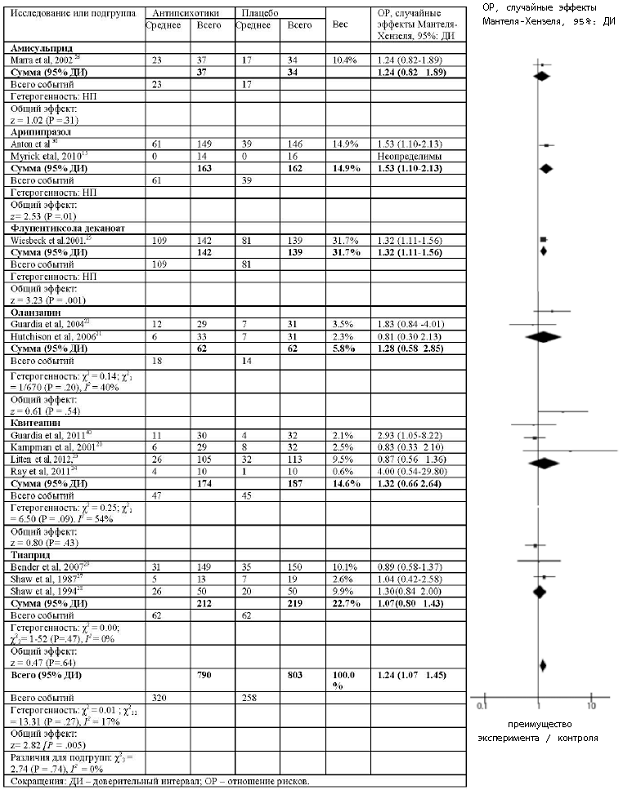
Рисунок 4. Форест график прерывания лечения (все причины)
СПИСОК ЛИТЕРАТУРЫ
1. Merikangas KR, McClair VL. Epidemiology of substance use disorders.
Hum Genet. 2012; 131 (6):779–789. doi:10.7/s439-2680PubMed
2. Swendsen J, Burstein M, Case B, et al. Use and abuse of alcohol and illicit
drugs in US adolescents: results of the National Comorbidity Survey-
Adolescent Supplement. Arch Gen Psychiatry. 2012; 69(4):390–398. doi:1
3. Centers for Disease Control and Prevention (CDC). Alcohol-attributable
deaths and years of potential life lost—United States, 2001. MMWR Morb
Mortal Wkly Rep. 2004; 53(37):866–870.PubMed
4. Mokdad AH, Marks JS, Stroup DF, et al. Actual causes of death in the United
States, 2000. JAMA. 2004; 291(10):1238–1245. doi:10./jam2938PubMed
5. Rivara FP, Garrison MM, Ebel B, et al. Mortality attributable to harmful
drinking in the United States, 2000. J Stud Alcohol. 2004; 65(4):530–536.PubMed
6. Holder HD, Gruenewald PJ, Ponicki WR, et al. Effect of community-based
interventions on high-risk drinking and alcohol-related injuries. JAMA.
2000; 284(18):2341–2347. doi:10./jam2843PubMed
7. Treno AJ, Parker RN, Holder HD. Understanding US alcohol consumption
with social and economic factors: a multivariate time series analysis,
1950–1986. J Stud Alcohol. 1993; 54(2):146–156.PubMed
8. Johnson BA. Update on neuropharmacological treatments for alcoholism:
scientific basis and clinical findings. Biochem Pharmacol. 2008;75(1):34–56. doi
9. Everitt BJ, Hutcheson DM, Ersche KD, et al. The orbital prefrontal cortex
and drug addiction in laboratory animals and humans. Ann N Y Acad Sci.
2007; 1121(1):576–597. doi:10.96/anls42PubMed
10. Hutchison KE. Alcohol dependence: neuroimaging and the development
of translational phenotypes. Alcohol Clin Exp Res. 2008;32(7):1111–1112. doi:
11. Perra S, Clements MA, Bernier BE, et al. In vivo ethanol experience increases
D2 autoinhibition in the ventral tegmental area. Neuropsychopharmacology.
2011; 36(5):993–1002. doi:10.38/np27PubMed
12. Goldstein RZ, Tomasi D, Alia-Klein N, et al. Dopaminergic response to drug
words in cocaine addiction. J Neurosci. 2009; 29(18):6001–6006. doi:10.523/J
13. Koob GF, Volkow ND. Neurocircuitry of addiction.
Neuropsychopharmacology. 2010; 35(1):217–238. doi:10.38/np29PubMed
14. Koob GF, Kenneth Lloyd G, Mason BJ. Development of pharmacotherapies
for drug addiction: a Rosetta stone approach. Nat Rev Drug Discov.
2009; 8(6):500–515. doi:10.38/nr2PubMed
15. Myrick H, Li X, Randall PK, et al. The effect of aripiprazole on cue-induced
brain activation and drinking parameters in alcoholics. J Clin
Psychopharmacol. 2010;30(4):365–372. doi:10.97/JCPb3e85cfuMd
16. Martinez D, Gil R, Slifstein M, et al. Alcohol dependence is associated with
blunted dopamine transmission in the ventral striatum. Biol Psychiatry.
2005; 58(10):779–786. doi:10.6/jbpsych2540PuMed
17. Depping AM, Komossa K, Kissling W, et al. Second-generation antipsychotics
for anxiety disorders. Cochrane Database Syst Rev. 2010; (12):CD008120. PubMed
18. Komossa K, Depping AM, Meyer M, et al. Second-generation antipsychotics
for obsessive compulsive disorder. Cochrane Database Syst Rev. 2010; (12):
CD008141. PubMed
19. Komossa K, Depping AM, Gaudchau A, et al. Second-generation
antipsychotics for major depressive disorder and dysthymia. Cochrane
Database Syst Rev. 2010; (12):CD008121. PubMed
20. Kampman KM, Pettinati HM, Lynch KG, et al. A double-blind, placebo-
controlled pilot trial of quetiapine for the treatment of type A and type B
alcoholism. J Clin Psychopharmacol. 2007; 27(4):344–351. doi0.97/JCPb3e8ca65uMd
21. Hutchison KE, Ray L, Sandman E, et al. The effect of olanzapine on craving
and alcohol consumption. Neuropsychopharmacology. 2006; 31(6):1310–1317. PubMed
22. Guardia J, Segura L, Gonzalvo B, et al. A double-blind, placebo-controlled
study of olanzapine in the treatment of alcohol-dependence disorder. Alcohol
Clin Exp Res. 2004; 28(5):736–745. doi:10.97/ALC253.068F7PubMed
23. Litten RZ, Fertig JB, Falk DE, et al; NCIG 001 Study Group. A double-blind,
placebo-controlled trial to assess the efficacy of quetiapine fumarate XR in
very heavy-drinking alcohol-dependent patients. Alcohol Clin Exp Res.
2012; 36(3):406–416. doi:10./j53-2701649.xPubMed
24. Ray LA, Chin PF, Heydari A, et al. A human laboratory study of the
effects of quetiapine on subjective intoxication and alcohol craving.
Psychopharmacology (Berl). 2011; 217(3):341–351. doi:10.7/s23-8PubMed
25. Wiesbeck GA, Weijers HG, Lesch OM, et al. Flupenthixol decanoate and
relapse prevention in alcoholics: results from a placebo-controlled study.
Alcohol Alcohol. 2001; 36(4):329–334. doi:10.93/alc642PubMed
26. Marra D, Warot D, Berlin I, et al. Amisulpride does not prevent relapse
in primary alcohol dependence: results of a pilot randomized, placebo-
controlled trial. Alcohol Clin Exp Res. 2002; 26(10):1545–1552. doi:10./j53-27
27. Shaw GK, Majumdar SK, Waller S, et al. Tiapride in the long-term
management of alcoholics of anxious or depressive temperament.
Br J Psychiatry. 1987; 150(2):164–168. doi:10.92/bjp564PuMed
28. Shaw GK, Waller S, Majumdar SK, et al. Tiapride in the prevention of relapse
in recently detoxified alcoholics. Br J Psychiatry. 1994; 165(4):515–523. doi:10
29. Bender S, Scherbaum N, Soyka M, et al. The efficacy of the dopamine D2/D3
antagonist tiapride in maintaining abstinence: a randomized, double-blind,
placebo-controlled trial in 299 alcohol-dependent patients. Int J
Neuropsychopharmacol. 2007; 10(5):653–660. doi:10.7/S4651PubMed
30. Anton RF, Kranzler H, Breder C, et al. A randomized, multicenter, double-
blind, placebo-controlled study of the efficacy and safety of aripiprazole for
the treatment of alcohol dependence. J Clin Psychopharmacol. 2008; 28(1):
5–12. doi:10.97/jcpb3e862fd4PuM
31. Cohn LD, Becker BJ. How meta-analysis increases statistical power. Psychol
Methods. 2003; 8(3):243–253. doi:10.37/82-9X4PubMed
32. Correll CU, Sheridan EM, DelBello MP. Antipsychotic and mood stabilizer
efficacy and tolerability in pediatric and adult patients with bipolar I mania:
a comparative analysis of acute, randomized, placebo-controlled trials.
Bipolar Disord. 2010; 12(2):116–141. doi:10./j39-568207.xPubMed
33. Farahani A, Correll CU. Are antipsychotics or antidepressants needed
for psychotic depression? a systematic review and meta-analysis of trials
comparing antidepressant or antipsychotic monotherapy with combination
treatment. J Clin Psychiatry. 2012; 73(4):486–496. doi:10.48/JCPr732ubMed
34. Nelson JC, Papakostas GI. Atypical antipsychotic augmentation in major
depressive disorder: a meta-analysis of placebo-controlled randomized trials.
Am J Psychiatry. 2009; 166(9):980–991. doi:10.76/apj29301PubMed
35. Leucht S, Tardy M, Komossa K, et al. Antipsychotic drugs versus placebo for
relapse prevention in schizophrenia: a systematic review and meta-analysis.
Lancet. 2012; 379(9831):2063–2071. doi:10.6/S4-73(2)9PubMed
36. Anton RF, Moak DH, Latham P. The Obsessive Compulsive Drinking Scale:
a self-rated instrument for the quantification of thoughts about alcohol and
drinking behavior. Alcohol Clin Exp Res. 1995; 19 (1):92–99. doi:10./j53-279t
37. Flannery BA, Volpicelli JR, Pettinati HM. Psychometric properties of the
Penn Alcohol Craving Scale. Alcohol Clin Exp Res. 1999; 23(8):1289–1295. do
38. DerSimonian R, Laird N. Meta-analysis in clinical trials. Control Clin Trials.
1986; 7(3):177–188. doi:10.6/97-245(8) PubMed
39. Higgins JP, Thompson SG, Deeks JJ, et al. Measuring inconsistency in meta-
analyses. BMJ. 2003; 327 (7414): 557–560. doi:10.36/bmj2745PuMed
40. Guardia J, Roncero C, Galan J, et al. A double-blind, placebo-controlled,
randomized pilot study comparing quetiapine with placebo, associated to
naltrexone, in the treatment of alcohol-dependent patients. Addict Behav.
2011; 36(3):265–269. doi:10.6/jabeh2 0PuMd
41. Baltieri DA, Daró FR, Ribeiro PL, et al. The role of alcoholic beverage
preference in the severity of alcohol dependence and adherence to the
treatment. Alcohol. 2009; 43 (3):185–195. doi:10.6/jalch2901PubMed
42. Velligan DI, Weiden PJ, Sajatovic M, et al; Expert Consensus Panel on
Adherence Problem in Serious and Persistent Mental Illness. The expert consensus guideline series: adherence problem in serious and persistent mental illness. / Clin Psychiatry, 2009; 70 (suppl 4) 1-46, quis 47-48.
43. Correll CU. From receptor pharmacology to improved outcomes:
individualising the selection, dosing, and switching of antipsychotics.
Eur Psychiatry. 2010; 25(suppl 2):S12–S21. doi:10.6/S924-38()710PubMed
44. Rubio G, Martínez I, Ponce G, et al. Long-acting injectable risperidone
compared with zuclopenthixol in the treatment of schizophrenia with
substance abuse comorbidity. Can J Psychiatry. 2006; 51(8):531–539. PubMed
45. Loebl T, Angarita GA, Pachas GN, et al. A randomized, double-blind,
placebo-controlled trial of long-acting risperidone in cocaine-dependent
men. J Clin Psychiatry. 2008; 69(3):480–486. doi:10.48/JCPv69n32ubMed
46. Stedman M, Pettinati HM, Brown ES, et al. A double-blind, placebo-
controlled study with quetiapine as adjunct therapy with lithium or
divalproex in bipolar I patients with coexisting alcohol dependence. Alcohol
Clin Exp Res. 2010; 34(10):1822–1831. doi:10./j53-2701.xPubMed
47. Brown ES, Garza M, Carmody TJ. A randomized, double-blind, placebo-
controlled add-on trial of quetiapine in outpatients with bipolar disorder
and alcohol use disorders. J Clin Psychiatry. 2008; 69(5):701–705. doi:10.48/J
48. Green AI, Burgess ES, Dawson R, et al. Alcohol and cannabis use in
schizophrenia: effects of clozapine vs risperidone. Schizophr Res. 2003; 60(1):
81–85. doi:10.6/S92-4()31PubMed
49. Brunette MF, Drake RE, Xie H, et al. Clozapine use and relapses of substance
use disorder among patients with co-occurring schizophrenia and substance
use disorders. Schizophr Bull. 2006; 32(4):637–643. doi:10.93/schbul PMed
50. Drake RE, Xie H, McHugo GJ, et al. The effects of clozapine on alcohol and
drug use disorders among patients with schizophrenia. Schizophr Bull. 2000;
26(2):441–449. doi:10.93/xfrjunalschb.0346PMed
51. Green AI, Noordsy DL, Brunette MF, et bstance abuse and
schizophrenia: pharmacotherapeutic intervention. J Subst Abuse Treat.
2008; 34(1):61–71. doi:10.6/jsat278PubMed
52. Falk D, Wang XQ, Liu L, et al. Percentage of subjects with no heavy drinking
days: evaluation as an efficacy endpoint for alcohol clinical trials. Alcohol Clin
Exp Res. 2010; 34(12):2022–2034. doi:10./j53-27019.xPubMed
53. Schuckit MA, Tipp JE, Bucholz KK, et al. The life-time rates of three major
mood disorders and four major anxiety disorders in alcoholics and controls.
Addiction. 1997; 92(10):1289–1304.

|
Из за большого объема этот материал размещен на нескольких страницах:
1 2 3 4 5 6 7 |
