


Партнерка на США и Канаду по недвижимости, выплаты в крипто
- 30% recurring commission
- Выплаты в USDT
- Вывод каждую неделю
- Комиссия до 5 лет за каждого referral
Dialogue 2
Passenger – Is there поезд дальнего следования going directly to Bangor, Maine?
Clerk – Yes, there is one train. It отправляется at 1.20 in the morning. Of course you can сесть в поезд any time after eleven o’clock at night and go to bed.
Passenger – I suppose it is необходимо купить билет заранее.
Clerk – It is customary to buy a ticket at least a day in advance. Sometimes, over holidays or busy seasons, even a week in advance is safer. Плата за проезд to Bangor amounts to about twenty dollars. Нижняя полка to Bangor will cost you about two dollars more than верхняя полка.
Passenger – Is there any other difference?
Clerk – Well, in the morning, if you are on нижняя полка you get up, and if you are on верхняя полка you get down. That is one of my little jokes.
Passenger – Большое спасибо. You have been very helpful.
Clerk – Не за что. That is what we are here for.
Dialogue 3
Clerk – Добрый день, чем я могу Вам помочь?
Passenger – Good morning, I’d like билет на скорый поезд до Glasgow.
Clerk – Which train?
Passenger – The one leaving в пять тридцать.
Clerk – Билет “туда” или “туда и обратно”?
Passenger – Только туда, пожалуйста.
Clerk – Would you like первый или второй класс?
Dialogue 4
[Ted and Ben, who are about 14, have been allowed by their parents to поехать за
город на поезде for a day. They make themselves comfortable in an empty купе. Suddenly Ben sees Ted’s билет lying on the seat. He moves it up, берёт его и кладёт в карман. He says nothing to Ted.]
Ted – Где мой билет? I had it a minute ago.
Ben – You’d better поискать его. Контролёр will be here через минуту. If you can’tпоказать him your ticket, he’ll make you платить double.
Ted – But у меня нет enough money. Что же мне делать?
[Ted gets up, turns out his pockets, ищет билет на полу, but all this doesn’t help.]
Ben – У меня есть хорошая идея.
Ted – What is it?
Ben – You get under the seat till he has gone. I’ll sit over you and hide you with my legs. Он не заметит тебя. As soon as he has gone, you can come out.
Ted – He’ll be here any minute. Мне залазить под кресло right now?
Ben – Yes, you’d better. And don’t move while он в вагоне.
[Ted gets under the seat. Контролёр comes along. Ben hands him two tickets.]
Insp. – Чей это билет?
Ben – Oh, that’s my friend’s.
Insp. – Where has he gone?
Ben – Nowhere. Он под креслом.
Insp. – И что он там делает?
Ben – Oh, ему нравится путешествовать под креслом, aren’t you, Ted?
Ted [getting out from under the seat] – All right! I’ll pay you back for this. Just you подожди.
2. Измените 4 диалог, на историю используя следующие слова и выражения.
to buy tickets for the commuter train; to get on the train; to make oneself comfortable; to play a trick; to put the ticket in the pocket; to look for the ticket; to have a good idea; to get under the seat; to enter the compartment; to hand the inspector two tickets; to be fond of traveling under the seat; to pay Ben back for this trick.
3. Назовите инструменты.
Example: (a) – knife
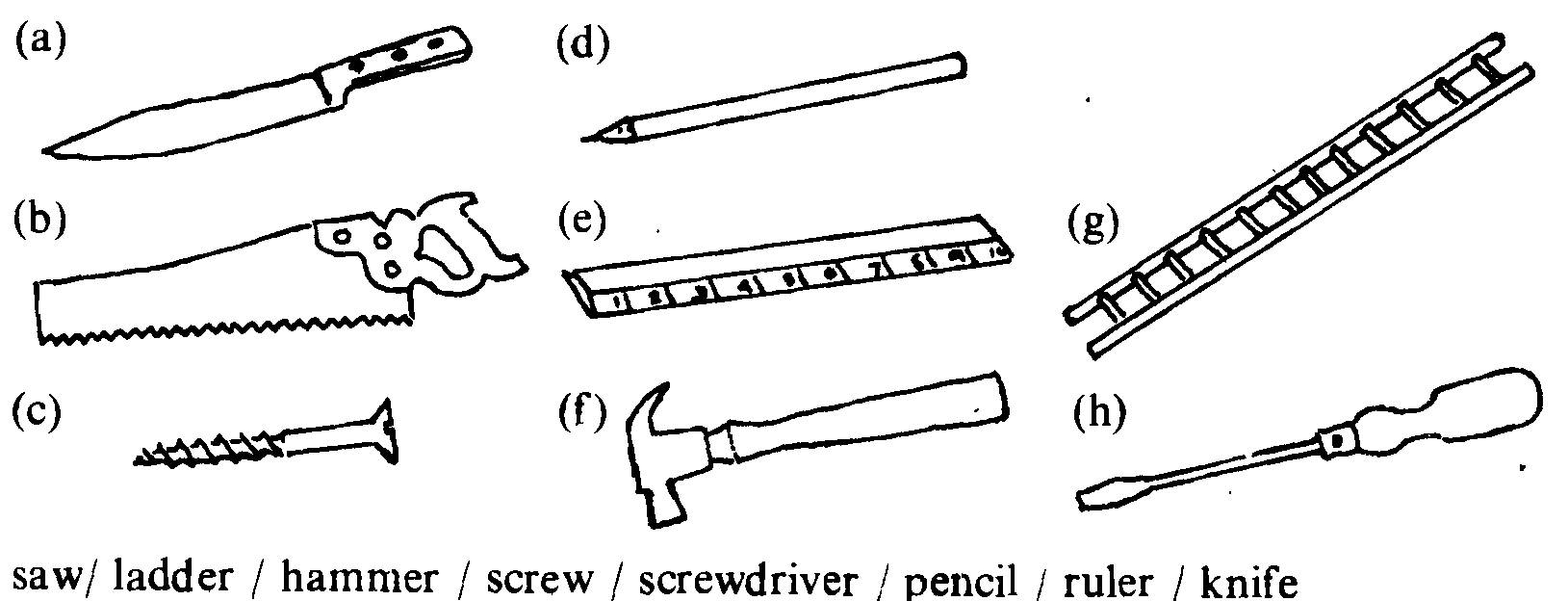
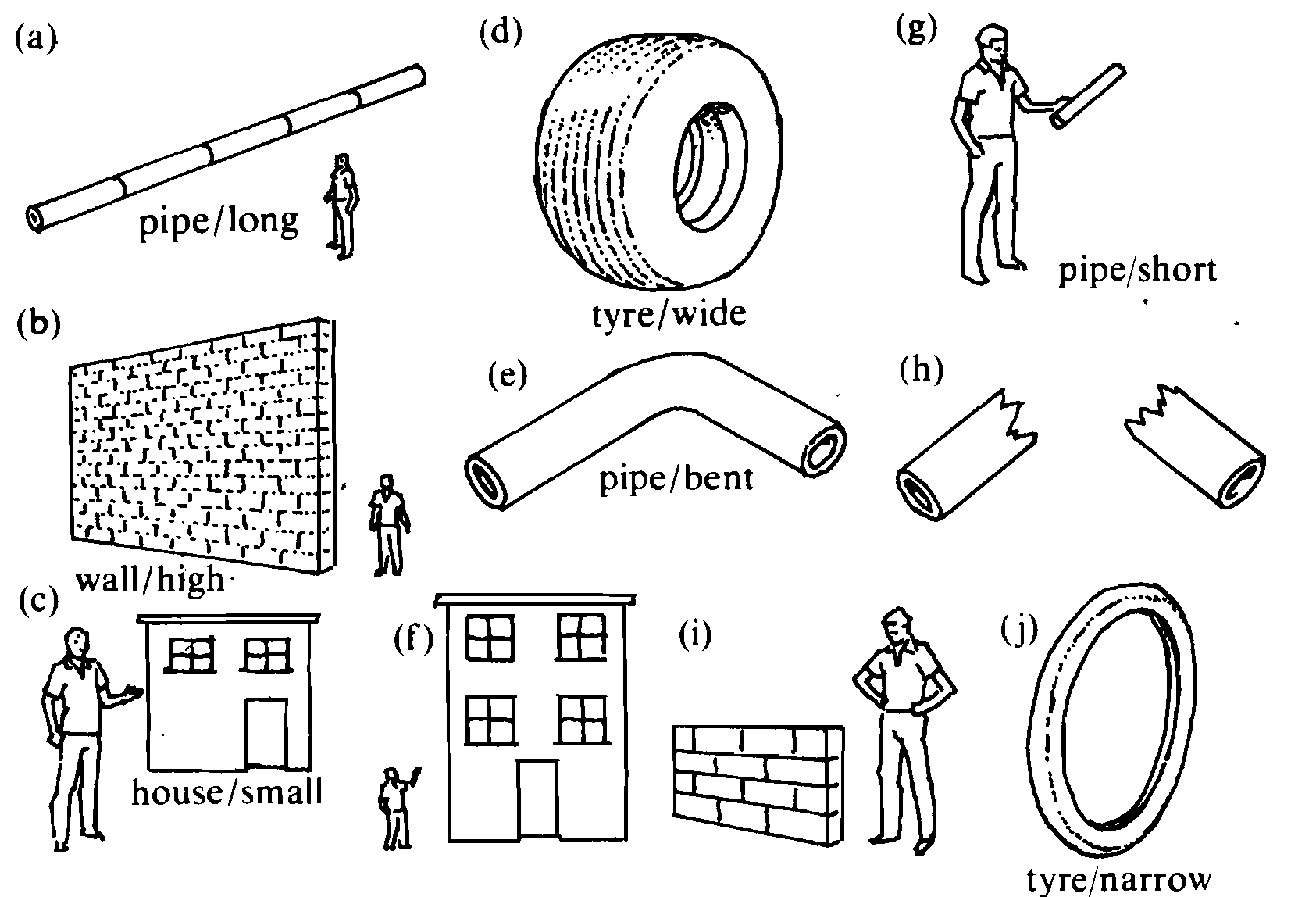
4. Составьте предложения.
Example: (a) The pipe is long.
5. Обратите внимание на –ing forms. Переведите предложение.
1. Tom’s coming back was unexpected. 2. Do you mind my opening the window? 3. I am tired of being told lies. 4. Thank you for supporting me at the meeting. 5. On entering the room he was surprised to see many people here. 6. The book is worth reading. 7. It was no use crying. 8. I am surprised at being given such an easy task. 9. There is no chance of catching the train. 10. Having answered all the questions he got quiet. 11. Hearing the news, the girl smiled pleasantly. 12. Being typed in a hurry, the article contained many mistakes. 13. The promising help wouldn’t come. 14. The girl speaking over the telephone put down the receiver and turned. 15. The children were amusing, playing with a dog. 16. Scuba diving is thrilling to many people.17. I am thrilled by Frankenstein movies. They are horrifying. 18. Generally speaking, I am not an early riser. 19. She was kept waiting for a long time. 20. Did you see her taking the money?
ЗАДАНИЕ № 9
Read and translate this:
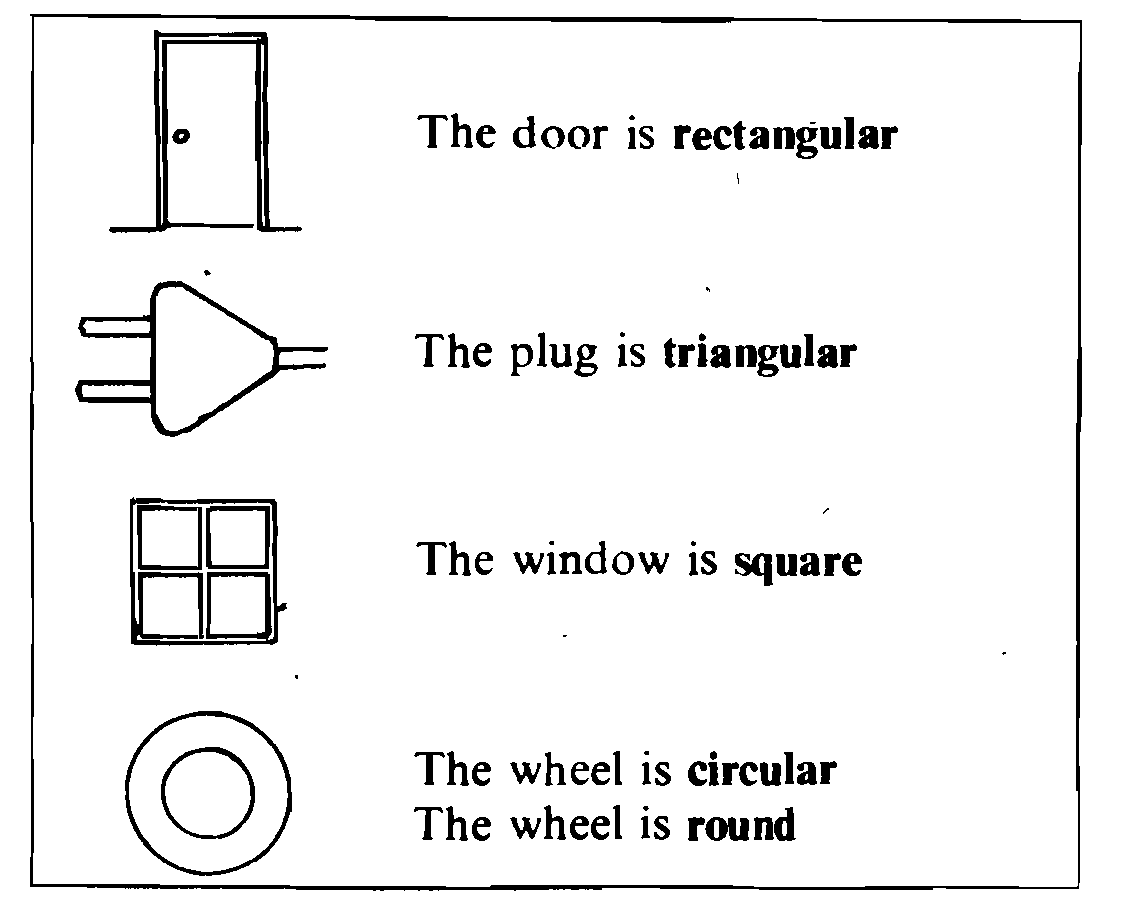
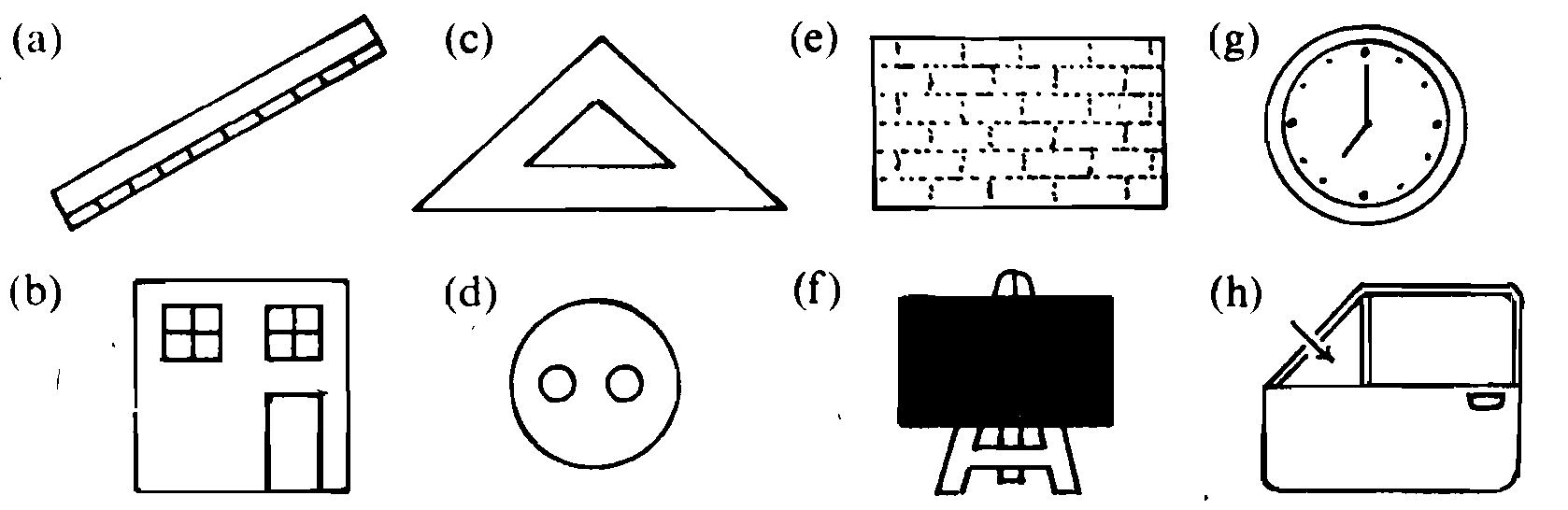
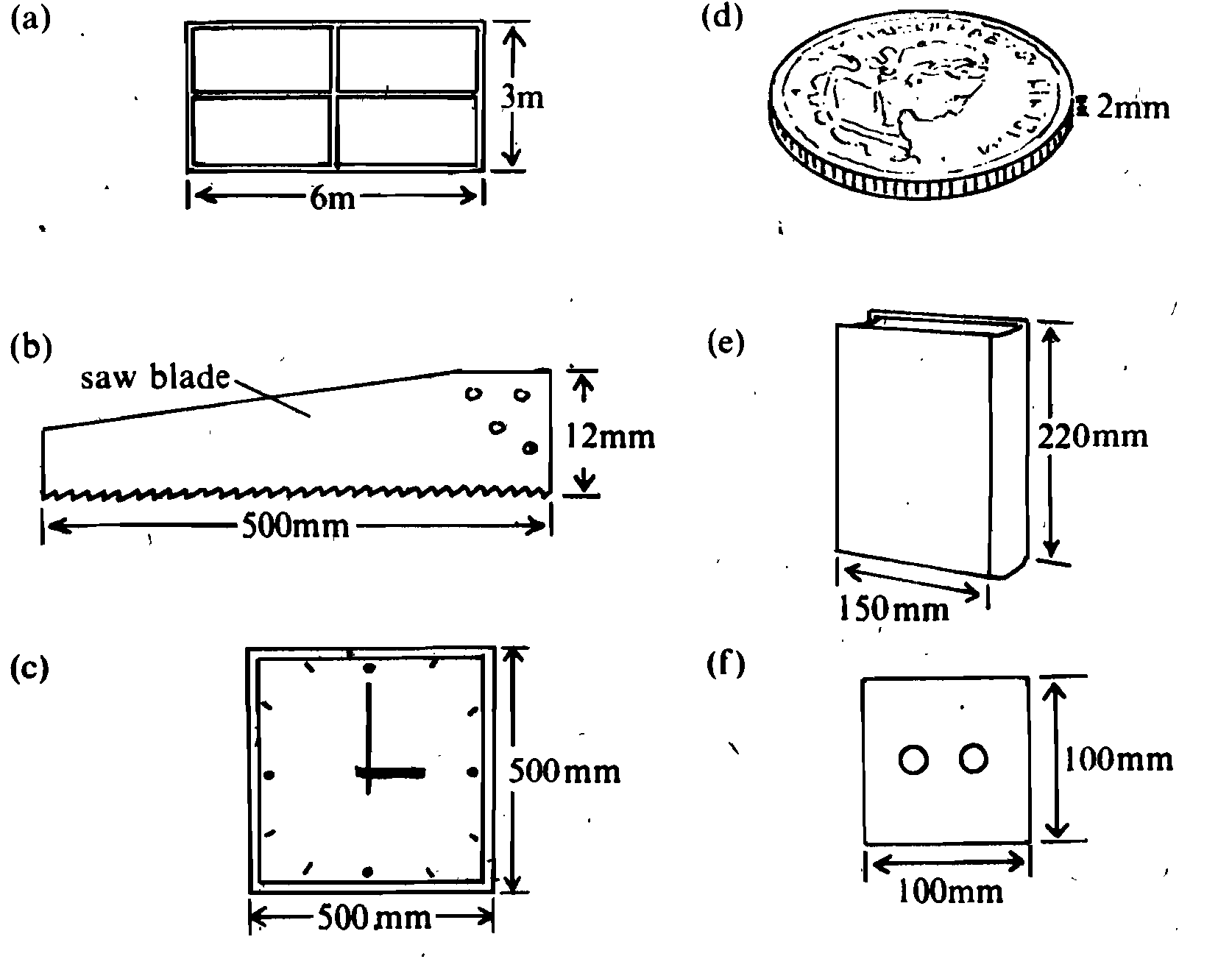
Make sentences.
Example: (a) This ruler is rectangular.
Make sentences:
Example: (a) These are pliers. This is a pair of pliers.
(a) pliers
(b) pincers
(c) scissors
(d) goggles
(e) glasses
(f) spanners
(g) screwdrivers
(h) chisels
(i) rulers
(j) tools
(k) matches
A) nails
(m) screws
(n) nuts and bolts
Describe these objects:
Example: (a) The window is rectangular. It is six meters long and three meters high.
5. Translate the sentences given below from Russian into English.
1) Машины заменили тяжёлый ручной труд строителей железных дорог. 2) Срок службы бетонных шпал – 40-50 лет. 3) Первые вагонеточные пути использовались на шахтах [a mine] для перевозки угля [coal]. 4) В России первое самоходное транспортное средство было изобретено в 18 веке. 5) Реактивные двигатели работают на керосине [kerosene]. 6) Первый паровоз отца и сына Черепановых имел четыре колеса, два из которых были ведущими. 7) Деревянные рельсы были недолговечными [short-lived], поэтому их сначала заменили чугунными, а затем стальными. 8) Существуют различные типы двигателей внутреннего сгорания: такие как дизельный, бензиновый, электрический, реактивный. 9) С изобретением парового двигателя начался новый этап [stage] в развитии транспорта. 10) Люди накопили большой опыт в сооружении мостов и виадуков.
6. Read and translate the text using a dictionary if necessary.
FROM THE HISTORY OF RAILWAY TRANSPORT
(Part 1)
The word ‘transport’ (or ‘transportation’) means to carry people or goods from place to place. Henry Ford, the American motor-car manufacturer, said that “transportation is civilization”. The history of transport is divided into two stages. The first stage is that in which all modes of transport depended directly on the power of men or animals, or on natural forces such as wind and current. The second stage began with the development of the steam engine. Do you know who invented it? It is sometimes said that James Watt got the idea for a steam engine while still a boy, watching steam lift the lid of his mother's tea kettle. The truth is that James Watt did not invent the steam engine; however, he made major improvements on the inefficient steam engine patented in 1705 by Thomas Newcomen, John Cawley, and Thomas Savery. James Watt installed his engine in a machine which was used at a large coal mine for pumping out the water. Soon this invention was widely used at nearly every large enterprise. The revolution in industry made by this machine was extremely great.
One of the first attempts to put a steam engine on wheels was made by Richard Trevithick, a British mining engineer. In 1804 he demonstrated the first successful railroad steam locomotive. His engine pulled a short train of cars uphill on a coal-mine railway in Wales. In the years after Trevithick’s locomotive, several others were built for use on various British coal-mine railways.
The world’s first common carrier railroad to use steam power was the Stockton-Darlington railway in England. It was designed and built by George Stephenson and opened for public service in 1825. On the day when it was opened, a man on a horse went in front of the engine and shouted that the train was coming. People on horses and in carriages were driving near the train. When they had gone for some time, Stephenson, who was running his locomotive, asked the horseman to go away. He put steam on and ran his locomotive at a speed of 12 miles per hour (about 20 km per hour). It was a success.
But the British Parliament did not want to construct railways. The members of the parliament did not believe that steam engines could run against a strong wind. Then Stephenson built a new locomotive and called it the Rocket. This locomotive was faster and stronger than the first one; it could draw a 13-ton train at an “unheard-of speed” of 29 miles per hour (46 km per hour). In 1829 the Liverpool-Manchester Railway was built, and the railway company offered a prize of Ј500 for the best steam loco. The prize was won by George Stephenson with his famous train. Though not the first such locomotive, it was the beginning of the effective use of steam power for passenger and freight transportation. At first many people were afraid of the railways; nevertheless in 1842 the steam-powered railways were already in wide use in Britain.
7. Answer the following questions.
1) What does the word ‘transport’ mean? 2) Who said that “transportation is civilization”?
3) How many stages is the history of transport divided into? 4) Did the second stage in the history of transport begin with the invention of the wheel? 5) Whom was the first steam engine invented by? 6) Did Thomas Savery improve the inefficient steam engine designed by Thomas Newcomen? 7) Where did James Watt install his engine? 8) Who made one of the first attempts to put a steam engine on wheels? 9) Where was the world’s first common carrier railroad to use steam power built? 10) Did Robert Stephenson design and built the first common carrier railway in Britain? 11) Why didn’t the British Parliament want to build railways? 12) When was the Liverpool-Manchester Railway put into operation? 13) What can you say about the locomotive called the Rocket?

|
Из за большого объема этот материал размещен на нескольких страницах:
1 2 3 4 5 6 7 8 |
