


Партнерка на США и Канаду по недвижимости, выплаты в крипто
- 30% recurring commission
- Выплаты в USDT
- Вывод каждую неделю
- Комиссия до 5 лет за каждого referral
- You’re always borrowing money from me!
Исключительные случаи употребления
Present Simple и Present Continuous
а) Некоторые глаголы не употребляются в Present Continuous, потому что они сами по себе описывают длительный процесс. К ним относятся: be, believe, cost, depend, have, hear, know, matter, smell, suppose, taste, think, understand.
б) Некоторые глаголы могут употребляться в форме continuous, если подразумевается другой смысл данного глагола в предложении. Например:
- I’m thinking of buying a new car. (Consider) I’m tasting the soup, to check if it needs more salt. (Sample) I’m having breakfast. (Eat)
в) Бывают случаи, когда можно использовать как Present Simple, так и Present Continuous. Например:
- Do you sleep a lot? (Постоянная привычка) Are you sleeping enough? (В данный момент)
В одной и той же ситуации можно задать оба эти вопроса.
Present Perfect Simple, Present Perfect Continuous
1. Незавершенность и соотнесенность с моментом речи передается продолженным совершенным временем. Сравните:
· He has eaten my chocolates. - Он съел мои шоколадные конфеты.
· He has been eating my chocolates. - Он ест мои шоколадные конфеты (т. е. он их ел и продолжает есть их; конфеты еще есть.)
Продолженное совершенное время (The Present Perfect Continuous Tense) может выражать действия, которые только что произошли. В этом значении в предложении часто используется наречие just:
· It has rained a great deal since you were here. - С тех пор как ты был здесь, идут (шли) сильные дожди.
· Oh look! It has just been raining. - О, посмотри! Только что (про)шел дождь.
2. В английском языке есть глаголы, обозначающие действия недлительные, краткие, быстро происходящие: cut, die, start, begin, finish, stop, find, lose, break.
Эти глаголы употребляются в настоящем совершенном времени (The Present Perfect Tense). Сравните:
· I've cut my finger. - Я порезал палец.
· I've been cutting wood. - Я рублю дрова.
· To cut wood - может иметь длительный характер.
Трудно, однако, представить, что действие to cut a finger может иметь длительный характер.
3. Если дополнение глагола выражает определенное количество или число, употребляется только настоящее совершенное время, так как выражает идею завершенности действия, а не настоящее совершенное продолженное время.
· I've eaten five pieces of toast this morning. - Сегодня утром я съел пять тостов.
Типичные ошибки
· I've been eating five pieces of toast this morning.
· I've been cutting down trees this morning. I've cut down ten.
· She's been smoking ever since she arrived. She's had eight cigarettes already.
Правильные варианты:
· I ate five pieces of toast this morning.
· I was cutting down trees this morning. I've cut down ten.
· She'd been smoking ever since she arrived. She'd had eight cigarettes already.
4. The Present Perfect Continuous (Progressive) Tense используется для передачи действия в ситуациях менее постоянных или менее длительных по времени, чем The Present Perfect. The Present Perfect Tense обозначает более постоянные действия или ситуации:
· I've been living in Sally's flat for the last month. - Последний месяц я живу в квартире Сэлли.
· My parents have lived in Bristol all their lives. - Мои родители всю свою жизнь живут в Бристоле.
· That man's been standing on the comer all day. - Этот человек стоит на углу весь день.
· The castle has stood above the town for nine hundred years. - Замок возвышается над городом уже 900 лет.
· She's been lying in bed all day. - Она лежит в постели целый день.
· For centuries the village of Little Barbie has lain undisturbed beneath the brooding shadow of the Black Hills. - Веками деревня Литтл Барбл лежит непотревоженной в тени Блэк Хилз.
· I haven't been working very well recently. - В последнее время я не очень хорошо работаю.
· He hasn't worked for years. - Он не работает уже годы.
Упражнения с ответами
Упражнение 4.1
Поставьте глаголы в скобках в правильную форму: Present Continuous или Present Perfect Continuous:
1) Maria (learn) English for two years.
2) Hello, Tom. I (look) for you all morning. Where have you been?
3) Why (you/look) at me like that? Stop it!
4) We always go to Ireland for our holidays. We (go) there for years.
5) I (think) about what you said and I've decided to take your advice.
6) "Is Ann on holiday this week?" "No, she (work).
7) Sarah is very tired. She (work) very hard recently.
Упражнения 4.2
Выберете правильный вариант Present Perfect or Present Perfect Continuous or Present Continuous:
1) Have you read/Have you been reading that newspaper yet? Can I have it?
2) How long have you been cleaning/have you cleaned that car? Haven't you finished/ Have you been finishing it yet?
3) How long have you known/have you been knowing Rosa?
4) He is living/has been living in Manchester since 1990.
5) She has liked/has been liking you since she saw you at that party.
6) I'm sorry I'm late. How long have you been waiting/are you waiting?
7) I've played/I've been playing tennis twice this week.
8) It's been raining/is raining here all morning. It started at eight.
Упражнение 4.3
Составьте предложения в Present Perfect и Preset Perfect Continuous. Например:
Tom is reading a book. He has started two hours ago and he is on page 53.
(he/read/for two hours) He has been reading for two hours.
(he/read/53 pages so far) He has read 53 pages so far. (so far - до сих пор, пока ещё, пока)
a. Linda is from Australia. Now she is traveling round Europe. She began her tour three months ago.
1) (she/travel/around Europe for three months)
2) (she/visit/six countries so far)
b. Jimmy is a tennis champion. He began playing tennis when he was 11 years old. Now he has just won the national championship for the fourth time.
1) (he/play tennis/since he was 11)
2) (he/win/ the national championship four times)
c. Bill and Andy make films. They start making films together when they left college.
1) (they/make/films since they left college)
2) (they/make/ten films since they left college)
Упражнение 4.4
Раскройте скобки, поставьте глагол в правильную форму:
I (lost) have lost my key. Can you help me look for it?
You look tired. Have you been working (you/work) hard?
1) Look! Somebody (break) that window.
2) I (read) the book you gave me but I (not/finished) it yet.
3) 'Sorry I'm late.' 'That's all right. I (not/wait) long.
4) Hello! I (clean) the windows. So far I (clean) five of them and there are two more to do.
5) There is a strange smell here (you/cook) something?
6) My brother is an actor. He (appear) in several films.
Контрольные упражнения и тесты
Упражнение 4.5
Раскройте скобки. Поставьте глагол в нужное время:
1) Why are you sad, Charlie? — I (lose) my book.
I (look) for it for two hours and I can't find it.
2) The bird (sing) behind my window all the day long.
3) Do you like Mary's roses? She (grow) them three years. She (make)a wonderful garden.
4) You (give)food to the cat yet?
5) What a wonderful bird! Is it your new pet? You (catch) it? - No, it's my friend's. I (look) after it since my friend went to see her grandparents.
6) Tom is tired. He (build) a nestling box since morning. — He (finish) it?
7) Ann has a wonderful voice. — Oh, yes. Today she (sing) since eight in the morning. In fact, she (sing) for three hours. You ever (be) to her concert?
Упражнение 4.6
Переведите предложения на английский язык:
1) Особняк стоял (и продолжает стоять) на этой точке уже как 200 лет.
2) Центр этого острова не был заселен в течение 50 лет.
3) Я голодный. Я ничего не ел с завтрака.
4) Мы не виделись в течении долгого времени.
Упражнение 4.7
Переведите на английский язык, употребляя глаголы в Present Perfect или Present Continuous:
1) Она все еще печатает свою статью.
2) Мы ее давно не видели.
3) Бабушка с дедушкой уже навестили своих внуков.
4) Сейчас они сидят в гостиной и разговаривают о своей поездке.
5) Ты когда-нибудь был в Африке?
6) Он все сделал для нее. Теперь он еще собирается купить ей дом.
7) Концерт еще не начался, и мы сидим в зале и обсуждаем свои проблемы.
8) Подожди меня! Я не взяла деньги.
9) Я только что позавтракал.
10) Он уже позавтракал.
Упражнение 4.8
Раскройте скобки, употребляя глаголы в Present Continuous или Present Simple:
1) I (not to know) what to give my brother for his birthday.
2) They (to want) publish this book in July?
3) She (to think) he (to drive) dangerously.
4) He (to understand) that he (to eat) noisily, but he always (to forget) about it.
5) Who that man (to be) who (to stand) in the doorway?
6) I (to have) no time now, I (to have) dinner.
7) Your family (to leave) St. Petersburg in summer? – Yes, we always (to go) to the seaside. We all (to like) the sea. Mother (to stay) with us to the end of August, but father (to return) much earlier.
8) Where Tom and Nick (to be) now? – They (to have) a smoke in the garden.
9) What you (to do) here now? – We (to listen) to tape recordings.
10) You (to want) to see my father? – Yes, I … .
11) Michael (to know) German rather well. He (to want) to know English, too, but he (to have) little time for it now.
12) What magazine you (to read)? – It (to be) a French magazine. There (to be) good articles on sports here. You (to be) interested in sports? – Yes, I … . but I (not to know) French.
13) We (to have) an English lesson now.
14) He (to feel) in a position to lend her money.
15) I (to think) she (not to feel) safe there.
16) You (to see) what I (to mean)?
17) You (to hear) what she (to say)?
18) He (not to feel) at liberty to tell you the truth.
19) Ron has got a new job. He (to earn) a fortune as a managing director. They (to think) he (to be) a bag of money.
Тест- минимум 4
1. Раскройте скобки, употребляя глаголы в одном из следующих времен: Present Indefinite, Present Continuous, Present Perfect, Present Perfect Continuous.
1) He (to run) now. He (to run) for ten minutes without any rest.
2) What they (to do) now? – They (to work) in the reading-room. They (to work) there for already three hours.
3) Where he (be) now? – He (to be) in the garden. He (to play) volley-ball with his friends. They (to play) since breakfast time.
4) I (to live) in St. Petersburg. I (to live) in St. Petersburg since 1990.
5) She already (to dо) homework for two hours; but she (not yet to do) half of it.
6) I (to wait) for you since two o'clock.
7) What you (to do)? - I (to read). I (to read) for already two hours. I already (to read) sixty pages.
8) This man (to be) a writer. He (to write) books. He (to write) books since he was a young man. He already (to write) eight books.
2. Переведите на английский язык:
1) Он опять смотрит ТВ. По-моему, он смотрит его с самого утра.
2) Кто взял мою ручку? Я ищу её уже несколько минут.
3) Мы уже уложили вещи. Теперь ждем такси.
4) Сколько времени она уже говорит по телефону?
5) Они женаты с 1992г.
6) Погода ужасная. Часто идут дожди.
Тест 4
1. Переведите предложение с русского на английский:
1) Где же ты был все это время? Мы искали тебя повсюду.
2) Мы работаем вместе уже пятнадцать лет и привыкли понимать друг друга.
3) Я слышал, вы многого добились в жизни.
4) Что с тобой случилось?
5) К пяти часам он нанес все необходимые визиты. Сейчас он отдыхает.
2. Употребите глагол в скобках в правильном времени (Present Perfect или Present Perfect Continuons):
1) I'm exhausted. I (work) all day, and I (not finish) yet.
2) I (visit) many countries in the last five years.
3) Someone (take) my books. I (look) for them for ages, but I can't find them anywhere.
4) I (shop) all morning, but I (not buy) anything yet. I haven't seen anything I've liked.
5) The best book I ever (read) is One Hundred Years of Solitude by Gabriel Marquez.
6) A You're filthy! What you (do)?
7) B I (work) in the garden. I (plant) all the vegetables for next year.
8) I (wait) for two hours, but nobody (arrive) yet.
3. Поставьте глагол в одном из следующих времен: Present Simple, Present Countinuous, Present Perfect Simple или Present Perfect Continuous.
1) A Oh dear! Look out of the window. It (rain).
2) B Oh no. I (not bring) my umbrella.
3) My uncle (know) everything about roses. He (grow) them for 35 years. Now he (try) to produce a blue one.
4) I (listen) to you for the past half an hour, but I'm afraid I (not understand) a word.
5) A What's the matter?
6) B I (read) in my room and the light isn't very good. I (have) a headache. It's really hurting.
7) A What you (do)?
8) B I (write) a letter.
9) A You (sit) at the desk for hours. Is it a difficult letter?
Раздел 5. The Past Continuous Tense.
Прошедшее продолженное (длительное) время
The Past Continuous Tense – прошедшее продолженное (длительное) время английского языка - обозначает действие, происходившее в определённый момент в прошлом, которое обозначено либо обстоятельством времени, либо другим действием в прошлом, как правило подчёркивается сам процесс действия, его продолжительность, например:
I was doing homework at 5 o'clock yesterday – Я делал домашние задание в 5 часов вчера
We were reading a book from 5 till 6 o’clock – Мы читали книгу с 5 до 6
When he came I was watching TV – Когда он зашел, я смотрел телевизор.
Глаголы в Past Continuous употребляются со следующими временными маркерами:
from 5 till 6 yesterday – с 5 до 6 вчера,
when I came – когда я пришел,
when I saw him – когда я увидел его,
on our way home – по пути домой,
all day (long) yesterday – все день вчера ,
still – все еще,
while – пока,
during the night – в течении ночи,
for 2 hours – в течение 2-х часов.
Образование форм:
The Past Continuous Tense образуется при помощи вспомогательного глагола to be в прошедшем времени(was, were) и первой формы смыслового глагола с окончанием - ing.
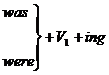 - утвердительное предложение
Утвердительное предложение
I/he/she/it | was | Working |
We/you/they | were |
Отрицательное предложение
I/he/she/it | was not = wasn’t | working |
We/you/they | were not = weren’t |
Вопросительное предложение
Where | was | I/he/she/it | working? |
were | We/you/they |
The Past Continuous употребляется:
ü Как и все продолженные времена, The Past Continuous (Progressive) Tense выражает незаконченное, длительное действие, происходившее в какой-то момент или период (в прошлом). Сравните следующие предложения:
· At 10.00 I had a bath. - В 10 я принял ванну.
· At 10.00 I was having a bath. - В 10 я принимал ванну.
Первое предложение означает, что действие началось в 10.00, а второе - что действие в 10.00 было в процессе осуществления. На рисунке это может быть представлено следующим образом: 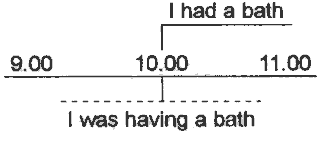
ü Для выражения длительного действия, которое началось до определенного момента в прошлом и продолжалось в указанный момент. Этот момент может быть определен:
· точным указанием времени:
What were you doing at 6 o'clock yesterday? - Что ты делал в 6 часов вечера? I was reading. - Я читал.
· другим кратким одновременным действием в прошлом, причем это действие всегда выражается глаголом в Past Indefinite (Simple):
I was reading when you came in.- Я читал, когда ты вошла.
· контекстом или ситуацией, т. е. точное указание времени или начало другого действия выражены в предыдущем предложении или ясны из ситуации:
I came to the station. My brother was waiting for me on the platform. - Я приехал на станцию. Мой брат ждал меня на платформе.
ü Для выражения действия, которое непрерывно продолжалось в течение указанного отрезка времени с целью придания эмоционального оттенка длительности действия. Обычно в предложениях с таким значением употребляются слова all day (night и др.) long, the whole morning (day, night и т. д.), all the time:
I was reading from 7 till 9 o'clock. - Я читал с 7 до 9 часов.
I was reading all day yesterday. - Я читал вчера весь день.
ü для выражения двух длительных действий, которые происходили одновременно в течение одинакового промежутка времени:
While he was speaking to the teacher I was waiting for him. - Пока он разговаривал с учителем, я ждал его.
ü используется для описаний:
This morning was really beautiful. The sun was shining, the birds were singing, and everyone in the street was smiling and saying hello to each other. - Утро было действительно прекрасным. Сияло солнце, птицы пели, люди на улице улыбались, приветствуя друг друга.
Упражнения с ответами
Упражнение 5.1
Поставьте глаголы в скобках в форму Past Continuous:
1) Jim was on his hands and knees on the floor. He (look) for his cigarette lighter.
2) When I arrived, everyone was sitting round the table with their mouths full. They (eat).
3) When I arrived, Ann (wait) for me.
Упражнение 5.2
Поставьте глаголы в скобках в Past Simple или Past Continuous:
Last night I (go) to the cinema. I (return) home at 22.00. While I (get out) of the car, I (see) two men. They (wear) masks. I (think) they (be) robbers. I (run) after them, but they (disappear) in the darkness. While they (run), they (drop) my wife’s necklace. It (not/ be) a big deal, but I (feel) better then.
Упражнение 5.3
Переведите предложения на английский язык:
1) Он ничего не видел, пока шло совещание.
2) Пока мы обсуждали эти проблемы, GM озвучивали скудные результаты.
3) Что ты делал в это время в прошлом месяце?
4) Он работал в ABC, когда произошло слияние.
5) Она читала газету, когда зазвонил телефон.
Контрольные упражнения и тесты
Упражнение 5.4
Прочитайте текст и проанализируйте употребление времен. Ответьте на вопросы после текста:
An Embarrassing Incident
One day last summer I was walking through the local park. It was a hot day and I was eating an ice cream. As I was walking past the boating lake, I saw my friends, Carol and Jim. They were taking their dog for a walk. When we met, we stopped for a chat. While we were talking, the dog suddenly jumped up and tried to get my ice cream. I pulled my hand away and unfortunately the ice-cream came out of the cone. Now there was a bald man behind me. The poor man wasn't doing any harm. He was just sitting on a bench and reading a newspaper. Well, when I pulled my hand away, the ice cream flew through the air and it landed on the man's head. I didn't know whether to laugh or to cry. When I looked at my friends, they weren't just laughing, they were in hysterics. But I was terribly embarrassed.
1) Where was the man walking one day?
2) What was he eating?
3) Who was taking a dog for a walk?
4) Was a bald man sitting on a bench or walking along the road?
5) The poor man wasn't doing any harm, was he?
6) I wonder why Carol and Jim were laughing?
Упражнение 5.5
Раскройте скобки, употребляя глаголы в форме Past Continuous Tense:
1) This morning was really beautiful. The sun (shine), the birds (sing) and everyone in the street (smile) and (say) hello to each other.
2) Mrs Patrik looked beautiful last night. She (wear) a lovely evening dress.
3) When we arrived, she (make) some coffee.
4) While I (have) a bath the telephone rang.
5) While we (walk) in the park it began to rain.
6) He wind (blow) and the rain (beat) down. John (stand) at the bus stop shivering. He (try) to imagine being at home sitting by a warm fire. Finally he saw the lights of the bus which (approach) from the distance.
7) At 3 o'clock yesterday a geometry lesson (go) on. The teacher (draw) diagrams on the blackboard but I (look) through the window and heard nothing. I (think) about the coming New Year's party.
8) She promised not to report me to the police but ten minutes later I saw that she (talk) with a policeman and from the expression on his face I understood that she (tell) him about me.
9) The dentist's waiting room was full of people. Some (read) magazines, others just (turn) over the pages. A woman (knit), a child (play) with a toy car. Everybody (wait) for the nurse to say "Next, please".
10) I lit the fire at 6.00 and it (burn) brightly when Jane came in.
11) - The house next to yours was full of policemen and police dogs yesterday. - What they (do)? - I heard that they (look) for drugs.
12) "What you (do) between 9.00 and 10.00 yesterday?" asked the detective. "I (clean) my house", said Mrs Jones. "I always clean my house at this time"
Упражнение 5.6
Переведите предложения на английский язык:
1) Что он делал в тот момент?
2) Шел дождь, когда я вышел из дому.
3) Несколько посетителей ждали заведующего. Секретарь говорил с кем-то по телефону, а бухгалтер диктовал письмо.
4) Он делал сайт летом.
5) Он писал письмо, когда я вошел в комнату.
Упражнение 5.7
Переведите предложения на русский язык:
1) It was raining when I went out into the street.
2) You were waiting for a bus.
3) I dropped my bag when I was running for a bus.
4) My car broke down when I was driving to work.
5) He broke a tooth when he was eating a sandwich.
Упражнение 5.8
Переведите предложения на английский язык:
1) Что вы ему говорили?
2) Я не работал вечером.
3) Он работал над книгой в то время.
4) Она сидела у окна несколько часов.
5) Они гости у родителей всё лето.
6) Когда поезд проезжал этот район, была ночь.
7) Пока директор вел беседу с представителями (representative) иностранных фирм (firm), секретарь читала утреннюю почту.
8) Том Сойер не мог играть со своими товарищами Он красил забор (fence).
9) Уже садилось солнце, когда я подъехал к Эдинбургу.
10) Он вел машину на большой скорости.
Тест - минимум 5
1. Переведите на английский язык:
1) Вчера весь вечер он читал свой любимый роман.
2) Они готовили ужин с 6 до 7 часов.
3) Пока они смотрели телевизор, я вышел.
4) Дети играли на улице, когда начался дождь.
5) Он ехал в течение двух часов.
2. Выберите правильный вариант:
1) The children were playing /was playing outside.
2) The dog were barking /was barking at us.
3) My teacher were explaining /was explaining the exercise to me.
4) I were listening / was listening to my mp3 player.
5) Those people were walking /was walking towards the library.
6) The cook were preparing/ was preparing a tasty meal.
7) I were trying / was trying to fix my computer.
8) My friend and I were playing / was playing basketball.
9) The police were chasing /was chasing the thief.
10) My sister and my brother were singing/was singing.
Тест 5
1.Составьте утвердительные предложения в Past Continuous:
1) he / the car / wash
2) she / home / go
3) they / not / the match / watch
4) you / in the shop / work
5) I / not / a magazine / read
2.Составьте вопросительные предложения в Past Continuous:
1) she / on a chair / sit
2) you / your bag / pack
3) his head / ache
4) we / tea / drink
5) you / the bike / repair
3.Поставьте вопросы к выделенным словам:
1) Jamie was doing a language course in London.
2) Andrew was carrying a heavy box.
3) The teacher was testing our English.
4) At six o'clock, we were having dinner.
5) Sally was hurrying to school because she was late.
4. Переведите на английский язык:
1) Я выглянул из окна. Много людей стояло около дома.
2) Когда я вошла в комнату, она плакала.
3) Мы катались на лыжах, хотя шел снег.
4) Вчера он был занят, он чинил (fix) телевизор.
5) Она готовилась к экзаменам всю неделю.
6) В одиннадцать часов он все еще работал.
Раздел 6. Сравнение The Past Simple Tense and The Past Continuous Tense.
Простое прошедшее и простое продолженное (длительное) время
а) Образование
Past Simple | Past Continuous |
неправильные глаголы: второй столбик таблицы неправильных глаголов I spoke правильные глаголы: глагол + ed I worked | прошедшая форма вспомогательного глагола 'be' + ing форма глагола I was speaking |
Исключения | |
Исключения при добавлении окончания 'ed' :
Пример: love - loved
Пример: admit - admitted
Пример: travel - travelled
Пример: worry - he worried | Исключения при добавлении окончания 'ing' :
Пример: come - coming
Пример: sit - sitting
Пример: travel - travelling
Пример: lie - lying |
б)Употребление
После другого действия или в тот же самый момент
Past Simple | Past Continuous |
последовательные действия She came home, switched on the computer and checked her e-mails. | действия в один и тот же момент времени Simon was playing on the computer while his brother was watchin TV. |
Новое действие или уже совершающееся
Если необходимо показать, что новое действие имеет место в середине другого, используются оба времени: Past Simple указывает на факт появления нового события и Past Continuous на факт его продолжительности
Past Simple | Past Continuous |
новое событие My mobile rang (when I was sitting in a meeting.) | событие уже в процессе совершения While I was sitting in a meeting, (my mobile suddenly rang.) |
Только упомянуть или обратить внимание на длительность действия

|
Из за большого объема этот материал размещен на нескольких страницах:
1 2 3 4 5 6 7 8 9 10 11 |
