


Партнерка на США и Канаду по недвижимости, выплаты в крипто
- 30% recurring commission
- Выплаты в USDT
- Вывод каждую неделю
- Комиссия до 5 лет за каждого referral
Приложение 1
|

.
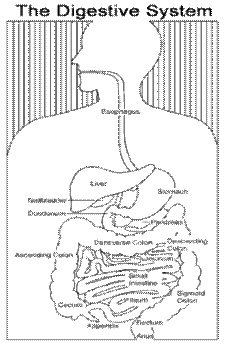
The gastrointestinal tract (GI tract), also called the digestive tract, alimentary canal, or gut, is the system of organs within multicellular animals that takes in food, digests it to extract energy and nutrients, and expels the remaining waste. The major functions of the GI tract are digestion and excretion. The human digestive system is a series of hollow organs joined in a long, twisting tube from the mouth to the anus. Inside this tube is a lining called the mucosa. In the mouth, stomach, and small intestine, the mucosa contains tiny glands that produce juices to help digest food. Two solid organs, the liver and the pancreas, produce digestive juices that reach the intestine through small tubes. In addition, parts of other organ systems (for instance, nerves and blood) play a major role in the digestive system.
Приложение 2
Gastritis
Acute gastritis. Acute gastritis (catarrhal gastritis) is due to a great variety of mon varieties in practice are the result of indiscretions in food or alcoholic drinks; but contaminated food, "chill" and scarlet fever in its acute stage may also induce very acute gastric catarrh. The inflammation may spread downwards to cause acute gastroenteritis. The cardinal symptom of acute gastritis is vomiting and when enteritis is superadded diarrhea also supervenes.
Chronic gastritis. Chronic gastritis, is regarded as an important and by no means infrequent disease. Accurate diagnosis is essential. It is important to treat this disease in as early a stage as possible, not only for the immediate disabilities which arise but still more for the serious consequences such as carcinoma, which may possibly result from it. Much of the treatment is essentially prophylactic and consists in the removal of such well-known causes as alcoholism, oral sepsis (especially pyorrhea) and deficient mastification of food (from bad habits or lack of teeth). The cardinal symptoms and signs of an established case which demand treatment are:
1. Vomiting, especially, in the morning and associated always with an excessive secretion of mucus into the stomach.
2. Diminution or frequently complete absence of hydrochloric acid in the gastric juice.
The prime causes favoring continuation of the disease having been removed, the first essential in treatment is gastric lavage carried out always before breakfast and in the severe cases at intervals during the day, before meals. Treatment by lavage is continued until improvement is manifest when its use can be gradually discontinued. If lavage is for any reason impossible, the next best substitute is the administration of a teaspoonful or more of sodium bicarbonate in a tumblerful of warm water in the morning and again before meals throughout the day.
Hydrochloric acid is so commonly greatly diminished or absent in an untreated case of chronic gastritis that some effort is generally made to remedy the deficiency. It is known that after gastric lavage for some weeks the secretion of hydrochloric acid frequently returns in adequate amount.
Anorexia is common in chronic patients especially in the morning when there is a great excess of mucus in the stomach. Later in the day the appetite generally improves. Bad dietary habits are common in these patients. The prescribed diet should be arranged so that attractive small meals are provided at frequent intervals.
Приложение 3
Digestive system is the series of organs that process and convert food into simpler substances that the body uses for nourishment. Starch and complex sugars are digested to simple sugars; fats to fatty acids and glycerin; and proteins to amino acids. These simpler substances consist of small molecules that can then pass through the intestinal wall and into the bloodstream for distribution to all parts of the body. The digestive system consists of the alimentary canal — mouth, pharynx, esophagus, stomach, and small and large intestines —aided by secretions from the liver and pancreas.
The teeth break up food by chopping end grinding it into fine particles. Glands in the mouth lubricate and moisten food with saliva, which also contains a digestive enzyme. The tongue conveys food to the throat, and the pharynx muscles push it down the esophagus (gullet), a muscular tube about 10 inches (25cm) long that leads to the stomach.
The stomach both stores and helps to digest food. The stomach of an average adult can hold about one quart (0.9l). The muscular stomach churns food around and mixes it with gastric juice, which includes hydrochloric acid to provide the acid medium needed for the enzyme pepsin to break down protein. The partly digested food (chyme) passes from the stomach to the small intestine, usually after two to five hours.
The digestive process is completed in the small intestine, a narrow muscular tube about 20 feet (6m) long. Enzymes from the pancreas mix with enzymes from the duodenum. Bile, made by the liver and stored in the gall bladder, also enters the small intestine. Bile helps in the digestion of fats.
The digested food particles are then absorbed by lymph or blood vessels in the intestinal wall. Tiny finger-like projections (villi) on the walls of the small intestine increase the surface area that can absorb the food. The digested particles are then carried by the bloodstream to the liver, which converts them into substances needed by the body.
Eaten material that can not be digested as food, such as plant fiber, passes into the large intestine, which is about 5 feet (1.5m) long. There, water is removed from the liquid waste, and bacteria convert it to its final form, feces. The waste material is excreted from the body through the end of the large Intestine (rectum).
Food is propelled along by wave-like contractions of muscles in the stomach and intestines. This is called peristalsis. The food moves in one direction only. Sphincters, circular muscles that close tightly, prevent the food from moving backward. There are sphincters at the lower end of the esophagus, at the exit from the stomach, at the lower end of the small intestine, and at the exit from the rectum.
One fairly common disorder is ulcers of the stomach or duodenum, the first part of the small intestine. If bile stagnates in the gall bladder because of the blocked bile duct, gallstones can form and must be removed surgically. Disorders of the intestinal tract include colitis, diverticulitis, diverticulosis and enteritis.
1. Занятие № 13
Тема «Blood. Circulation»
2. Форма организации занятия: практическое занятие.
3. Значение изучения темы обеспечивается, во-первых, ее параллельным изучением в курсе анатомии человека. Во-вторых, основные речевые конструкции, усвоенные в ходе изучения данной темы, послужат основой при реферировании и аннотировании студентами текстов, описывающих строение других системы жизнедеятельности организма человека.
4. Цели обучения:
общая: (ОК-5), (ОК-6), (OK-1).
учебная: знать лексический минимум по теме, основную медицинскую терминологию на иностранном языке; грамматический; уметь использовать знания лексико-грамматического материала устной и письменной речи, владеть иностранным языком в объеме, необходимом для возможности коммуникации и получения информации из зарубежных источников.
5. План изучения темы:
5.1. Контроль исходного уровня знаний.
Проверка письменного домашнего задания.
5.2. Основные понятия и положения темы.
Тема «Blood. Сirculation» предполагает ознакомление с системой кровообращения, ее органами и их функциями. Ознакомление с составом крови, лейкоцитами и лимфоцитами. Рассматривается процесс сердцебиения.
5.3. Самостоятельная работа по теме:
1. Изучающее чтение и перевод текста “ Blood. Сirculation ”
2. Ответьте на вопросы.
1. What is the difference between neutrophils, basophils and eosinophils?
2. When does the percentage of eosinophils increase?
3. The process of chemotaxis means “cell-eating”, doesn’t it?
4. What stimulates the formation of lymphocytes?
5. When do the lymph nodes become infected?
6. What kind of experiment is performed to prove this statement?
5. Решите ситуационные задачи.
1. You are a scientific supervisor. You want your post-graduate student to write a paper on the problem of circulation. Tell him how to do it.
5.4. Итоговый контроль знаний.
1. Из пары слов, данных в скобках, выберите подходящее по смыслу:
1. After the … working day I felt like having a good rest (tiring, tired).
2. This food is … so it is not recommended for those who suffer from gastritis (irritating, irritated).
3. The doctor demonstrated some new techniques and the students became … in them (interesting, interested).
4. The patient will be … if he follows all the doctor’s recommendations (curing, cured).
5. She could not sleep because of that … noise in the street (annoying, annoyed).
6. The news about his death was …, so we all were … when we heard it (shocking, shocked).
6. Домашнее задание для уяснения темы занятия.
Подготовить презентации по теме “Diseases of the digestive system”.
7. Рекомендации по выполнению НИРС, в том числе список тем, предлагаемый кафедрой.
1. “Nerve regulators / Hormone regulators “
2. “Kinds of stomach examination”
8. Рекомендованная литература по теме занятия.
основная: Английский язык: Учебник для медицинских вузов и медицинских специалистов
дополнительная: англо-русские, русско-английские словари, грамматические справочники.
 The circulatory system (or cardiovascular system) is an organ system that moves nutrients, gases, and wastes to and from cells, helps fight diseases and helps stabilize body temperature and pH to maintain homeostasis. The main components of the human circulatory system are the heart, the blood, and the blood vessels. The circulatory system includes: the pulmonary circulation, a "loop" through the lungs where blood is oxygenated; and the systemic circulation, a "loop" through the rest of the body to provide oxygenated blood. An average adult contains five to six quarts of blood, which consists of plasma that contains red blood cells, white blood cells, and platelets. Two types of fluids move through the circulatory system: blood and lymph. The blood, heart, and blood vessels form the cardiovascular system. The lymph, lymph nodes, and lymph vessels form the lymphatic system. The cardiovascular system and the lymphatic system collectively make up the circulatory system.
Systemic circulation is the portion of the cardiovascular system which carries oxygenated blood away from the heart, to the body, and returns deoxygenated blood back to the heart.
Diagram of the human circulatory system.
Arteries always take blood away from the heart, regardless of their oxygenation, and veins always bring blood back. In general, arteries bring oxygenated blood to the tissues; veins bring deoxygenated blood back to the heart. In the case of the pulmonary vessels, however, the oxygenation is reversed: the pulmonary artery takes deoxygenated blood from the heart to the lungs, and oxygenated blood is pumped back through the pulmonary vein to the heart. As blood circulates through the body, oxygen and nutrients diffuse from the blood into cells surrounding the capillaries, and carbon dioxide diffuses into the blood from the capillary cells.
The release of oxygen from red blood cells or erythrocytes is regulated in mammals. It increases with an increase of carbon dioxide in tissues, an increase in temperature, or a decrease in pH. Such characteristics are exhibited by tissues undergoing high metabolism, as they require increased levels of oxygen.
Pulmonary circulation is the portion of the cardiovascular system which carries oxygen-depleted blood away from the heart, to the lungs, and returns oxygenated blood back to the heart.
De-oxygenated blood enters the right atrium of the heart and flows into the right ventricle where it is pumped through the pulmonary arteries to the lungs. Pulmonary veins return the now oxygen-rich blood to the heart, where it enters the left atrium before flowing into the left ventricle. From the left ventricle the oxygen-rich blood is pumped out via the aorta, and on to the rest of the body.
The Coronary circulatory system provides a blood supply to the heart.
The circulatory systems of humans is closed, meaning that the blood never leaves the system of blood vessels. In contrast, oxygen and nutrients diffuse across the blood vessel layers and enters interstitial fluid, which carries oxygen and nutrients to the target cells, and carbon dioxide and wastes in the opposite direction.
1. Занятие № 14
Тема «Blood. Circulation. Pathologies»
2. Форма организации занятия: практическое занятие.
3. Значение изучения темы обеспечивается, во-первых, ее параллельным изучением в курсе анатомии человека. Во-вторых, основные речевые конструкции, усвоенные в ходе изучения данной темы, послужат основой при реферировании и аннотировании студентами текстов, описывающих строение других системы жизнедеятельности организма человека.
4. Цели обучения:
общая: (ОК-5), (ОК-6), (OK-1).
учебная: обучающийся должен знать лексику по теме «Blood. Сirculation. Pathologies», быть готовым к чтению оригинальной литературы по теме с минимальным использованием словаря, уметь кратко рассказать о строении системы кровообращения человека, владеть иностранным языком в объеме, необходимом для возможности коммуникации и получения информации из зарубежных источников.
5. План изучения темы:
5.1. Контроль исходного уровня знаний.
Проверка письменного домашнего задания.
5.2. Основные понятия и положения темы.
Тема «Blood. Сirculation. Pathologies» предполагает ознакомление с системой кровообращения, ее органами и их функциями. Ознакомление с составом крови, лейкоцитами и лимфоцитами. Рассматривается процесс сердцебиения.
5.3. Самостоятельная работа по теме:
1. Describe the heart beat.
2. When is refractory period?
3. What are two factors according which cardiac output is a product?
4. What is heart rate?
5. What is stroke volume?
5. Решите ситуационные задачи.
1. You are a scientific supervisor. You want your post-graduate student to write a paper on the problem of circulation. Tell him how to do it.
5.4. Итоговый контроль знаний.
1. He said, "I like this song."
He said __________.
2. "Where is your sister?" she asked me.
She asked me __________.
3. "I don't speak Italian," she said.
She said __________.
4. "Say hello to Jim," they said.
They asked me __________.
5. "The film began at seven o'clock," he said.
He said __________.
6. "Don't play on the grass, boys," she said.
She told the boys __________.
7. "Where have you spent your money?" she asked him.
She asked him __________.
8. "I never make mistakes," he said.
He said __________.
9. "Does she know Robert?" he wanted to know.
He wanted to know __________.
10. "Don't try this at home," the stuntman told the audience.
The stuntman advised the audience __________.
11. "I was very tired," she said.
She said __________.
12. "Be careful, Ben," she said.
She told Ben __________.
13. "I will get myself a drink," she says.
She says __________.
14. "Why haven't you phoned me?" he asked me.
He wondered __________.
15. "I cannot drive them home," he said.
He said __________.
16. "Peter, do you prefer tea or coffee?" she says.
She asks Peter __________.
17. "Where did you spend your holidays last year?" she asked me.
She asked me __________.
18. He said, "Don't go too far."
He advised her __________.
19. "Have you been shopping?" he asked us.
He wanted to know __________.
20. "Don't make so much noise," he says.
He asks us __________.
6. Домашнее задание для уяснения темы занятия.
Подготовить презентации по теме “Diseases of the digestive system”.
7. Рекомендации по выполнению НИРС, в том числе список тем, предлагаемый кафедрой.
1. “Nerve regulators / Hormone regulators “
2. “Kinds of stomach examination”
8. Рекомендованная литература по теме занятия.
основная: Английский язык: Учебник для медицинских вузов и медицинских специалистов
дополнительная: англо-русские, русско-английские словари, грамматические справочники.
1. Занятие № 15
Тема « Nutrition»
2. Форма организации занятия: практическое занятие.
3. Значение изучения темы обеспечивается, во-первых, ее параллельным изучением в курсе анатомии человека. Во-вторых, основные речевые конструкции, усвоенные в ходе изучения данной темы, послужат основой при реферировании и аннотировании студентами текстов, описывающих строение других системы жизнедеятельности организма человека.
4. Цели обучения:
общая: (ОК-5), (ОК-6).
учебная: знать лексический минимум по теме, основную медицинскую терминологию на иностранном языке; грамматический материал ; уметь использовать знания лексико-грамматического материала устной и письменной речи, владеть иностранным языком в объеме, необходимом для возможности коммуникации и получения информации из зарубежных источников.
5. План изучения темы:
5.1. Контроль исходного уровня знаний.
Проверка письменного домашнего задания.
5.2. Основные понятия и положения темы.
1-е занятие по теме «Nutrition». Введение лексико-грамматического материала. Отработка в упражнениях по теме. Просмотровое чтение текста «Foods». Самостоятельная работа студентов – поисковое чтение, определение тем абзацев. Письменный и устный контроль усвоения лексико-грамматического материала по теме в упражнениях. Контроль на уроке. Подведение итогов занятия. Задание на дом, упражнения на активизацию изучаемого материала.
5.3. Самостоятельная работа по теме:
а) Does the oxidation of foods produce heat or energy?
б) How is the food burnt up?
в) What substance is the most abundant one in the body?
г) What substances are present in the body?
д) What is the percentage of different substances in different organs?
5. Решите ситуационные задачи.
Вы врач-диетолог. Составьте список продуктов питания, чрезмерное потребление которых вредит организму.
5.4. Итоговый контроль знаний.
1. The digestive enzyme of the stomach is... .
a) billirubin
b) pepsin
c) vitamin
d) protein
2. The oxidation of foods produces... .
a) heat
b) cold
c) minerals
d) milk
3. Milk contains much...
a) salt
b) blood
c) protein
d) oxygen
4. Black currants provide a rich source of... .
a) waste materials
b) inorganic salts
c) animal fats
d) ascorbic acid
5. Muscle fibres have the power to store... .
a) glycogen
b) apples
c) diseases
d) organisms
6. Домашнее задание для уяснения темы занятия.
Подготовить презентации по теме “Diseases of the digestive system”.
7. Рекомендации по выполнению НИРС, в том числе список тем, предлагаемый кафедрой.
1. “Nerve regulators / Hormone regulators “
2. “Kinds of stomach examination”
8. Рекомендованная литература по теме занятия.
основная: Английский язык: Учебник для медицинских вузов и медицинских специалистов
дополнительная: англо-русские, русско-английские словари, грамматические справочники.
1. Занятие № 16
Тема « Nutrition. Pathologies»
2. Форма организации занятия: практическое занятие.
3. Значение изучения темы обеспечивается, во-первых, ее параллельным изучением в курсе анатомии человека. Во-вторых, основные речевые конструкции, усвоенные в ходе изучения данной темы, послужат основой при реферировании и аннотировании студентами текстов, описывающих строение других системы жизнедеятельности организма человека.
4. Цели обучения:
общая: (ОК-5), (ОК-6), (ОК-1)..
учебная: знать лексический минимум по теме, основную медицинскую терминологию на иностранном языке; грамматический материал ; уметь использовать знания лексико-грамматического материала устной и письменной речи, владеть иностранным языком в объеме, необходимом для возможности коммуникации и получения информации из зарубежных источников.
5. План изучения темы:
5.1. Контроль исходного уровня знаний.
Проверка письменного домашнего задания.
5.2. Основные понятия и положения темы.
2-е занятие по теме «Nutrition». Введение нового лексического материала. Активизация лексико-грамматического материала в упражнениях по теме и текстовом материале. Самостоятельная работа студентов включает составление и презентацию диалогов по теме. Составление ассоциативного лексического ряда по теме «Nutrition». Контроль на уроке. Выполнение контрольно-обобщающих упражнений по теме. Подведение итогов занятия. Домашнее задание.
5.3. Самостоятельная работа по теме:
1) Does the oxidation of foods produce heat or energy?
2) How is the food burnt up?
3) What substance is the most abundant one in the body?
4) What substances are present in the body?
5) What is the percentage of different substances in different organs?
6) What is the digestive enzyme of the stomach?
7) What do we call a well balanced diet?
8) What is the role of vitamin A in human organism?
9) What food substances do not contain nitrogen?
10) What animals are porkilothermic at birth?
5. Решите ситуационные задачи.
Вы врач-диетолог. Составьте список продуктов питания, чрезмерное потребление которых вредит организму.
5.4. Итоговый контроль знаний.
1. The solution to be filtered was poured into a vessel.
2. Many ores to be found in this district are of great value to the industry.
3. That method makes use of the low solubility of the substance, a property about to be described.
4. We observed the evaporation of water, a phenomenon to be more fully described later.
5. The explanation will probably be considerably modified in the years to come.
6. The method to be followed is based upon some peculiar properties of these rays.
7. The procedure to be followed depends upon the substance being tested.
8. The material to be attacked by. АГ-rays is placed on the screen.
9. Here are some more figures to be referred to later.
6. Домашнее задание для уяснения темы занятия.
Подготовить презентации по теме “Diseases of the digestive system”.
7. Рекомендации по выполнению НИРС, в том числе список тем, предлагаемый кафедрой.
1. “Nerve regulators / Hormone regulators “
2. “Kinds of stomach examination”
8. Рекомендованная литература по теме занятия.
основная: Английский язык: Учебник для медицинских вузов и медицинских специалистов
дополнительная: англо-русские, русско-английские словари, грамматические справочники.
1. Занятие № 17
Тема «The Excretory Organs»
2. Форма организации занятия: практическое занятие.
3. Значение изучения темы обеспечивается, во-первых, ее параллельным изучением в курсе анатомии человека. Во-вторых, основные речевые конструкции, усвоенные в ходе изучения данной темы, послужат основой при реферировании и аннотировании студентами текстов, описывающих строение других системы жизнедеятельности организма человека.
4. Цели обучения:
общая: (ОК-5), (ОК-6),.
учебная: знать лексический минимум по теме, основную медицинскую терминологию на иностранном языке; грамматический материал ; уметь использовать знания лексико-грамматического материала устной и письменной речи, владеть иностранным языком в объеме, необходимом для возможности коммуникации и получения информации из зарубежных источников.
5. План изучения темы:
5.1. Контроль исходного уровня знаний.
Проверка письменного домашнего задания.
5.2. Основные понятия и положения темы.
1-е занятие по теме «The Excretory Organs». Введение нового лексического и грамматического материала. Отработка в упражнениях по теме. Просмотровое чтение текста «The Excretory Organs». Самостоятельная творческая работа студентов по делению текста на смысловые части с заданием озаглавить каждую. Письменный перевод с заданием по грамматике. Контроль на уроке. Подведение итогов.
5.3. Самостоятельная работа по теме:
а) How are harmful substances eliminated from the body?
б) What organs pass out carbon dioxide and water vapor?
в) What are the organs of the urinary system?
г) How is water eliminated from the body?
д) What process takes place in the kidneys?
5. Решите ситуационные задачи.
Нарисуйте схему на английском языке, которая иллюстрирует выделительную систему. Обсудите с товарищем по парте.
5.4. Итоговый контроль знаний.
1. The solution to be filtered was poured into a vessel.
2. Many ores to be found in this district are of great value to the industry.
3. That method makes use of the low solubility of the substance, a property about to be described.
4. We observed the evaporation of water, a phenomenon to be more fully described later.
5. The explanation will probably be considerably modified in the years to come.
6. The method to be followed is based upon some peculiar properties of these rays.
7. The procedure to be followed depends upon the substance being tested.
8. The material to be attacked by. АГ-rays is placed on the screen.
9. Here are some more figures to be referred to later.
6. Домашнее задание для уяснения темы занятия.
Подготовить презентации по теме “Diseases of the digestive system”.
7. Рекомендации по выполнению НИРС, в том числе список тем, предлагаемый кафедрой.
1. “Nerve regulators / Hormone regulators “
2. “Kinds of stomach examination”
8. Рекомендованная литература по теме занятия.
основная: Английский язык: Учебник для медицинских вузов и медицинских специалистов
дополнительная: англо-русские, русско-английские словари, грамматические справочники.
1. Занятие № 18
Тема «The Endocrine System»
2. Форма организации занятия: практическое занятие.
3. Значение изучения темы обеспечивается, во-первых, ее параллельным изучением в курсе анатомии человека. Во-вторых, основные речевые конструкции, усвоенные в ходе изучения данной темы, послужат основой при реферировании и аннотировании студентами текстов, описывающих строение других системы жизнедеятельности организма человека.
4. Цели обучения:
общая: (ОК-5), (ОК-6),.
учебная: знать лексический минимум по теме, основную медицинскую терминологию на иностранном языке; грамматический материал ; уметь использовать знания лексико-грамматического материала устной и письменной речи, владеть иностранным языком в объеме, необходимом для возможности коммуникации и получения информации из зарубежных источников.
5. План изучения темы:
5.1. Контроль исходного уровня знаний.
Проверка письменного домашнего задания.
5.2. Основные понятия и положения темы.
1-е занятие по теме «The Endocrine System». Введение нового лексического и грамматического материала. Отработка в упражнениях по теме. Просмотровое чтение текста «The Endocrine System». Самостоятельная творческая работа студентов по делению текста на смысловые части с заданием озаглавить каждую. Письменный перевод с заданием по грамматике. Контроль на уроке. Подведение итогов
5.3. Самостоятельная работа по теме:
а) How are harmful substances eliminated from the body?
б) What organs pass out carbon dioxide and water vapor?
в) What are the organs of the urinary system?
г) How is water eliminated from the body?
д) What process takes place in the kidneys?
5. Решите ситуационные задачи.
Нарисуйте схему на английском языке, которая иллюстрирует эндокринную систему. Обсудите с товарищем по парте.
5.4. Итоговый контроль знаний.
1. The solution to be filtered was poured into a vessel.
2. Many ores to be found in this district are of great value to the industry.
3. That method makes use of the low solubility of the substance, a property about to be described.
4. We observed the evaporation of water, a phenomenon to be more fully described later.
5. The explanation will probably be considerably modified in the years to come.
6. The method to be followed is based upon some peculiar properties of these rays.
7. The procedure to be followed depends upon the substance being tested.
8. The material to be attacked by. АГ-rays is placed on the screen.
9. Here are some more figures to be referred to later.
6. Домашнее задание для уяснения темы занятия.
Подготовить презентации по теме “Diseases of the digestive system”.
7. Рекомендации по выполнению НИРС, в том числе список тем, предлагаемый кафедрой.
1. “Nerve regulators / Hormone regulators “
2. “Kinds of stomach examination”
8. Рекомендованная литература по теме занятия.
основная: Английский язык: Учебник для медицинских вузов и медицинских специалистов
дополнительная: англо-русские, русско-английские словари, грамматические справочники.
1. Занятие № 19
Тема «The Nervous System»
2. Форма организации занятия: практическое занятие.
3. Значение изучения темы обеспечивается, во-первых, ее параллельным изучением в курсе анатомии человека. Во-вторых, основные речевые конструкции, усвоенные в ходе изучения данной темы, послужат основой при реферировании и аннотировании студентами текстов, описывающих строение других системы жизнедеятельности организма человека.
4. Цели обучения:
общая: (ОК-5), (ОК-6),.
учебная: знать лексический минимум по теме, основную медицинскую терминологию на иностранном языке; грамматический материал ; уметь использовать знания лексико-грамматического материала устной и письменной речи, владеть иностранным языком в объеме, необходимом для возможности коммуникации и получения информации из зарубежных источников.
5. План изучения темы:
5.1. Контроль исходного уровня знаний.
Проверка письменного домашнего задания.
5.2. Основные понятия и положения темы.
1-е занятие по теме «The Nervous System». Введение нового лексического и грамматического материала. Отработка в упражнениях по теме. Просмотровое чтение текста «The Nervous System». Самостоятельная творческая работа студентов по делению текста на смысловые части с заданием озаглавить каждую. Письменный перевод с заданием по грамматике. Контроль на уроке. Подведение итогов.
5.3. Самостоятельная работа по теме:
а) What organs pass out carbon dioxide and water vapor?
в) What are the organs of the urinary system?
г) How is water eliminated from the body?
д) What process takes place in the kidneys?
5. Решите ситуационные задачи.
Нарисуйте схему на английском языке, которая иллюстрирует нервную систему. Обсудите с товарищем по парте.
5.4. Итоговый контроль знаний.
1. Many ores to be found in this district are of great value to the industry.
3. That method makes use of the low solubility of the substance, a property about to be described.
4. We observed the evaporation of water, a phenomenon to be more fully described later.
5. The explanation will probably be considerably modified in the years to come.
6. The method to be followed is based upon some peculiar properties of these rays.
7. The procedure to be followed depends upon the substance being tested.
8. The material to be attacked by. АГ-rays is placed on the screen.
9. Here are some more figures to be referred to later.
6. Домашнее задание для уяснения темы занятия.
Подготовить презентации по теме “Diseases of the digestive system”.
7. Рекомендации по выполнению НИРС, в том числе список тем, предлагаемый кафедрой.
1. “Nerve regulators / Hormone regulators “
2. “Kinds of stomach examination”
8. Рекомендованная литература по теме занятия.
основная: Английский язык: Учебник для медицинских вузов и медицинских специалистов
дополнительная: англо-русские, русско-английские словари, грамматические справочники.
1. Занятие № 20
Тема « Viruses. Bacteria»
2. Форма организации занятия: практическое занятие.
3. Значение изучения темы обеспечивается, во-первых, ее параллельным изучением в курсе анатомии человека. Во-вторых, основные речевые конструкции, усвоенные в ходе изучения данной темы, послужат основой при реферировании и аннотировании студентами текстов, описывающих строение других системы жизнедеятельности организма человека.
4. Цели обучения:
общая: (ОК-5), (ОК-6),.
учебная: знать лексический минимум по теме, основную медицинскую терминологию на иностранном языке; грамматический материал ; уметь использовать знания лексико-грамматического материала устной и письменной речи, владеть иностранным языком в объеме, необходимом для возможности коммуникации и получения информации из зарубежных источников.

|
Из за большого объема этот материал размещен на нескольких страницах:
1 2 3 4 5 6 7 8 |
