


Партнерка на США и Канаду по недвижимости, выплаты в крипто
- 30% recurring commission
- Выплаты в USDT
- Вывод каждую неделю
- Комиссия до 5 лет за каждого referral
Государственное бюджетное образовательное учреждение высшего профессионального образования «Красноярский государственный медицинский университет имени профессора -Ясенецкого»
Министерства здравоохранения Российской Федерации
ГБОУ ВПО КрасГМУ им. проф. -Ясенецкого Минздрава России
Кафедра латинского и иностранных языков
Иностранный язык (Английский)
СБОРНИК
МЕТОДИЧЕСКИХ УКАЗАНИЙ
ДЛЯ ОБУЧАЮЩИХСЯ К ВНЕАУДИТОРНОЙ (САМОСТОЯТЕЛЬНОЙ) РАБОТЕ
для специальности 0600609 – Медицинская кибернетика (очная форма обучения)
Красноярск
2012
УДК
ББК
С
Сборник методических рекомендаций для обучающихся к практическим занятиям студентов для внеаудиторной работы 1 курса по дисциплине «Иностранный язык (английский)» для специальности 060609 – Медицинская кибернетика (очная форма обучения) / сост. , , – Красноярск: тип. КрасГМУ, 2012 – 140с.
Составители: к. п.н. ,
ст. преп.
ст. преп.
ст. преп.
преп. .
Сборник методических рекомендаций к практическим занятиям предназначен для студентов с целью организации занятий. Составлен в соответствии с ФГОС ВПО 2010 по специальности 060609 –Медицинская кибернетика (очная форма обучения), рабочей программой дисциплины (2012г.) и СТО 4.2.01-11. Выпуск 3.
Рекомендован к изданию по решению ЦКМС (Протокол №__ от «___»__________20__).
КрасГМУ
2012
Занятие 1-2
1. Тема: « Becoming a Doctor ».
2. Формы работы: подготовка к практическим занятиям, подготовка материалов по НИРС.
3. Перечень вопросов для самоподготовки по теме практического занятия.
Знать лексический минимум по теме, основную медицинскую на иностранном языке, грамматический материал: личные и неопределённые местоимения, глагол to be, артикли, уметь использовать знания лексико-грамматического материала, владеть иностранным языком в объеме, необходимом для возможности коммуникации и получения информации из зарубежных источников.
Задания.
1. Перепишите предложения, заполнив пропуски личными местоимениями.
1. (Он) ….. is a patient.
2. (Вы) ….. are nurses.
3. Are (Мы) ….. students?
4. (Она) ….. is a ward doctor.
5. (Я) ….. am ill.
6. (Они) …. are children.
2. Прочитайте текст «Becoming a doctor» и ответьте на вопросы.
1. What qualities are needed to become a good doctor?
2. What were the two points the professor made to the writer?
3. Why should a medical student only learn the important facts of medicine?
4. What are the main advantages of a medical career?
5. Does the human side of medicine attract or repel me?
6. What is the difference between an illness and a disease?
7. What factors can influence a disease?
8. Does the doctor work alone during his residency?
9. What is much of the work like during a residency?
10. How long does it take to become a surgeon?
11. How many doctors do postgraduate studies?
12. What are some of the dangers for doctors in developed countries?
3. Эссе “Why have I chosen the profession of a doctor?”
4. Повторение грамматического материала личные местоимения и притяжательные местоимения. Артикли. Формы артиклей и их произношение. Неопределенные артикли a, an. Определенный артикль the, глагол to be, виды вопросов.
Понятие об артикле.
Артикль — это особое слово-определитель, употребляемое с именем существительным. Существуют два артикля: неопределенный (a или an) и определенный (the). Артикли ставятся перед существительными: a doctor, the nurse. Если перед существительным есть прилагательное, то артикль ставится перед прилагательным: the old doctor, a good nurse.
Неопределенный артикль имеет два варианта — a, an; an употребляется перед словами, начинающимися с гласного звука, а — в остальных случаях:
a doctor врач
но: an old doctor старый врач
Исторически неопределенный артикль произошел от числительного один и поэтому он никогда не употребляется с именем существительным во множественном числе.
Определенный артикль происходит от указательного местоимения. Он произносится [δə] перед словами, начинающимися с согласного звука, и [δi] перед словами, начинающимися с гласного звука:
[δə]
the doctor врач
the ward палата
[δi ]
the old doctor старый врач
the evening вечер
В утвердительной форме глагол to be стоит после подлежащего. В вопросительной форме он ставится перед подлежащим. В отрицательной форме он стоит после подлежащего и сопровождается отрицательной частицей not.
He is a doctor. Он врач.
Is he a doctor? Он врач?
He is not a doctor. Он не врач.
Глагол to be употребляется как глагол-связка для образования составного сказуемого и на русский язык обычно не переводится;
He is a doctor. Он врач.
Is he a doctor? Он врач?
He is not a doctor. Он не врач.
Глагол to be может также употребляться как смысловой глагол:
The doctor is in the ward now. Врач (находится) в палате сейчас.
4. Самоконтроль по тестовым заданиям данной темы.
1. Напишите предложения, вставив some, any, no, a, an или the.
1. There are ….. pictures on the wall.
a) some b) any c) no d) a
2. Can I have ….. apple, please?
a) some b) any c) no d) a
3. Are there….. case reports on the table?
a) some b) any c) no d) a
4. There aren’t ….. good restaurants in our town.
a) some b) any c) the d) an
5. There is ….. children’s hospital opposite our Academy.
a) some b) an c) no d) a
6. She has ….. problems at home.
a) some b) any c) an d) a
7. Are there ….. dissecting rooms in your Academy?
a) the b) any c) no d) a
8. There is ….. foreign newspaper on the table.
a) some b) any c) an d) a
9. There aren’t ….. scientific associations at our Institute.
a) the b) any c) no d) a
10. There are …. articles in the journal.
a) some b) an c) a d) an
2. Заполните пропуски, выберите верный ответ.
1. Anatomy studies…
a) bones, muscles, organs of the human body
b) disease, symptoms
c) clinical subjects
d) family relations
2. Physiology studies...
a) surgical procedures
b) the work of the body
c) the qualities of good doctors
d) the behavior of scientists
3. Biochemistry studies…
a) new films
b) wild animals
c) chemical reactions accruing in the body’s cells
d) abnormalities of sleep
4. Pharmacology studies…
a) special diets
b) chemistry of drugs
c) cough and temperature
d) physical examination
5. Pathology studies…
a) diseases
b) nursing
c) hospitals
d) books
plete the phrases using «to be»:
1. Where... you from?
a) am b) is c) were d) was
2. How old... you?
a) am b) is c) will be d) was
3. What... your aunt's name?
a) were b) is c) are d) --
4. I... glad to see you.
a) am b) is c) are d) were
5. Tom's parents... travel agents.
a) am b) is c) were d) was
6. -... your father a carpenter?
a) am b) is c) are d) --
7. ...you hungry?
a) was b) is c) are d) am
8. The news... (not) very bad today.
a) am b) is c) are d) --
9. I... hot. Open the window, please.
a) am b) is c) are d) was
10) What... your parents' address?
a) am b) is c) are d) were
plete the questions:
1. … do you live?
a) what b) who c) where d) which
2. … do you want?
a) what b) who c) why d) which
3. … are you?
a) what b) who c) whose d) whom
4. … book is it?
a) whose b) who c) where d) which
5. … do you usually get up?
a) what b) who many c) when d) which
6.… do you like autumn?
a) what b) who c) where d) why
7. … does it cost?
a) what b) who c) where d) how much
8. … have you got a pencil?
a) what b) who c) where d) which
9. … is the weather like today?
a) what b) who c) where d) why
10. … is the cheapest way to get to London?
a) what b) when c) where d) which
5. Самоконтроль по ситуационным заданиям.
1. Объясните, чем вызвано отчаяние француза в предложенной ситуации:
What a Language!
"What a language English is!" a Frenchman exclaimed in despair. "I once called on an English friend and the maid who came to the door said, 'He's not up e back in half an hour.' "
"When I came again, she was setting the table for breakfast and said, 'He's not down yet.'"
"I asked: 'If he's not up and he's not down, where is he?'" "She said, 'He's still in bed. When I say 'He's not up', I mean he has not yet got up; when I say, 'He's not down', I mean he has not yet come downstairs!' "
2. They are students. They like Anatomy best of all. At the end of the first term they have a credit test in English. At the end of the academic year they have exams in Latin, Biology, Chemistry and Physics. На каком курсе учатся эти студенты?
3. You apply to a medical university, the interviewers ask: ”Why do you want to become a doctor?” Prove your choice.
4. You are asked to do an advertisement of a doctor profession. Explain the main advantages of medical profession.
6. Перечень практических умений по изучаемой теме.
1. Владеть навыками монологической и диалогической речи, использовать новую лексику, уметь вести беседу по изучаемой теме.
2. Владеть навыками изучающего чтения, извлекая необходимую информацию.
7. Рекомендации по выполнению НИРС.
1. “The secrets of the English language”
2. “Being a good doctor: advantages and disadvantages”.
8. Рекомендованная литература по теме занятия.
основная: Английский язык: Учебник для медицинских вузов и медицинских специалистов
дополнительная: англо-русские, русско-английские словари, грамматические справочники.
Becoming a doctor
Ten people apply for every place at medical school. How can the interviewers choose those who will become the best doctors? People sometimes criticize medical schools for selecting the best students and ignoring qualities such as maturity, adaptability and common sense. But it is impossible to say which of all the students being interviewed will develop these qualities. How, then, should you decide if medicine is the right career for you?
Often, the most intelligent children in a school are encouraged to study medicine. But the study of medicine does not demand great intellect. It demands a good memory, and the willpower to read many long and boring textbooks. It demands great physical strength, for you must sometimes stay awake all night and go for hours without food. It also demands humility, for you will make mistakes.
Salary, security and status are important to most people. But they are not themselves good reasons to study medicine. Love of science is a more honorable aim, but doctors who love only science will not find fulfillment in clinical medicine. A fascination with diseases is essential, but the student must also care about the people who suffer from those diseases. Ask yourself: does the human side of medicine attract or repel me?
In the past, doctors did not show their emotions. Patients could live or die, but the doctor remained unemotional. Nowadays, doctors know that their work often needs laughter, tears and anger as well as science. The good doctor can use his own emotions as part of the therapy. When a child dies in the hospital after a car accident, the parents’ only comfort may be the sweat and the tears on the face of the doctor who tried to save him.
Good doctors can be extroverted or shy, ambitious or modest, radical or conventional, brilliant or mediocre. People with disabilities and/or diseases - including deafness, paraplegia, diabetes and cancer - have studied medicine. They can become particularly sensitive doctors. To be a good doctor, you will need a love of life and living things. If you can ignore a crying baby; if you have never looked forward to spring; if you find uneducated people dull; if you are the happiest when you are alone - medicine is not the career for you.
When I was a young medical student, I was once rude about a patient. My professor took me aside to discipline me. ”From today,” he said,” you will begin to think and act as a doctor. But remember, you will never cease to be a medical student.” The old professor meant this: first, I must acquire a professional and compassionate approach to patients; and second, that medical science is continually changing and my studies would not end when I graduate.
The first two or three years of medical school are the pre-clinical years.
The student learns anatomy (the bones, muscles and organs of the human body), physiology (how the body works), biochemistry (the chemical reactions occurring in the body’s cells), pharmacology (the chemistry of drugs) and pathology (the study of diseases).
There is much to learn. The body has over 50 organs, 100 joints, 200 bones, 400 nerves, 500 arteries and 600 muscles, as well as 8 meters of gut and 100 square meters of lung. Every cell carries 10,000 genes on two meters of DNA in 46 chromosomes. There are 3,000 known inherited diseases and another 50,000 acquired diseases. More than 20,000 drugs are available to treat these diseases.
Only the foolish medical student tries to learn all this. The wise student learns only the basic facts. He tries to view the whole, rather than the details of its parts. He must gain a “feel” for how the body works and heals. In future years, this feel for the body will remain when the details are forgotten.
The later (clinical) years at medical school are spent in hospitals learning about illness. Illness is what the patient feels that something is wrong with him. A disease (for example, diabetes) can produce a wide spectrum of illness, depending on how the patient copes with the problem. Some people with diabetes feel that they are crippled and worthless; other people with the same disease live normal and active lives. One person who has a cold goes to bed for a week; another person goes to the doctor for some medicine; another person does not even think that he is ill. The student must learn how the patient’s beliefs, personality and culture influence the disease. He must learn to use his personality to reassure and comfort the patient. When he can do this, he will be ready to perform operations and prescribe drugs.
The medical course in Britain lasts five years; in the United States it lasts eight. After the final examinations, the student may call himself a doctor, but he cannot practice medicine alone yet. He does a residency (one or two years); working under supervision, usually in a hospital. Much of their work is administrative and boring. They are usually too inexperienced to win the patients’ respect. They live, eat and sleep within the hospital, which sometimes feels like a prison. The exciting areas of medicine, such as heart transplants and “wonder drugs”, seem a long way away.
Residents learn that a degree in medicine is the beginning, not the end, of the road to success. Whatever branch of medicine the young doctor enters, he must study for at least three more years as well as doing a fulltime job. For some specialties, such as surgery, the young doctor will spend another ten years studying. Over half of all doctors now take postgraduate examinations later in their careers.
Medical school is not a passport to a glamorous and exciting life, and there are certainly easier ways to earn a high salary. Doctors have twice the rate of alcoholism, divorce, and suicide as other professional people, and women doctors often have difficulty combining medicine with motherhood. But the rewards of understanding, and occasionally curing, the diseases of the human body and mind, have no parallel in any other profession.
Занятие 3-4
1. Тема: « The Medical University ».
2. Формы работы: подготовка к практическим занятиям, подготовка материалов по НИРС.
3. Перечень вопросов для самоподготовки по теме практического занятия.
Знать лексический минимум по изучаемой теме, уметь находить запрашиваемую информацию, высказываться в монологической форме на профессионально-ориентированную тему; владеть грамматическими навыками, а именно: уметь употреблять страдательный залог.
Задания.
1. Отработка нового лексического материала:
Applicants - абитуриенты; to conduct research – проводить исследования ; to master - овладевать, усваивать; promotion - продвижение, повышение (по службе); higher-ranking – высокопоставленный; non-resident – иногородний.
2. Поставьте следующие предложения в страдательный залог:
Model: A nurse fills in a patient’s temperature chart. – A patient’s temperature chart is filled in by a nurse.
1. The doctor asks his patient about his complaints.
2. Professor Smirnov delivers lectures at the University.
3. This drug produces a favourable effect.
4. Nurses keep all the drugs in special cabinets.
5. Everybody respects him.
3. Поставьте следующие предложения в форме Future Simple Passive:
Model: The teeth are extracted under local anaesthesia.- The teeth will be extracted under local anaesthesia.
1. I am asked at every lesson.
2. The temperature is taken three times a day.
3. We are invited to his lecture.
4. Roses are grown in this park.
4. Поставьте следующие предложения в вопросительной форме и отрицательную формы:
1. The patients are discharged in the morning.
2. The patient is accompanied by his brother.
3. The operation will be performed in two hours.
4. They will be invited to the conference.
5. From the left heart the blood is pumped into the aorta.
6. The blood from the aorta is distributed throughout the body.
7. Theses textbooks will be distributed among all the students of our group.
8. Those who have been in close contact with the infected patients must be quarantined for a time.
9. Numerous questions were being discussed at the lesson.
10. Those patients have been taken care of by the nurses.
5. Работа с текстом « Krasnoyarsk State Medical University ».
Прочитайте текст и ответьте на вопросы.
1. How was KrasSMU founded?
2. How many departments are there at the University at present and what are they?
3. Who works at the University?
4. How do young people enter the University?
5. How many periods is the state programme divided into?
6. What happens at the end of the six year course?
6. Изучающее чтение текста “The Therapeutic Faculty” или “The Pediatric Faculty” в зависимости от специальности.
7. Ответьте на вопросы.
1. What is a CV?
2. Нow many sections does a standard CV consist of? What are they?
3. What does the issue “Personal Information” include?
4. What is recommended to be written in the Objective of the CV?
5. Are there any special rules for presenting your work experience?
6. What may be presented as additional skills?
7. What subjects do the students of the Therapeutic faculty study during the first year?
8. What human qualities must the doctor have?
9. What do you know about the history of the Therapeutic faculty of the Krasnoyarsk State Medical University?
10. How long does the course of training in the Medical University last?
8. Прочитайте диалог и скажите о чем беседуют Марина и студент из Иордании, которые учатся в мед. академии в России. (Стр.265 упр.8)
7. Повторение грамматического материала Passive Voice. Понятие – Active Voice – Passive Voice, предлоги места, движения и времени.
В английском языке глаголы могут иметь два залога: действительный залог (the Active Voice) и страдательный залог (the Passive Voice). Глагол в действительном залоге обозначает действие, которое производится подлежащим:
I examined the patient. Я осмотрел больного.
Глагол в страдательном залоге обозначает действие, которое производится над подлежащим:
I was examined.
Времена страдательного залога группы Simple образуются при помощи вспомогательного глагола to be в Present, Past или Future Simple и причастия II смыслового глагола.
В вопросительной форме вспомогательный глагол ставится перед подлежащим, причем в Future Simple на 1-ое место ставится вспомогательный глагол shall или will.
Отрицательная форма образуется при помощи отрицательной частицы not, которая ставится после вспомогательного глагола, при этом в Future Simple эта частица ставится после 1-го вспомогательного глагола shall или will.
В США резюме принято называть Resume, в Европе - CV (Curriculum Vitae). Стандартная форма резюме европейского уровня включает в себя 6 основных частей:
1. Личная информация (Personal Information)
2. Цель (Objective)
3. Опыт работы (Work Experience)
4. Образование (Education)
5. Специальные навыки (Additional Skills)
6. Рекомендации (References)
Основные моменты, которые должны быть учтены при составлении резюме:
1.Во-первых, весь опыт работы, оплачиваемый и неоплачиваемый, с полной занятостью и по совместительству.
2. Образование: получение ученых степеней, свидетельств об окончании различных учебных заведений.
3. Какая-либо дополнительная деятельность: членство в различных организациях, служба в армии и т. д.
4. Резюме следует начать с личной информации (Personal Information). Напишите полностью свое имя, укажите адрес, телефон, электронный адрес.
5. Следующим пунктом является цель устройства на данную должность (Objective). В нескольких словах опишите работу, которой вы хотите заняться и причины, по которым вы считаете свою кандидатуру подходящей для нее. Представьте ваши самые важные достижения в данной области. Рекламируя себя с наилучшей стороны, показывая, в чем именно вы преуспели, вы будете выгодно отличаться от других претендентов на данную должность, просто перечисляющих свои способности. Рассказывая о себе, используйте больше прилагательных, это сделает текст более ярким и иллюстративным, вот краткий перечень наиболее употребляемых слов: directed, led managed, supervised; achieved, delivered, drove, generated, grew, increased, initiated, instituted and launched; cut, decreased, reduced, slashed; accelerated, created, developed, established, implemented, instituted, performed, pioneered, planned, produced, re-engineered, restructured, saved and transformed.
Избегайте таких клише, как: Dynamic, people-oriented, results-oriented, self-motivated, hands-on leader, visionary.
6. После этого перейдите к описанию опыта работы (Work Experience). Начать нужно с вашего последнего места работы. Необходимо дать название компании, род ее деятельности, вашу должность. Рассказывая о вашем предыдущем опыте, не стесняйтесь упомянуть о своих достижениях. Перечисляйте места своей предыдущей работы в обратном хронологическом порядке, начиная с последнего.
7. Дополнительная информация, такая как уровень владения иностранными языками, умение работать с компьютером, наличие водительских прав и тому подобная, должна быть перечислена в пункте специальные навыки (Additional Skills), если она имеет отношение к вашим обязанностям в новой должности.
8. Обычно резюме заканчивается пунктом рекомендации (References), в котором нужно назвать несколько людей с предыдущей работы (желательно непосредственных начальников) с указанием должности, названием организации, контактным телефоном, электронным адресом, которые могли бы за вас поручиться. Выпускники вузов, не имеющие опыта работы, могут назвать в качестве поручителя декана или заведующего кафедрой.
Грамматический материал занятия: 1. Предлоги (см. 1, стр. 317).
4. Самоконтроль по тестовым заданиям данной темы.
Выберите нужное слово и переведите предложения.
1. EVERY DEPARTMENT HAS А...PROGRAMME FOR STUDENTS.
1. research;
2. relevant;
plete;
4. interesting.
2. AFTER THE ENTRANCE EXAMINATIONS THE STUDENT... TO А BASIC PROGRAMME.
1. gains;
pletes;
3. applies;
4. look.
3. AT THE UNIVERSITY THE STUDENTS STUDY THE... OF DISEASES.
1. departments;
2. experiences;
3. courses;
4. organs.
4. DURING THE FIRST TWO YEARS THE STUDENTS... KNOWLEDGE OF PRE-CLINICAL SUBJECTS.
1. gain;
2. carry out;
3. last;
4. learn.
5. А LOT OF EXPERIMENTS... AT THE LABORATORIES OF THE UNIVERSITY.
1. are relevant;
2. are carried out;
3. are divided;
4. are taught.
Поставьте предлоги.
1. The library of our University is closed … Mondays.
a) on b) in c) the d) a
2. The hostel is closed … night.
a) on b) at c) the d) a
3. Anna lives in a small flat not far … the University.
a) on b) in c) from d) afar
4. He enjoys living … the sea.
a) by b) in c) the d) a
5. The canteen opens … noon.
a) on b) in c) at d) from
6. He sometimes works … the afternoon.
a) on b) in c) at d) behind
7. We travel abroad … every year.
a) on b) -- c) the d) a
8. I usually go there … foot.
a) on b) in c) by d) along
9. They cooked the meal … their friends.
a) with b) in c) the d) a
10. She plays … piano.
a) on b) in c) the d) a
11. I like walking … the mountains.
a) on b) into c) in d) a
12. Do you prefer travelling …. train or … air?
a) on b) in c) from d) by
13. He flies … Krasnoyarsk … Moscow every month.
a) on b) from c) to d) a
14. We shall meet our friends … the station.
a) on b) in c) at d) a
15. There are too many cars … the roads.
a) on b) in c) the d) a
16. Our flat is in … center.
a) on b) an c) the d) a
17. The Students’ Union meeting is … Monday.
a) on b) in c) the d) a
18. Write your name.... the top of the page.
a) on b) in c) the d) at
19. Is Tom........... this photograph? I can't find him.
a) on b) in c) the d) at
20. There was an accident....... hospital.
a) on b) in c) by d) at
5. Самоконтроль по ситуационным заданиям.
1. Puzzles
1. The science of living matter in аll its forms and phenomena. (Biology)
2. The science dealing with or investigating the composition, properties and
transformation of substances and various elementary forms of matter. (Chemistry)
3. The science dealing with the function of living organisms or their parts.
(Physiology)
4. The science dealing with matter, energy, motion and force. (Physics)
2. Why was Krasnoyarsk State Medical Institute founded on the base of 2 Institutes in 1942? Give reasons.
3. Просмотрите предложенный отрывок резюме. На какую должность претендует его автор? Представьте, что Вы – кандидат на эту должность. Дополните свое резюме необходимыми предлогами.
OBJECTIVE: Clinical Research Associate.
Having completed many years … my specialist field … treatment … leukemia, I have decided that the time is right … a change in area … pleting my Ph. D. was one … the most exciting and challenging periods … my life and I want to experience such a steep learning curve again …another medical field. The position of Research Associate would therefore be very suitable … me as I have many years’ experience … prestigious medical institutes and have studied … Russia, Germany and in the United States. My level of language is therefore exceptional, and my communication skills have been thoroughly tested. I am looking to broaden my knowledge of medicine, … which I have devoted my life and feel that I would be a particularly suitable candidate … the position.
6. Перечень практических умений по изучаемой теме.
1. Владеть навыками монологической и диалогической речи, использовать новую лексику, уметь вести беседу по изучаемой теме.
2. Владеть навыками изучающего чтения, извлекая необходимую информацию.
3. Правильно употреблять в речи предлоги места, движения, времени, а также основные сочетания глаголов с предлогами,
4. Написать свое резюме.
7. Рекомендации по выполнению НИРС.
1. “The modern medicine in Russia”
2. “The history of the Therapeutic/Pediatric Faculty of the Krasnoyarsk State Medical University”
8. Рекомендованная литература по теме занятия.
основная: Английский язык: Учебник для медицинских вузов и медицинских специалистов
дополнительная: англо-русские, русско-английские словари, грамматические справочники.
КRASNOYARSK STATE MEDICAL UNIVERSITY
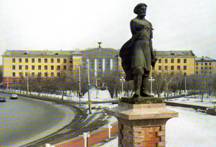 Krasnoyarsk State Medical University named after professor V. F. Voyno-Yasenetsky is situated in the centre of the city. The history of Krasnoyarsk State Medical University originates in severe years of the Great Patriotic War. It was founded in 1942 on the base of two Institutes: Leningrad Medical Institute and Voronezh Stomatologic Institute. Our University was named after great Russian surgeon V. F. Voyno-Yasenetsky (author of essays about purulent surgery, which nowadays are used by doctors from all over the world in their practice), who delivered his lectures to the future doctors in our University and was canonized not so long ago.
Our University trains specialists in different fields of medical science. There are 9 faculties: Pre-University Education, Fundamental Medical Education, Therapeutic, Pediatric, Nursing, Pharmaceutical, Clinical Psychology, Advanced Medical Courses and KrasSMU Institute of Stomatology. At the departments of the University there are 60 Doctors of Medicine, 50 Professors, 10 members of different Russian and International Academies. Also there are more than 290 Candidates of Medicine who are lecturers and instructors.
Every faculty has a relevant programme for training of the future doctors. The course of training in Therapeutic and Pediatric departments lasts for six years, in Stomatologic faculty - for five years and in Nursing department - for four years.
The applicants go in for entrance examinations in July before the new academic year begins. They have to take three entrance examinations: Biology, Chemistry and a written essay. After that the students apply to a basic programme. The six-year state programme is conditionally devided into two periods: during the first two years the students study the basis of theoretical medicine, Latin and Foreign Languages, Philosophy and Ethics, Biophysics and Biology, History of Medicine. During these two years they learn the structure of the human body, its physiological functions and the courses of diseases. The study of Human Anatomy is carried out on corpse material. During the last four years the students learn the basic medical subjects and gain knowledge and work experience in clinics and hospitals.
There are a lot of scientific societies at our University where the students gain deep knowledge in the field of science they care for. The students take their examinations twice a year in winter and in summer periods. Every day the students have lectures, take notes of them, and carry out experiments at their practical classes. At the end of each year the students have practical training.
If a student completes the six - year programme of medical course and passes the state final examinations, he will be awarded The Medical Doctor Diploma and the title of practitioner. If a student completes the first year of internship, he will get the medical license that will enable him to practice medicine. After the seven-year course of training the students may enter the residency or postgraduate course working at the same time in hospitals, Medical University and Scientific Research Institutes.
Our University laboratories, classes and gymnasiums are large and light. They have modern equipment. Our scientific library contains a lot of books, which provide the students with up-to-date information in various spheres of medical science. Most of students (out-of-town) have hostel accommodation.
The students take an active part in the life of our University, in social and creative actives, attend students clubs and go in for sports.
Занятие 5
1. Тема: « The Skeleton ».
2. Формы работы: подготовка к практическим занятиям, подготовка материалов по НИРС.
3. Перечень вопросов для самоподготовки по теме практического занятия.
Знать лексический минимум по теме, основную медицинскую терминологию на иностранном языке уметь использовать знания лексико-грамматического материала, владеть иностранным языком в объеме, необходимом для возможности коммуникации и получения информации из зарубежных источников.
Задания.
1. Отработка лексико-грамматического материала. Порядок слов в предложении, формы неправильных глаголов и. т.д.. (№1 - №7 стр. 45-46)
2. Изучающее чтение и перевод текста “The Skeleton”
3. Поиск ключевых слов и выражений текста.
4. Ответьте на вопросы.
1. What kinds of bones is the skeleton made of?
2. Is the backbone the most important part of the body?
3. What classes do the naturalists divide all the animals into?
4. What does the skull include?
5. The bones of the trunk include the spinal column, the ribs and the breastbone, don’t they?
6. How does the wrist work?
7. What does the spinal canal contain?
8. What role do the ribs play?
9. What are the functions of the skeleton?
10. What are the diseases the skeleton can be affected by?
5. Выявление ключевых мыслей для составления резюме текста.
6. Повторение грамматического материала оборот there is/ there are, повторение времен группы Indefinite (Active Voice).
4. Самоконтроль по тестовым заданиям данной темы.
1. Дополните фразы, используя Рast Simple указанных глаголов:
clean finish happen live smoke start stay want divide begin break
1. Yesterday evening I ………… television.
2. I………… my teeth three times yesterday.
3. Bernard ………… 20 cigarettes yesterday evening.
4. The concert last night ………… at 7.30 and ………… at 10 o’clock.
5. The accident ………… last Sunday afternoon.
6. When I was a child, I ………… to be a doctor.
7. Mozart ………… from 1756 to 1791.
8. Naturalists ………… all animals into two classes. We ………… at a very good hotel.
9. We ………… to study skeleton.
10. The student………… his arm in an accident.
2. Заполните пропуски, выберите верный ответ.
1. The bones of the spinal column are called....

|
Из за большого объема этот материал размещен на нескольких страницах:
1 2 3 4 5 6 7 8 |
