


Партнерка на США и Канаду по недвижимости, выплаты в крипто
- 30% recurring commission
- Выплаты в USDT
- Вывод каждую неделю
- Комиссия до 5 лет за каждого referral
Упражнение 5. Переведите предложения. Поставьте их в отрицательную форму. Задайте общий вопрос к каждому предложению.
1. Tim does his morning exercises every day. 2. Emma gets up early. 3. Ann always gets up late. 4. His grandmother always wakes him up. 5. The Wilsons normally have breakfast at 7 o'clock. 6. My uncle usually watches TV in the evening. 7. It often rains in England. 8. It seldom snows in Spain. 9. We usually do the shopping on Thursday. 10. The children help mother to do the washing-up.
Упражнение 6. Используя вопросительные слова в скобках, задайте к предложениям специальные вопросы.
1. Не always smokes before lunch. (When?) 2. The Pearsons like to work in the garden. (Where?) 3. Amanda always wears too much make up. (Who?) 4. Kate works at a nursery school. (Where?) 5. Charles goes to the disco every Saturday. (How often?) 6. I sometimes spend the weekend in the country. (Why?) 7. She takes a shower in the morning. (When?) 8. I get to the pool by bus. (How?) 9. My sister visits her friends on Saturday evenings. (What?) 10. Our father takes medicine three times a day. (How often?) 11. They usually speak English. (What language?) 12. Everybody has a good time every Saturday. (Who?) 13. My name is Tom. (What?)
Упражнение 7. Ответьте на вопросы, используя фразы, данные в скобках.
1. What does a singer do? 2. What does a shoemaker do? 3. What does a housewife do? 4. What does an artist do? 5. What does a doctor do? 6. What does a hairdresser do? 7. What does a broker do? 8. What does a law student do? 9. What does a laundress do? 10. What does a sportsman do? 11. What does a baker do?
(to go in for sports, to study law, to cut and dress the hair, to paint pictures, to mend boots and shoes, to sing songs, to do the housework, to practice medicine, to buy and sell shares, to wash linen, to make bread.)
Упражнение 8. Исправьте предложения по образцу:
1. The American President lives in Rome.
2. The American President doesn't live in Rome.
3. The American President lives in Washington.
1. Insects catch birds. 2. Elephants eat animals. 3. The River Volga
flows into the Baltic Sea. 4. The sun sets in the East. 5. Dentists look after nose.
Упражнение 9. Прочтите предложения и ответьте на вопросы.
I The students of your group like to go for walks in the woods in summer.
1. Do the students like to go for walks?
2. Where do they like to go for walks?
3. When do they like to go for walks?
4. What students like to go for walks?
5. What do they like to do?
6. Who likes to go for walks in the woods?
II Kostya helps his mother to look after his small brother.
1. What does Kostya help his mother to do?
2. Whom does Kostya help his mother to look after?
3. What does Kostya do?
4. Whom does Kostya help?
5. Who helps his mother?
6. Kostya helps his mother, doesn't he?
Упражнение 10. Задайте вопросы к предложениям, опираясь на упражнение 9.
1. On Saturday we finish our lessons at 12 o'clock.
2. The girl gets off the bus at the stop in Pushkin Square.
Speaking
Упражнение 11. Tell the group what you usually do,
- when your teacher comes to the workshop;
- when you come home from the college;
- when your mother asks you to help her;
- when you have session;
- when you stay at the library;
- when you go to the canteen.
Упражнение 12. Tell each other some words about Omsk Aviation College using the Present Simple Tense.
1.2
Урок 1.2.4
The Past Simple Tense
Прошедшее неопределённое (простое) время
Употребляется:
для выражения действий повторяющихся, происходивших последовательно и имевших место в прошлом и не связанных с настоящим моментом.
Yesterday I went to the theatre.
С формой Past Indefinite часто употребляются слова и словосочетания: yesterday, the day before yesterday, last week (month, year),, days ago, in 1990 и т. д.
Образуется:
с помощью прибавления окончания – ed у правильных глаголов; у неправильных глаголов – II колонка
а) - ed читается как [t] после глухих согласных (dressed), как [d] после звонких согласных и гласных (opened, played), как [id] после t и d: (counted, decided)
б) Глаголы, оканчивающиеся на у с предшествующей согласной, меняют у на i:
to study - studied (но: play - played).
в) В односложных и двусложных глаголах с краткой гласной удваивается конечная согласная: skip - skipped; travel – travelled.
Вопросительная форма: Отрицательная форма:
Did I (he, she, it, we, you, they) work? I (he, she, it, we, you, they) did not work.
Упражнение 1. Напишите форму прошедшего времени глаголов:
to go, to have, to see, to take, to give, to put, to stand, to put on, to sit, to understand.
Упражнение 2. Перепишите предложения. Глаголы напишите в Past Simple.
I
1. The children sometimes work on a collective farm in summer. 2. We play football and other interesting games at the camp. 3. Mike goes to his circle early. 4. It always snows in winter. 5. The Ninth Form pupils clean the street in front of the school. 6. We often ski and skate in the park. 7. She always answers questions well.
II
1. Yesterday (to be) the third of October. 2. It (to be) warm, and we (to play) ball in our yard. 3. Our dog (to be) with us too. 4. It (to like) the game. 5. He (to jump) and (to jump). 6. We (to have) five lessons yesterday. 7. After the lessons the pupils on duty (to water) the flowers and (to clean) the blackboard and other things. 8. When everything in the classroom (to look) clean, they (to go) home. 9. It (to be) half past three and they (to be) very hungry.
Упражнение 3. Раскройте скобки, употребляя глаголы в форме Present или Past Simple.
1. I (to watch) television at seven o'clock every evening.
2. I (to watch) television yesterday.
3. She (to comb) her hair every morning.
4. Yesterday she (to comb) her hair.
5. They (not to rest) yesterday.
6. I usually (to walk) to my school but yesterday I (to take) a tram.
7. Yesterday he (to have) a holiday. He (not to go) to the office. He (to get) up at eleven o'clock, (to wash) his face, (to have) breakfast and (to go) for a walk.
8. As a rule my mother (to cook) dinner. But yesterday she (to decide) not to cook. She (to invite) us to the restaurant.
9. He (not to like) coffee. But yesterday he (to drink) a cup of coffee as he (to be) very tired.
10. You often (to take) your brother for a walk? - Yes. - Why you (not to take) him for a walk the day before yesterday? - He (to be) ill.
Упражнение 4. Перепишите тексты в Past Simple.
I
Не gets up at seven o'clock. He washes his face, cleans his teeth and combs. He goes to the kitchen and has his breakfast. For breakfast he has a cup of coffee and cheese. When the breakfast is over, he goes to the office. He takes a bus to get to his work.
At the office he works till two o'clock. At two o'clock he has dinner. He finishes his work at seven o'clock in the evening. He decides to walk a little after his working day. He returns home at nine. He doesn't want have supper, he only drinks tea. Suddenly he remembers that he has to phone his friend. He dials the numbers that he has to phone his friend. He dials the number but nobody answers. His friend is not at home. He goes to his room and decides to watch TV. When the TV program is over, he sleeps.
II
The weather is bad. There is no sun in the sky. Beth wakes up late in the morning. She doesn't want to leave the bed. She stays in her bed for some time. But Beth is hungry. She wants something to eat. She makes herself to get up, and goes to the bathroom. She washes and cleans her teeth. Beth goes to the kitchen and has her breakfast. After breakfast she thinks how to spend her day. Suddenly the telephone rings. Her friend Tom phones. Tom says he has two tickets to the theatre and he invites her to go and see the play. Beth thanks him and agrees to go to the theatre. The play begins at twelve. She has only two hours to dress and to get to the theatre. Beth doesn't know what to put on in such bad weather. She thinks for some minutes and chooses her new beautiful dress! The weather is bad but she is in a good mood.
Speaking
Упражнение 5. Complete the sentences.
Example: He has dinner at three o'clock every day, but yesterday he had dinner at four.
1. He comes home at one o'clock, but yesterday. . .
2. She takes three notebooks to school, but yesterday. . .
3. Every summer he lives in the country, but last summer. . .
4. My uncle comes to us every Sunday, but last Sunday he. . .
5. My father works from nine till five, but last week. . .
6. She goes to bed at ten o'clock, but yesterday. . .
Упражнение plete the sentences and make a story. Use the verbs in the Past Simple Tense.
In August I... at a camp. The camp... in a big forest. We... to the forest every day. Our teacher ... us many birds in the forest, and now I know the names of many birds. We often. . . in a little river near our camp. In the afternoon we … volleyball, basketball and other games. I … table tennis well. I... very nice time at the camp. My friend Nick … many pictures of us. We … many songs.
My favourite song … « I saw…».
Упражнение 7. Do and say what you did
I. 1. Take your bag.
2. Open it.
3. Take your exercise-book.
II. 1. Stand up.
2. Go to the teacher's desk.
3. Take a picture.
4. Hang it on the blackboard.
III. 1. Go to the door.
2. Open the door.
3. Look out.
4. Shut the door.
IV. 1. Stand up.
2. Turn to the middle of the classroom.
3. Look up.
4. Count the lamps.
Упражнение 8. Answer the questions (see Exercise 7).
I. 1. Did he (she) take his (her) bag?
2. What did he (she) open?
3. What did he (she) do then?
4. Where did he (she) put the exercise-book?
II. 1. Did a girl or a boy stand up?
2. Whose desk did she (he) go to?
3. What did she (he) take?
4. Where did she (he) hang the picture?
III. 1. Who went to the door?
2. Did he (she) open the door or shut it?
3. What did he (she) do then?
4. What did he (she) shut?
IV. 1. Did a girl or a boy stand up?
2. Where did he (she) turn?
3. He (she) looked up, didn't he (she)?
4. How many lamps did he (she) count?
Упражнение 9. Answer the questions.
1. You listened to the radio yesterday, didn't you?
2. What mark did you get yesterday?
3. When did you have your dinner yesterday?
4. Did you write a dictation on Saturday?
5. Where did you go after the lessons on Monday?
6. Did you come home from college late?
Упражнение 10. a) Say who you saw this morning (yesterday) on the way to the college.
Example: I saw our doctor on my way to the college this morning.
b) Tell the group what sport games you played last summer (winter).
Example: I often played chess in summer.
Урок 1.2.5
Чтение дат. Порядковые и количественные числительные.
Количественные числительные | Порядковые числительные |
1one - один 2 two - два 3 three - три 4 four 5 five 6 six 7 seven 8 eight 9 nine 10 ten 11 eleven 12 twelve 13 thirteen 14 fourteen 15 fifteen 16 sixteen 17 seventeen 18 eighteen 19 nineteen 20 twenty | the first - первый the second - второй the third - третий the fourth the fifth the sixth the seventh the eighth the ninth the tenth the eleventh the twelfth the thirteenth the fourteenth the fifteenth the sixteenth the seventeenth the eighteenth the nineteenth the twentieth |
Числительные от 13 до 19 образуются прибавлением суффикса – teen к основе. Числительные, обозначающие десятки, имеют суффикс – ty. Порядковые числительные кроме первых трех (first, second, third) образуются прибавлением суффикса – th или – eth к соответствующим количественным числительным. Они всегда употребляются с определенным артиклем.
Числительные обозначают количество предметов или порядок предметов при счете.
Числительные делятся на количественные, отвечающие на вопрос «сколько?» и порядковые, отвечающие на вопрос «который? ».
Десятки | Составныечислительные |
20 twenty – the twentieth 30 thirty –the thirtieth 40 forty –the fortieth 50 fifty – the fiftieth 60 sixty – the sixtieth 70 seventy – the seventieth 80 eighty – the eightieth 90 ninety – the ninetieth | twenty-two – the twenty-second thirty-three – the thirty-third forty-four – the forty-fourth fifty-five – the fifty-fifth sixty-six – the sixty-sixth |
Числительные от ста и больше
100 – a (one) hundred 100th – the hundredth
101 – a (one) hundred 101st – the one hundred
and one and first
200 – two hundred 200th – the two hundredth
1,000 – (one) thousand 1000th – the thousandth
1,001 – a (one) thousand and one
5, 550 – five thousand five hundred and fifty
5, 000, 000 – five million
1,500 – fifteen hundred
Числительные hundred, thousand, million не имеют окончания –s, когда перед ним стоит другое числительное. Когда числительные обозначают неопределенное количество, они употребляются во множественном числе с окончанием –s, за которым следует предлог of.
Сравните:
hundreds of books two hundred books
thousands of people five thousand books
millions of people 2 million people
Номера страниц, домов, квартир, транспорта обозначаются не порядковыми, а количественными числительными. В этих случаях существительные употребляются без артикля: page15, house 40, flat 13, bus 72.
***
Чтение дат
Числительное, обозначающее год, делится на две части – число сотен, а затем – число десятков и единиц.
1900 – nineteen hundred, in (the year) nineteen hundred
2000 – two thousand, in (the year) two thousand
1905 – nineteen five, in (the year) nineteen five
Даты читаются следующим образом:
April 12, 2on the twelfth of April, two thousand one
2) on April the twelfth, two thousand one
_________________
Упражнение 1. Прочтите по - английски.
1. Количественные числительные:
3, 5, 11, 12, 13, 24, 69, 325, 1005, 1.745.033.
2. Порядковые числительные:
1, 2,15, 23, 84, 149, 150, 208, 1000, 2
Упражнение 2. Напишите цифрами следующие даты:
The first of March nineteen seventy six
The fifth of December two thousand
The sixteenth of May nineteen hundred
The third of July nineteen five
In (the year) nineteen ninety seven
In (the year) nineteen eighty one
In (the year) two thousand fivе
Упражнение 3. Напишите по - английски:
1) 7 марта 1999 года; 2) 1 сентября 1974 года; 3) 22 апреля 1911 года; 4) 11 марта 1951 года; 5) 12 декабря 2004 года; 6) 4 июля 1965 года; 7) 28 декабря 1988 года; 8) 22 августа 1992 года.
Упражнение 4. Переведите на английский язык.
A. 1) 220 дней;человек;книг;страниц;тетрадей.
B. 1) первый автобус; 2) вторая страница; 3) миллионный посетитель; 4) часть первая; 5) номер десятый.
С. 1) два миллиарда человек; 2) миллионы книг; 3) триста восемьдесят пять страниц; 4) двадцать первое декабря 1997 года; 5) двенадцатое марта 2000 года.
Упражнение 5. Прочтите и переведите предложения.
1. N. E. Zhukovsky was born on the 17th of January, 1847 in Orekhovo of Vladimir region.
2. Zhukovsky entered the Moscow University and became a student of the Mathematical Department. He graduated from it in 1868.
3. In 1870 Zhukovsky accepted the post of a physics teacher at the Moscow gymnasium for girls and in 1872 he was offered to be a teacher of mathematics at the Moscow Technical Institute.
4. At the Institute he began to be interested in mechanics. The first scientific work of the scientist appeared in 1876.
5. On his initiative the Central Aero – Hydrodynamic Institute was founded in 1918.
6. On the 17th of March, 1921 N. E. Zhukovsky died after long disease.
Упражнение 6. Составьте диалог - расспрос на тему “Моя биография”. Работайте в парах по образцу:
Студент 1 - Where and when were you born?
Студент 2 - I was born …
Студент 1 - Did you go to the kindergarten? When?
Студент 2 - I went to the kindergarten at the age …(from…till)
Студент 1 – When did you go to school?
Студент 2 – When I was 6 I went to… .
Студент 1 – When did you leave school?
Студент 2 – I left … in… .
Студент 1 – What educational institution did you enter?
Студент 2 – I entered … и т. д.
Урок 1.2.6
Биография
Упражнение 1. Прочтите и переведите текст.
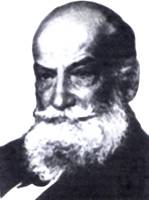 N. E. Zhukovsky, a professor of the Moscow University and the Moscow Technical Institute, is the founder of theoretical, technical, and experimental aerodynamics.
He was born on the 17th of January, 1847 in Orekhovo of Vladimir region. His family was intelligent and Nicolay’s parents paid a great deal of attention to the education of their son. Nicolay began to read at an early age and read a lot.
He was sent in to the Moscow gymnasium in 1858 where he was the best pupil in algebra, geometry and natural sciences. After finishing it Zhukovsky entered Moscow University and became a student of the Mathematical Department. He graduated from it in 1868. In 1870 Zhukovsky accepted the post of a physics teacher at the Moscow gymnasium for girls and in 1872 he was offered to be a teacher of mathematics at the Moscow Technical Institute. At the Institute he began to be interested in mechanics. The first scientific work of the scientist appeared in 1876. It was devoted to the research of fluid kinematics. In ten years N. E. Zhukovsky became a professor of Moscow University at the Mechanics Department.
Zhukovsky brought an enormous contribution in the development of fluid mechanics and air – mechanics. The last one he founded as an independent science.
Zhukovsky’s genius shone in a new field of science being theoretical and experimental aerodynamics. He investigated fly trajectory, wing lift, made whirl theory of propeller. On his initiative the Central Aero – Hydrodynamic Institute was founded in 1918.
On the 17th of March, 1921 N. E. Zhukovsky died after long disease. It was a great loss for the Russian scienсe.
Упражнение 2. Ответьте на вопросы.
1. When and where was Zhukovsky born?
2. Did his parents pay much attention to the education of their son?
3. What subjects was Nicolay good in?
4. What educational institution did Zhukovsky enter after leaving the gymnasium?
5. What was his first scientific work devoted to?
6. How old was Zhukovsky when he became a professor of Moscow University?

|
Из за большого объема этот материал размещен на нескольких страницах:
1 2 3 4 5 6 7 8 9 |
