


Партнерка на США и Канаду по недвижимости, выплаты в крипто
- 30% recurring commission
- Выплаты в USDT
- Вывод каждую неделю
- Комиссия до 5 лет за каждого referral
- Give English equivalents to the Russian words and word combinations.
1. старинный русский город 2. берег 3. праздновать 4. маленький купеческий город 5. житель 6. левый берег 7. проходить 8. немощёный 9. кривой 10. пыльный 11. место ссылки | 12. гордость 13. считать, полагать 14. город студентов 15.материальная и духовная культура 16. собор 17. храм 18. молитвенный дом 19. развлечения 20. переоценить |
_______________________________________________________
revalue, bank, entertainment, cathedral, prayers house, celebrate, inhabitant, small merchant town, left bank, pass through, unpaved, crooked, dirty, exile, pride, consider, a city of students, welfare standards and culture
- Make up sentences.
1. The city, to number, 1 inhabitants, today.
2. So, 1716, in, Omsk, to found.
3. Oil Refinery, Siberian, petrochemistry, to be, a giant, of.
4. They, to be, visiting, worth.
5. To live, we, in, of, the period, changes, great.
6. Library, Pushkin, to be, big, the, of, them.
- Answer the following questions.
1. What is Omsk?
2. How old is Omsk?
3. What is the population of Omsk?
4. How was it founded?
5. What are the main branches of industry in Omsk?
6. Why do we consider Omsk a city of students?
7. What theatres do you know in Omsk?
8. What places of interest are there in Omsk?
9. What problems must the inhabitants of Omsk solve?
- Make up a plan of the text.
- Give a short story about Omsk.
- Speak about the history of Omsk using the following words
and word combinations.
To be situated, merchant town, to turn for, center, a group, soldiers and Cossacks, guidance, Bukhgolts, to found, fortress, to be renamed, Great Trans-Siberian Railway, to pass through, to be like, wooden, unpaved, dusty, crooked, exile, Dostoevsky.
Тext II
Omsk in a nutshell
· Founded in 1716
· Is said to be the capital of South-Western Siberia
· Situated in the southern part of the West-Sibеrian plain
· Climate is continental
· Population is 1,5 mil people
· Distance from Moscow - 2555 km.
· Local time GMT + 6
· Phone code: 3812
· Big railway traffic centre
Basic info
Omsk is said to be the capital of South-Western Siberia.
The territory of Omsk region is 139,7 thousand square kilometres and is divided into 32 administrative districts.
Population
Population is 1,5 million people. It is a multinational city. It is inhabited by Russians, Germans, Ukrainians, Tatars, Kazakhs, Belorussians, Bashkeers, Jewry and other nations, altogether – about 80 nationalities.
Geography
Omsk region is situated in the southern part of the West-Siberian plain. On the West and North the region borders with Tyumen region, on the East – with Tomsk and Novosibirsk regions, on the South and South-Western direction – with Kazakhstan.
History of Omsk Region
Omsk was founded in 1716 as a fortress at the junction point of channels of the Irtysh and the Om rivers by Colonel Ivan Bukhgolts, this historic fact initiated developing one of the oldest cities in Siberia.
At the second part of the 18th century the fortress became the largest fortification at the East of the country. Construction of Trans - Siberian railway boosted the development of the city. Railway connected Omsk with European part of Russia.
Culture
There are 83 public libraries with book fund exceeding 7 million
pieces, 9 museums, containing over collection items, theatres
of Omsk are also well known in Russia as well as abroad.
Sport
Athletes from Omsk have been taking part in national and international competitions, Olympics. Wrestler Alexander Pushnitza, swimmer Roman Sludnov and gymnast Irina Chashina are world known.
Omsk Hockey Team Avangard is the champion of the Russian Hockey Superleague in 2004, 2 times took the second place – in 1998 and 2006, and is proud to be the European Hockey Champion in 2005.
Healthcare
There arephysicians and 17000 nurses in Omsk as well as 60 hospitals and 158 dispensaries. Omsk Medical Academy trains highly skilled doctors of different specialties and is in charge of raising the level of G. Ps skills.
The distinguishing feature of our people, in this case our physicians, is that they are perfectly glad to share their knowledge and experience with students.
We have very friendly and warm relationships with leading hospitals, thus, they are constantly waiting for our students. We hope everybody can appreciate the atmosphere, which prevails in our hospitals.
There are 30 special medical centres in Omsk, such as: endocrinological, pulmonological, perinatal, microsurgery, surgery of
lever, gastroenterology, and diagnostic centre, the largest one in Siberia.
How to get
The flight time from Moscow is 3 hours. There are 3 flights every day: 2 in the early morning and one at night.
Теxt III
Everyone who has once visited Omsk notices its openness, breadth and peculiarity. The city on the banks of the Irtysh and Om rivers is beautiful and sweeping in a Siberian manner. A beautiful site was chosen for the new fortress by the guardsman of Peter the Great I. Bukhgolts, when in spring of 1716 he and his detachment made a landing on the shore of the free Irtysh, in the place where this powerful Siberian river takes the quiet Om into its broad riverbed. According to the edict of the tsar Peter the Great and his deputy in Siberia prince Gagarin, pioneers erected here the fortification to guard the south Russian borders. Thus was founded the town, which in our days became the largest industrial and cultural centre of Siberia. No trace was left of wooden fortress - primogenitor of the town. But the ancient stone houses and the entrance fortress gates on the right bank of the river Om, where it flows into the Irtysh, still keep the voices of the remote past. Right here in the 1760s, when the wooden buildings of the first Omsk fortress became dilapidated, a new fortification was founded, this time built of stone.
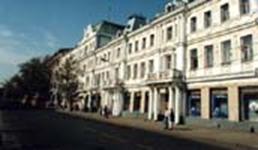
In 1782 the fortress settlement was given the name of a town. Among inhabitants of this town were merchants, artisans, officials, but most people were the military. In 1812 battalions of the 24th Siberian division went to fight with Napoleon. Many of them died the death of brave on the Borodino field. The Shirvansky musketeer regiment units guarding the borders of Omsk fortress also distinguished themselves in the fights with Frenchmen. Later the heroes and participants of that war served in Omsk. At different times the post of West Siberian Governor-general was held by P. Kaptsevich and G. Husford. During that time the town grew considerably, was decorated with gardens and sturdy stone buildings. In the 1820s Omsk was lined with buildings by the project of the famous Russian engineer V. Geste. Since that time the central architectural ensemble of the town began to take shape. One of the Omsk central buildings became the palace of Governor-general. In celebration days the tricolor flag appeared on the tower. From this tower the young town was viewed by many guests - well-known scientists, diplomats and travellers. They could see new squares, wooden houses with mezzanines and galleries, the broad Irtysh, ships, fresh green Lyuba's Grove and the fortress with mighty belfry of Voskresensky Cathedral. The military significance of Omsk determined the fates of many Russians. We are not sure if the famous horses of talented sculptor Peter Klodt could appear on the Anitchkov Bridge in Petersburg without his Omsk experiences. Because here in Omsk a gifted boy fell for horses - these proud and beautiful animals. The fame found him in the Northern capital but here in Omsk, far away from European artistic world, for the first time baron Klodt felt the desire to learn curving, modelling and studying horses. Among that lot a huge to him Cossack Nikolsky Cathedral in the garden of which the artist could have walked. "Its severe slim appearance" is very alike to its architectural brothers in Petersburg. And it's quite explicable because the Cathedral was built by the famous architect V. Stasov's drawings, who built a lot in the city on 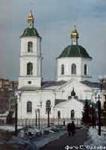 the banks of Neva. In 1894 when the railroad came to Omsk it was called the Gates of Siberia. The Great Siberian Track made the economic contacts of business men more active and easier, by connecting Omsk with Moscow, Petersburg and Far East. The representatives of famous Russian and foreign firms came to the far Siberian town. Due to this Omsk started intensive construction of imposing buildings: banks, shops, apartments and offices. In our days the work of organizations responsible for the keeping of Omsk antique memorials became animated, there appeared enthusiasts-students of local lore, whose opinion is considered by the community. The city's department of architecture lead by A. Karimov has provided the restricted areas where the erection of new buildings is strictly regulated. One of such areas are the Cossack suburb. Each house here has its unique history. On Pochtovaya street remained some ancient houses, among them No, 27 - the Khiebnikovs house where Omsk artists are working now. Durable house with a verandah facing the garden, with carved laurel branches on the front door and frieze reflected the taste of his owner the famous public figure, lawyer Arseny Khiebnikov. At the beginning of the 20-s this house was visited by the talented youth, among them was young Vissarion Shebalin, who performed many of his works in this house on Pochtovaya for the first time. In the 50-s - 60-s in the North - West of Omsk due to the construction of the first Siberian oil refinery grew the town of oil industry workers. This town appeared on the spot which since the 18th century occupied "the quiet little village of Zakhlamino, surrounded by the windmills" as wrote I. Belov in his "Travel Notes and Impressions of Western Siberia" in the 1850s. A new city was created designed, by the indivisible architect-artistic project (the Vesniny Brothers architectural-planning workshop). The idea of the city-garden presented for the first time in 1919 by the engineer D. Werner was incarnated at the end of the 50-s, when the city was all in green and the lawns of parks and public gardens were filled with exotic flora. Many interesting buildings appeared in Omsk during last decades. Among the buildings which enriched the city's panorama we can enumerate the Trade Center, the builders of which were awarded the State prize in 1968, the Pushkin Scientific Library (architects Y. Zakharov, G. Narizyna, T. Moraz, I. Lubchich) on the Krasny Put street. Omsk architects are trying to form the complete ensembles, they attach great importance to the moulding of building's silhouette, use widely the natural factors in their creative plans. And at the same time they don't forget the antiquity and understand the necessity of its preservation. The city cherishes its past. The architects and antiquity lovers restored the Serafimo-Alexeevskaya Chapel which even now is surrounded by numerous legends. One of them tells that the Chapel was built in 1908 to memorize the birth of the Tsesarevitch Alexey. Another tells that it was built to memorize the soldiers killed in Russian war with Japan. The chapel was torn down in the 1920-s and was rebuilt brick by brick by the project and su
 per-vision of artist V. Desyatov. You can meet the history of Omsk not only on the streets of the city. It lives in the museums, in the inspirational works of Omsk artists, actors and history scientists. Omsk museum of local lore, history and economy is the oldest in Siberia. It was founded in 1878 by the famous Siberian scientists, explorers and public figures: M. Pevtsov, G. Potanin, N. Yadrintsev, I. SIovtsov.
The city has great scientific potential. The names of academician the Honorary citizen of Omsk V. Bisyarina, academician N. Milachshenko, corresponding member of Medical Academy L. Poluektov, Honorable Science and Technics Workers K. Artemiev, T. AIexeyeva, D. Krinitsin, V. Mezentsev, K. Tolmachev, social anthropologist I. Tomilov are well known in Russia and abroad. Omsk is theatrical city. It has 5 state and 3 municipal theatres for 1200 thousand city dwellers. It's hard to buy tickets for many plays and today in the developing market relations when many theatres in different cities close, here in Omsk in the beginning of the nineties there opened 4 more theatres.
Теxt IV
In our days the work of organizations responsible for the keeping of Omsk antique memorials became animated, there appeared enthusiasts-students of local lore, whose opinion is considered by the community. The city's department of architecture lead by A. Karimov has provided the restricted areas where the erection of new buildings is strictly regulated.
One of such areas are the Cossack suburb. Each house here has its unique history. On Pochtovaya street remained some ancient houses, among them No, 27 — the Khiebnikovs house where Omsk artists are working now. Durable house with a verandah facing the garden, with carved laurel branches on the front door and frieze reflected the taste of his owner — the famous public figure, lawyer Arseny Khiebnikov. At the beginning of the 20-s this house was visited by the talented youth, among them was young Vissarion Shebalin, who performed many of his works in this house on Pochtovaya for the first time.
Next is another famous building, No. 30 on Krasnykh Zor street, former Nikolsky avenue. Here lived our famous fellow-townsman prominent contemporary poet Leonid Martynov. We can entitle the book of his memoirs "The Aerial Frigates" the Omsk encyclopaedia of the first half of the 20th century. His love to the town was active, his interest to its history and its present was real. "This town standing on the border of Kazakhstan and Siberia, town where January frosts resemble Arctic and June heat resembles Middle Asia. This town above quiet Om has grown during last 20 years" — wrote Martynov in his book "the Fortress on Om".
Forever will remain in the history of WW II the names of its heroes. The name of Dmitry Karbyshev, our fellow-countryman, Omsk Military School graduate, man of great strength became a legend. 134 Omsk citizens were awarded the title of Hero of the Soviet Union.
During this time the city 2,5 thousand kilometers away from Moscow was hosting the evacuees from Leningrad and other front-line towns and cities. Sharing bread and shelter with them. Omsk received industrial enterprises from the Ukraine, turned its cultural places into hospitals. 37 hospitals were opened and each third Omsk dweller became a blood-donor during the war.
There almost was no civil construction during the war. On the vacant lots were urgently erected shops of military plants. In those days started their activities the Baranov Motor works, the Oktyabrskaya Revolution Tank plant, Omsk Tyre plant and many others, turning Omsk into large industrial center of Siberia. The builders lived in barracks which disappeared totally only in the 70s.
In the 50-s - 60-s in the North - West of Omsk due to the construction of the first Siberian Oil Refinery grew the town of oil industry workers. This town appeared on the spot which since the 18th century occupied "the quiet little village of Zakhlamino, surrounded by the windmills" as wrote I. Belov in his "Travel Notes and Impressions of Western Siberia" in the 1850s. A new city was created designed, by the indivisible architect-artistic project (the Vesniny Brothers architectural-planning workshop).
The idea of the city-garden presented for the first time in 1919 by the engineer D. Werner was incarnated at the end of the 50-s, when the city was all in green and the lawns of parks and public gardens were filled with exotic flora. Many interesting buildings appeared in Omsk during last decades. Among the buildings which enriched the city's panorama we can enumerate the Trade Center, the builders of which were awarded the State prize in 1968, the Pushkin Scientific Library (architects Y. Zakharov, G. Narizyna, T. Moraz, I. Lubchich) on the Krasny Put street. Omsk architects are trying to form the complete ensembles, they attach great importance to the moulding of building's silhouette, use widely the natural factors in their creative plans. And at the same time they don't forget the antiquity and understand the necessity of its preservation.
The city cherishes its past. The architects and antiquity lovers restored the Serafimo-Alexeevskaya Chapel which even now is surrounded by numerous legends. One of them tells that the Chapel was built in 1908 to memorize the birth of the Tsesarevitch Alexey. Another tells that it was built to memorize the soldiers killed in Russian war with Japan. The chapel was torn down in the 1920-s and was rebuilt brick by brick by the project and supervision of artist V. Desyatov.
You can meet the history of Omsk not only on the streets of the city. It lives in the museums, in the inspirational works of Omsk artists, actors and history scientists.
Omsk museum of local lore, history and economy is the oldest in Siberia. It was founded in 1878 by the famous Siberian scientists, explorers and public figures: M. Pevtsov, G. Potanin, N. Yadrintsev, I. SIovtsov.
In 1923 the museum was granted with the best building of the city, the former palace of governor-general, and in the middle of eighties the museum moved to a new building, built by the special project in Lenin street. The museum depositories are filled with more than 250.000 unique items telling about the history of the land, about its nature, its culture.
Each visit to the museum is a joy of knowing your past, modern life of your native city, a joy of meeting professionals, a joy of joining to the tense spiritual activity of enthusiasts.
In 1924 the Vrubel Museum of Fine Arts was established as the art department of the museum of local lore, history and economy. Its collection includes paintings, drawings, sculptures and works of arts and crafts. The pride of the museum collection make canvases by Russian artists I. Repin, V. Serov, I. Shishkin, V. Surikov, I. Levitan. Spectators are always attracted by the Russian avant-garde collection: N. Goncharova, M. Larionov, V. Kandinsky, A. Yavlensky, members of "Jack of Diamonds". Omsk museum is the only museum in Siberia which owns works by great painter M. Vrubel — who was born in Omsk.
The former general-governor palace is very beautiful but too small for the huge museum collection and that's why the new building — the former trade house built in 1914 by the architect A. Kryachkov and restored by the Omsk specialists — was granted for that collection. Recently museum moved to that new building. There is enough space now to exhibit icons, Siberian tumuli gold, Faberge jewelry, glass and ceramics items which for many long years were kept in its depositaries.
Five years ago in Omsk appeared the memorial museum of the Peoples Artist of Russia Kondraty Belov. It is placed in the old wooden house and is the bright example of the city's care for its talented sons — for carpenters who built this house, for its former owner F. Stumpf. This house became the memorial of wooden architecture. It's filled with warm atmosphere of cosiness. The artist's atelier is in one of the rooms on the second floor. From the pictures look faces of kinfolk and friends of Kondraty Belov. You can see here his palette, his easel with unfinished work of the master. On the rag we can see his hat, coat, walking stick... These things create the feeling of artist's presence here, next to you. In the evenings the museum turns into musical- poetical drawing-room. The Dostoevsky Literature Museum is also one of the city's memorial museums. Until recently it was the department of the Museum of Local Lore, History and Economy but now it's the independent scientific- literature center. Here you are absorbed into another world, into years when Fyodor Dostoevsky was the Omsk convict, when worked P. Dravert and Anton Sorokin, when there appeared Vsevolod Ivanov's first works, when Leonid Martynov wrote his books, when in the 60-s Leonid Ivanov astonished everyone with his knowledge of rural life, when Timofey Belozerov wrote his fine children's poems.

|
Из за большого объема этот материал размещен на нескольких страницах:
1 2 3 4 5 6 7 8 9 |
