


Партнерка на США и Канаду по недвижимости, выплаты в крипто
- 30% recurring commission
- Выплаты в USDT
- Вывод каждую неделю
- Комиссия до 5 лет за каждого referral

Упражнение 5. Представители каких национальностей живут в этих странах?
Country Nationality
Argentina Argentinean
Australia __________
Britain __________
England __________
Greece __________
Ireland __________
Italy __________
Portugal __________
Scotland __________
Spain __________
Turkey __________
Wales __________
USA _________
Упражнение 6. Впишите в клеточки названия стран.
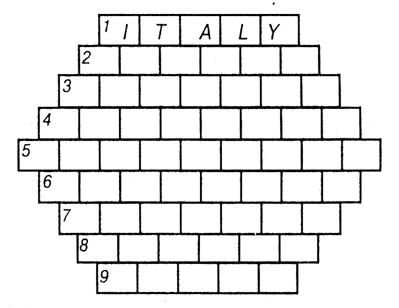
Across:
1. This country is in the south-west of Europe. It starts with “I”.
2. This country is in the south-east of Europe. It starts with “G”.
3. This country is in the United Kingdom. It starts with “E”.
4. This country is in the south-west of Europe. It starts with “P”.
5. This country is in the south-east of South Europe. They speak Spanish.
6. This country is in the north of the United Kingdom.
7. There are 3 countries here. It starts with “B”.
8. This country is in the South America. They speak Spanish.
9. This country is in the south-west of Europe. It starts with “S”.
Упражнение 7. Можете ли вы найти названия языков, предварительно расставив буквы в правильном порядке?
1. Typhoon comes from (ceshins) Chinese.
2. Psychology comes from (laint).
3. Zero comes from (aabcir).
4. Sputnik comes from (rainuss).
5. Yacht comes from (dcuht).
6. Kindergarten comes from (gamner).
7. Matador comes from (sahpins).
Упражнение 8. Соедините линиями названия городов и достопримечательностей.
1. London a) Eiffel Tower
 2. Washington b) Red Square
3. Paris c) The Pyramids
4. Cairo d) The Colosseum
5. Cuzco e) The White House
6. Rome f) Big Ben
7. Moscow g) The Temple of the Sun
Упражнение 9. Как много вы знаете о Соединённом королевстве? Проверьте себя.
1. The Union Jack is …
a) the flag of the UK; c) the flag of Wales;
b) the flag of Scotland; d) the flag of England.
2. The British Prime Minister lives at …
a) 12, Whitehall; c) 7, Russell Street;
b) 10, Downing Street; d) 15, Oxford Street.
3. Whitehall is …
a) a street leading from Trafalgar Square to the Houses of Parliament;
b) a big hall in the center of London;
c) a white palace near Trafalgar Square;
d) the palace where the Queen lives in summer.
4. The Great Fire of London broke out in …
a) 1066; c) 1106;
b) 1766; d) 1666.
5. Sir Christopher Wren built …
a) Buckingham Palace; c) St. Paul’s Cathedral;
b) Westminster Abbey; d) The Tower of London.
6. The National Gallery is in …
a) Piccadilly Circus; c) Trafalgar Square;
b) Parliament; d) Leicester Square.
7. Westminster is a … center of London.
a) cultural; c) business;
b) political; d) industrial.
8. Great Britain is separated from the continent by …
a) the Pacific ocean; c) the British Channel;
b) the Irish Sea; d) the English Channel.
9. Britain’s population is more than... million people.
a) 56; c) 560;
b) 5, 6; d) 7.
10. There are many farmlands in Britain, especially in the…
a) north; c) west;
b) south; d) east.
11. The head of State in Britain is …
a) the Prime Minister; c) the Queen;
b) the President; d) the Speaker.
Упражнение 10. Квиз о языках. Найдите правильный ответ. Загляните в справочную литературу.
1. What language has the largest number of native speakers?
a) Chinese; c) Spanish;
b) Hindustani; d) English.
2. Which language is spoken by 600 million people as a second language?
a) French; c) German;
b) English; d) Italian.
3. How many different languages are there in the world?
a) 50; c;
b) 500; d)
4. Which of this languages is the most similar to English?
a) Hindustani ; c) Chinese;
b) Hungarian; d) Arabic.
5. What word in English has the biggest number of different meanings?
a) set; c) take;
b) go; d) put.
6. What is the most common word in English?
a) I; c) the;
b) is; d) you.
7. How long is the longest word in the Oxford Dictionary?
a) 21 letters; c) 36 letters;
b) 28 letters; d) 45 letters.
8. Which country has the most English language speakers?
a) UK; c) Ireland;
b) Canada; d) USA.
9. What is the most common letter in English?
a) E; c) S;
b) T; d) A.
10. What is the most common first letter of English words?
a) O; c) S;
b) X; d) T.
Урок 1.4.12
Значение английского языка в современном мире. Местоимения some, any, no и их производные.
Упражнение 1. Прочтите и переведите текст.
Why should we learn English?
Тhe modern world is becoming smaller all the time. Every day distances between different countries seems less. For this reason it’s becoming more and more important to know different languages especially English.
One billion people speak English today. That’s about 20% of the world’s population.
400 million people speak English as their first language. For the other 600 million people it’s either a second language or a foreign language.
English is the first language in the United Kingdom, the United States of America, Australia and New Zealand. It is one of the official languages in Canada, the Irish Republic and the Republic of South Africa.
As a second language English is spoken in more than 60 countries. It is used by the government, businessmen and universities. English is the language of politics and diplomacy, science and technology, business and trade, sport and pop music.
80% of all information in the world’s computers is in English.
75% of the world’s letters and faxes are in English.
60% of all international telephone calls are made in English.
More than 60% of all scientific journals are written in English. To know English today is absolutely necessary for every educated person, for every good specialist. Learning a language is not an easy thing. It’s a long and slow process that takes a lot of time and patience. But it’s a must.
English is taught throughout the world and a lot of people speak it quite well. In our country English is very popular: it is studied at schools (sometimes even at nursery schools), colleges and universities.
Everyone will speak English soon – I’m sure of it. We all need to understand each other. To do that we need an international language, and that’s English.
Упражнение 2. Ответьте на вопросы к тексту.
1. Why is it necessary to know English today?
2. English is a world language, isn’t it?
3. How many people speak English?
4. Is English popular in Russia?
5. In what countries is English the official language (one of the official languages)?
6. Is learning languages an easy thing?
7. Have you read any books in English?
8. Have you seen any films in English?
9. What other languages would you like to know?
Упражнение 3. Заполните пропуски, используя данные в скобках числа и проценты.
1. … of all information in the world’s computers is in English.
2. … of the world’s letters and faxes are in English.
3. … of all international telephone calls are made in English.
4. … people speak English today.
5. That’s about … of the world’s population.
6. … million people speak English as their first language.
7. For the other … people it’s either a second language or a foreign language.
8. As a second language English is spoken in more than … countries.
( 80%, 75%, 60%, 20%, 400 million, 1billion, 600, 60.)
Упражнение 4. Составьте диалог – расспрос на тему «Необходимость изучения английского языка в наше время», опираясь на текст упражнения 1. Приведите аргументы за и против. Работайте в парах.
Упражнение 5. Приготовьте устное сообщение на тему «Значение английского языка в современном мире», используя новые слова и выражения.
***
Местоимения some, any, no и их производные.
Употребление some и any , а также их производных определяется типом предложения.
В утвердительном предложении употребляются, как правило, местоимение some и его производные:
Give me something to read, please.
Дайте мне что – нибудь почитать, пожалуйста.
I met him somewhere before.
Я встречал его где – то раньше.
В вопросительных и отрицательных предложениях обычно используются местоимение any и его производные:
Have you seen him anywhere?
Вы видели его где – нибудь?
Is there anything I can do for you?
Могу ли я что – нибудь для вас сделать?
В отрицательных предложениях используется либо местоимение any и его производные, либо отрицательное местоимение no.
I can not find this book anywhere.
Я не могу нигде найти эту книгу.
There is nobody in that room.
В той комнате никого нет.
There is not anybody in that room.
В той комнате никого нет.
Различия между местоимениями some и any - в степени неопределённости, поэтому иногда местоимение any можно встретить и в утвердительных предложениях:
You can find this book anywhere.
Эту книгу вы можете найти где угодно.
_____________________
Упражнение 6. Образуйте 16 производных местоимений и переведите их.
Образец: some + body = somebody – кто - то, кто – нибудь
some body
any one
no thing
every were
Упражнение 7. Вставьте somebody, anybody, nobody, everybody.
1. The question is so difficult that … can answer it. 2. … left his bag in our classroom yesterday. 3. Has … in this group got a dictionary? 4. It is too late. I think there is … in the office now. 5. … knows that plants like water. 7. You must find … who can help you. 8. … knew anything about our home task. 9. The question is very easy. … can answer it. 10. There is … in the next room. I don’t know him. 11. Please, tell us the story. … knows it. 12. Has … got a red pencil?
Упражнение 8. Переведите предложения на английский язык, употребляя неопределённые или отрицательные местоимения и их производные.
1. Здесь есть кто – нибудь, кто говорит на английском языке? 2. Каждый знает, что столица Англии - Лондон. 3. Кто – то из нашего колледжа ездил за рубеж прошлым летом. Я не могу вспомнить его фамилию. 4. У меня нет опыта общения с иностранными партнёрами. 5. В этом журнале есть что – нибудь интересное? – Нет, ничего . 6. Я нигде не могу найти англо – русский словарь. Вы видели его где – нибудь? 7. В музее изобразительных искусств есть какие – нибудь картины итальянских художников? - Да, есть несколько. 8. Мой друг не может ничего сказать на иностранном языке. Ни одного слова. Он не изучал его в школе. 9. Возьмите что – нибудь почитать для меня в библиотеке иностранных языков. 10. Расскажите нам всё о вашем путешествии в Париж. 11. Никто не помогал ему изучать китайский язык. 12. В Омске повсюду можно увидеть иностранцев.
Урок 1.4.13
Трудности в овладении английским языком
Употребление Participle 1, Participle 2
Упражнение 1. Прочтите и переведите текст.
The difficulties of a Foreign Language
There are numerous anecdotes about the difficulties of people travelling in foreign countries without a knowledge of the language of that country. Here is a story of a Frenchman travelling in the United States who, while eating in a restaurant, wished to order some mushrooms. Unable to make himself understood, he asked for a pencil and paper and carefully drew a picture of a mushrooms. His drawing, however, was not too good, for the puzzled waiter returned in about ten minutes, not with an order of mush rooms, but with a large man’s umbrella.
Another similar story concerns two Americans travelling in Spain. They were both unable to speak a word of Spanish and one day, while eating in a restaurant in a small village, they wеre having considerable difficulty in explaining to the waiter what they wanted. One of them wanted a glass of milk. The waiter seemed unable to understand. Finally, on the back of the menu the man drew a picture of the cow. The poor waiter, however, still seemed puzzled. Finally he left and was gone from the restaurant for the hour or so. He returned very pleased with himself. There were two tickets for a bullfight in his hand.
Упражнение 2. Если с вами когда – либо случались подобные истории, расскажите их друг другу. Работайте в группах.
Упражнение 3. Прочтите и переведите советы по улучшению вашего английского.
- try not to be nervous about speaking English;
- make an effort to practice out of college;
- listen to the radio and watch videos;
- sometimes speak English with your friends and parents;
- make an effort to use a dictionary to check the meaning of new vocabulary;
- try to enjoy studying English.
Упражнение 4. Познакомьтесь с некоторыми речевыми сегментами по теме «Я говорю по – английски». Соотнесите их с русскими эквивалентами.
Do you speak English (German, Вы говорите по – английски
French, Spanish, Italian, (по – немецки, по - французски,
Russian)? по – испански, по – итальянски, по – русски)?
Are you from England (…)? Вы из Англии (Германии, Франции, Испании, Италии,
России)?
I am Russian (Englishman, Я русский (англичанин, немец,
German, Frenchman, Spaniard, француз, испанец, итальянец).
Italian).
I am sorry. Простите (Я виноват).
Do I speak fast? Я говорю быстро?
I’ll speak slower. Я буду говорить медленнее.
Pardon. Простите (Я не расслышал).
I can understand you very Я понимаю вас очень хорошо. well.
You can speak English fairly. Вы очень прилично говорите по – английски.
I took you for an Englishman. Я принял вас за англичанина.
I have never been to England. Я никогда не бывал в Англии.
Упражнение 5. Прочтите диалог. Обратите внимание на употребление речевых сегментов.
- Do you speak English, Mr. Sokolov?
Вы говорите по – английски, господин Соколов?
- Yes, a little.
Да, немного.
- Do you speak German?
Вы говорите по - немецки?
- No, I don’t. But I speak Spanish.
Нет, но я говорю по – испански.
- Are you from Spain?
Вы из Испании?
- No, I am Russian. I am sorry, but I can’t understand you well when you speak so fast.
Нет, я русский. Простите, но я плохо понимаю вас, когда вы говорите так быстро.
- Do I speak fast? Well, I’ll speak slower. Do you understand me now?
Я говорю быстро? Хорошо, буду говорить медленнее. Теперь вы понимаете меня?
- Pardon?
Простите?
- I say, can you understand me now?
Я спрашиваю, понимаете ли вы меня теперь?
- Oh, yes. Now I can understand you very well.
О, да. Теперь я очень хорошо понимаю вас.
- You can speak English fairly.
Вы очень прилично говорите по – английски.
- Thank you. But I don’t think so. Sometimes it is very difficult for me to understand British people.
Спасибо. Но я так не думаю. Иногда мне очень трудно понимать англичан.
- But you speak English so well that I took you for an Englishman. Но вы так хорошо говорите по – английски, что я принял вас за Англичанина.
- Did you? But I have never been to England.
В самом деле? Но я никогда не был в Англии.
Упражнение 6. Выполните в диалоге частичный перевод.
- Do you speak English?
- Yes, a little.
- ( Вы говорите по - немецки?)
- No, I don’t. (Но я говорю по - испански.)
- Are you from Spain?
- No, I am Russian. I am sorry, but (я плохо понимаю вас, когда вы говорите так быстро).
- Do I speak fast? Well, (Я буду говорить медленнее). (Теперь вы понимаете меня?)
- Pardon?
- I say, (Понимаете ли вы меня теперь?)
- Oh, yes. (Теперь я очень хорошо понимаю вас.)
- You can speak English fairly well.
- (Спасибо.) (Но я так не думаю.) Sometimes it is very difficult for me (понимать англичан.)
- But you speak English so well that (я принял вас за англичанина.)
- Did you? (Но я никогда не бывал в Англии.)
Упражнение 7. Какие вопросы были заданы господину Соколову, если он дал на них следующие ответы?
1.__________________________________
- I am from Russia.
2.___________ ____________
- Yes, I am. I am Russian.
3. __________________________________
- Yes, I do. I speak English.
4. __________________________________
- No, I don’t. I don’t speak German.
5. __________________________________
- Yes, it is. Sometimes it is difficult for
me to understand British people.
6. __________________________________
- No, I haven’t. I have never been to
England.
***
Употребление Participle 1, Participle 2
Participle I
(Причастие настоящего времени)
Образование:
Participle I = основа глагола + - ing : sleeping |
Функции:
В предложении Participle I может быть: определением (а) или обстоятельством (б):
а) Определение:
The child sleeping on the sofa is Jack.
Ребёнок, спящий на диване, Джек.
б) Обстоятельство:
Reading your translation the teacher found several mistakes.
Читая ваш перевод, учитель нашёл несколько ошибок.
Participle II
(Причастие прошедшего времени)
Причастие II - это третья основная форма глагола (первые две формы – неопределённая форма глагола, или инфинитив, и форма прошедшего времени). Стандартные глаголы образуют эту форму при помощи суффикса – ed (т. е. эта форма совпадает с формой прошедшего времени). Нестандартные глаголы имеют особые формы, не всегда совпадающие с формой прошедшего времени.
Сравните:
Стандартные глаголы Нестандартные глаголы
ask - asked – asked go – went - gone
want – wanted – wanted come – came - come
work – worked - worked speak – spoke – spoken
Participle II в предложении может быть определением:
Не bought a used car.
Он купил подержанный автомобиль.
The information received was very important.
Полученная информация была очень важна.
__________________
Упражнение 8. Переведите на русский язык, обращая внимание на Participle 1, Participle 2.
1. a) A letter sent from St. Petersburg today will be in Moscow tomorrow.
b) He saw some people in the post office sending telegrams.
c) When sending the telegram, she forgot to write her name.
2. a) Some of the questions put to the lecturer yesterday were very important.
b) The girl putting the book on the shelf is a new librarian.
c) While putting eggs into the basket, she broke one of them.
3. a) A fish taken out of the water cannot live.
b) A person taking a sunbath must be very careful.
c) Taking a dictionary, he began to translate the text.
4. a) A line seen through this crystal looks double.
b) A teacher seeing a mistake in his dictation always corrects it.
c) Seeing clouds of smoke over the house, the girl cried: “Fire! Fire!”
Упражнение 9. Выпишите из текста упражнения 1. причастия 1 и причастия 2.
Упражнение 10. Прочтите текст о столице одной из стран изучаемого языка – США и выполните следующие упражнения:
а) Назовите номер абзаца, в котором причастие 1 является определением. Выпишите это предложение и переведите на русский язык.
б) В каких функциях употреблено причастие 1 в приведённых ниже предложениях? Переведите предложения на русский язык:
1. The Library of Congress contains millions of books and manuscripts, including personal papers of the US presidents.

|
Из за большого объема этот материал размещен на нескольких страницах:
1 2 3 4 5 6 7 8 9 |
