


Партнерка на США и Канаду по недвижимости, выплаты в крипто
- 30% recurring commission
- Выплаты в USDT
- Вывод каждую неделю
- Комиссия до 5 лет за каждого referral
Action, un-English, really, business, incorrect, unfruitful, illness, ninth, television, re-enter, unusual, driver, examination, humanist, fifty, capitalism, nineteen, fishy, fatherless, glassy, enjoyable, youthful, machinist, landless, modernism, readable, funny, indirect, retell, electric, political, redress.
Exercise 4. Образуйте столько слов, сколько сможете, используя суффиксы –less, -able, -ly, -ion, -ness, -ful и приставки re- и un-:
Success, to connect, to understand, to construct, help, active, to break, to read, beauty.
Text: Biography.
Let me introduce myself. My name is Ivan Smirnov. I am a pupil of the Professional Lyceum №1. I am 15 years old.
I was born on the 6th of October in 1991 in Gubkin. Gubkin is my native town. At the age of 3 years old I went to the kindergarten №10. When I was 7 I went to school №5.
This year I have finished the 9th form of the secondary school and have entered the PL №1. Now I am going to become an electrician (an excavator driver, a locomotive driver, a driver, a borer, a welder).
Words:
1. Let me – позвольте, разрешите мне;
2. lyceum [lai’siəm] – лицей;
3. I was born…– я родился…;
4. native – родной;
5. at the age of…– в возрасте…;
6. kindergarten – детский сад;
7. form – класс;
8. secondary school – средняя школа;
9. to enter PL№1 – поступить в ПЛ№1.
Questions:
1. What is his name?
2. How old is Ivan Smirnov?
3. What is he?
4. When was Oleg born?
5. Where was he born?
6. When did he go to the kindergarten?
7. When did he go to school?
8. What has he done this year?
9. What is he going to be?
Лексические упражнения
1.Выберите правильный перевод английских словосочетаний:
А. 1)детский сад; 2)позвольте представиться; 3)окончить школу; 4)девятый класс средней школы; 5)профессиональный лицей.
a) let me introduce myself;
b) to finish school;
c) professional lyceum;
d) the ninth form of the secondary school;
e) the kindergarten.
В. 1)родился; 2)поступить в..; 3)я собираюсь стать; 4)в возрасте…; 5)когда мне было семь.
a) I am going to become;
b) to enter;
c) at the age of;
d) when I was seven;
e) was born.
2. Заполните пропуски следующими словами в соответствующей форме:
(is, born, Lyceum, old, age, introduce, entered, finished, kindergarten, secondary, am, native, school)
1) Let me ___ myself. My name ___ Ivan Smirnov. I ___ a pupil of the Professional ___ №1. I am 15 years ___.
2) I was ___ on the 6th of October in 1991 in Gubkin. Gubkin is my ___ town.
3) At the ___ of 3 years old I went to the ___ №10. When I was 7 I went to ___ №5.
4) This year I have ___ the 9th form of the ___ school and have ___ the PL №1.
3. Выпишите слово из словарного ряда, которое не подходит по смыслу:
1) age
2) lyceum
3) introduce
4) form
school
friend
finish
school
old
kindergarten
myself
town
4. Заполните пропуски предлогами и наречиями где это необходимо:
1) I am a pupil ___ the Professional Lyceum №1
2) I was born ___ the 6th ___ October ___ 1991.
3) I was born ___ Gubkin.
4) ___ the age ___ 3 years old I went ___ the kindergarten №10.
5) When I was 7 I went ___ school №5.
6) This year I have finished the 9th form ___ the secondary school.
7) This year I have entered ___ the PL №1.
5. Заполните пропуски артиклями там, где это необходимо:
1) Let me introduce ___ myself. 2) My name is Ivan Smirnov. 3) I am ___ pupil of ___ Professional Lyceum №1. 4) I am 15 years old. 5) I was born on ___ 6th of ___ October in 1991 in ___ Gubkin. 6) ___ Gubkin is my ___ native town. 7) At ___ age of 3 years old I went to ___ kindergarten №When I was 7 I went to ___ school №5. 9) This year I have finished ___ 9th form of ___ secondary school and have entered ___ PL №1. 10) Now I am going to become ___ electrician.
6. Переведите на английский язык, употребляя активную лексику урока:
Позвольте представиться. Меня зовут Петр Иванов. Мне 16 лет. Я учащийся Профессионального лицея № 1.
Я родился 1-го января 1992 года в Старом Осколе. Старый Оскол мой родной город. В возрасте 2 лет я пошел в детский сад № 58. Когда мне было 6, я пошел в школу № 27.
В этом году я закончил 9-й класс средней школы и поступил в ПЛ №1. Я собираюсь стать экскаваторщиком.
Грамматика.
Past Simple (Прошедшее простое).
1. Утвердительная форма образуется:
для правильных глаголов
V–ed
для неправильных глаголов
V2
He worked.
We opened.
They studied.
Он работал.
Мы открыли.
Они учились.
He read (to read).
They wrote (to write).
She went (to go).
Он читал.
Они писали.
Она пошла.
Вторую форму неправильных глаголов (V2) следует искать во второй колонке таблицы неправильных глаголов. Например:
to write – wrote – written – писать
to sit – sat – sat – сидеть
to go – went – gone – ходить
2. Вопросительная форма как правильных, так и неправильных глаголов образуется при помощи вспомогательного глагола did и смыслового глагола в форме инфинитива (без to), причем did ставится перед подлежащим:
Did they work?
Did they speak?
Работали ли они?
Говорили ли они?
3. Отрицательная форма как правильных, так и неправильных глаголов образуется при помощи вспомогательного глагола did, частицы not и смыслового глагола в форме инфинитива (без to).
He did not speak.
I did not work.
Он не говорил.
Я не работал.
4. Употребляется для выражения действия, которое совершалось или совершилось в прошлом.
5. Обстоятельства времени Past Simple:
yesterday – вчера;
the day before yesterday – позавчера;
last week (month, time…) - на прошлой неделе (в прошлом месяце, в прошлый раз…).
two days (three years) ago - два дня (3 года) назад;
in 1917 - в 1917 году.
Глагол “to be”в Past Simple.
ед. ч.
мн. ч.
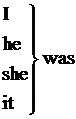
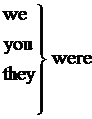
Как и в настоящем времени для образования вопросительной формы предложения ставится was/were перед предложением:
Was he?
Were you?
Был ли он?
Были ли вы?
Отрицательная форма образуется при помощи частицы not, которая ставится после was/were:
I was not.
He was not.
They were not.
Я не был.
Он не был.
Они не были.
Предлоги времени.
on Sunday - в воскресенье (on + дни недели).
on the 24th of July - 24-го июля (on +дата).
in September - в сентябре (in + месяц).
at three o’clock - в 3 часа (at + время).
in 1971 - в 1971 году (in + год).
in winter - зимой (in + время года).
in the evening - вечером (in + время дня).
at night - ночью.
Предлоги места и движения.
I live in Moscow. – Я живу в Москве. (где?)
I am going to Moscow. – Я еду в Москву. (куда?)
I went from Paris. – Я уехал из Парижа. (откуда?)
I am at home. – Я дома.
I am at school. – Я в школе.
He is in the shop. – Он в магазине (внутри здания).
Альтернативные вопросы.
Это вопросы, предполагающие в ответе выбор между двумя или более предметами, действиями или качествами, выраженными однородными членами предложения, соединенными союзом or - или.
Is this pen red or black?
I go to school.
Do I go to school or to the cinema?
Do I or you go to school?
Do I go or drive to school?
This pen is red. или This pen is
black.
Я иду в школу.
Я иду в школу или в кино?
Я или ты идешь в школу?
Я иду или еду в школу?
Специальные вопросы.
Это вопросы, которые относятся к отдельным членам предложения, и начинается c вопросительного слова.
What? что? – если стоит после глагола.
What is this?
It is a pen.
Что это такое?
Это ручка.
What? кто? – если подразумевается профессия, социальное положение.
What are you?
Кто вы (профессии)?
I am a welder.
Я газосварщик.
What? какой? (какая, какое, какие), если стоит не перед глаголом, а перед существительным:
What book is this?
It is Anna Karenina.
Какая это книга?
Это - “Анна Каренина”
т. е. не вопрос о качестве предмета и на него нельзя ответить, называя качество предмета.
Для того чтобы задать вопрос о качестве, употребляется словосочетание what kind of..? какого рода (вида), что такое?
Сравните:
What city is it? It is Kiev.
What kind of city is Kiev?
It is a big city.
Какой это город? Это Киев.
Какой город Киев?
(Что за город Киев?)
Это большой город.
Who? кто? – если подразумевается имя (фамилия) или степень родства.
Who is that girl?
She is my sister.
Кто та девушка?
Она моя сестра.
Whose? чей? – подразумевается вопрос о принадлежности предмета.
Whose book is this? It is my book.
Whose sister is this?
This is her sister.
Чья это книга? Это моя книга.
Чья это сестра?
Это ее сестра.
Where? куда? откуда? – вопросы к обстоятельству места.
Where is the book?
Где книга?
It is on the table.
Она на столе.
When? когда? – вопрос к обстоятельству времени.
When is your birthday?
Когда твой день рождения?
It is on the 1st of May.
Оно 1-го мая.
Вопросы к подлежащему или определению.
Who? – кто?
Whose? – чей?
What? – что? какой?
Which? – который?
Вопросы, начинающиеся с этих слов, имеют порядок слов повествовательного предложения, т. е. вспомогательный глагол не выносится, т. к. вопросительное слово само является подлежащим, а перед ним нельзя ничего ставить. Вопросительные слова who? кто? what? что? which? который? согласуются обычно с глаголом – сказуемым в 3-м лице ед. числа:
Who reads English well?
Кто хорошо читает по-английски?
What lasts two hours?
Что продолжается 2 часа?
Which of you speaks German well?
Кто из вас хорошо говорит по-немецки?
What lessons last two hours?
Какие уроки длятся 2 часа?
Упражнения для повторения грамматического материала:
1. Поставьте следующие предложения в отрицательной и вопросительной форме:
1. I went to school at 7.
2. He finished school last year.
3. They entered PL№1 two years ago.
4. She was born in 1991.
5. We were pupils of PL №1 ten years ago.
6. He was a driver.
2. Напишите следующие предложения в прошедшем времени, добавив к каждому из них нужное по смыслу обстоятельство времени:
1. His name is Igor.
2. His birthday is on the lst of January.
3. She is 15 years old.
4. I go to school.
5. They are pupils of PL №1.
6. We go to the kindergarten.
7. He finishes school.
8. I enter the Professional Lyceum.
3. Заполните пропуски предлогами и наречиями, там, где это необходимо:
1. He is a pupil __ PL №1.
2. He was born __ the 22nd __ June__1990.
3. We were born __ Gubkin.
4. __ the age__3 he went__ the kindergarten.
5. When he was 7 he went__ school.
6. He finished the 8th fоrm __ the secondary school.
7. We entered __ PL №1.
4. Заполните пропуски предлогами там, где это необходимо:
1. I live __ Gubkin.
2. __ last week he went __ Volgograd.
3. Yesterday mother went __ PL №1.
4. I am __ PL №1 now.
5. Let’s go __ me.
6. __ Sunday __ five o’clock I meet friends.
7. He is __ hоmе now.
8. They returned __ London.
9. __ winter we ski and skate.
10. __ the evening I watch TV.
11. We always have a holiday __ November.
5. Прочитайте по-английски:
1, 11, 2, 12, 20, 3, 13, 30, 4, 14, 40, 5, 15, 50, 6, 16, 60, 7, 17, 70, 8, 18, 80, 9, 19, 90.
6. Прочитайте по-английски:
1870г., 1868г., 1825г., 1773г., 1837г., 1919г., 1708г., 1800г., 2000г., 2006г.
7. Раскройте скобки и употребите глагол в необходимом времени, лице и числе:
1. Who usually (to go) to the lyceum? – This student (to do).
2. Last year I (to study) at the 9th form of the secondary school.
3. How your friend (to speak) English? – He (to speak) English badly.
4. What language you (to study) five years ago? – I (to study) French.
5. What language he (to study) now? – He (to study) German.
6. Who (to finish) school last year? – I (to do).
7. How long your lesson always (to last). – It always (to last) forty minutes.
8. How long your lesson (to last) two days ago? – It (to last) thirty minutes.
9. Yesterday (to be) my day off. I usually (to wake up) early on my days off. But sometimes I (not to get up) at once. Yesterday I (to get up) at eight o’clock.
10. What you (to have) breakfast yesterday? – I (to have) breakfast at nine o’clock in the morning.
11. My son (to be) a pupil. He (to study) very well. He always (to prepare) his lessons. Yesterday he (to get) three good marks.
12. Where you (to be) yesterday? – I (to be) at the cinema. – You (to like) the new film? – Yes, I (to do).
8. Переведите, обращая внимания на употребление глагола to like.
1. Я люблю читать.
2. Мне нравится читать.
3. Вам нравится этот парк?
4. Он любит ловить рыбу.
5. А ей нравится садоводство.
6. Вам понравился этот фильм? – Да, мне он очень понравился.
7. Вы любите гулять? – Да, люблю.
9. Поставьте к следующим предложениям альтернативные вопросы, используя слова данные в скобках:
1. He was born in Kiev (Moscow).
2. She went to school at 6. (to the kindergarten).
3. I went to the kindergarten at three (at four).
4. He was born in 1985(in 1987).
5. He entered PL №1 (PL №15).
6. She entered PL №1 last year (two years ago).
10. Поставьте вопросы к выделенным словам:
1. I was born in Vologda in 1989 (3).
2. We were playing chess (2).
3. I went to school at 7 (3).
4. My friend’s son usually goes to kindergarten early (2).
5. I saw my friend yesterday (1).
6. She is 15 years old (1).
7. He has 5 lessons every day (2).
8. He had 6 lessons yesterday (1).
Unit 3: My Flat.
Exercise1. Прочитайте следующие слова, пользуясь соответствующими правилами чтения.
[ai]
[^]
[o]
[ou]
[s]
[k]
neither
wide
right
light
cupboard
number
oven
bathroom
door
wall
often
floor
wardrobe
window
sofa
narrow
electricity
bookcase
electricity
can
cold
above
stove
enjoy + - ment |
| |
Verb | Noun |
|
enjoy | enjoyment |
|
agree | agreement |
|
pay | payment |
|
develop | development |
|
move | movement |
|
| ||
Adjective | Noun | |
active | activity | |
national | nationality | |
possible | possibility | |
formal | formality | |
real | reality | |
 active activity
Exercise 2. Прочитайте, сравните и проанализируйте:
1. I enjoyed the concert very much. 2. She finds great enjoyment in music. 3. The child is very active for his age. 4. He always took part in out-of-school activities.
Exercise 3. Прочитайте и дайте русские эквиваленты подчеркнутым словам:
1. The new film shows the grim realities of war. 2. After a long discussion the delegations came to an agreement. 3. There were a lot of government offices in the high building in the square. 4. The meeting showed the solidarity of working people. 5. The democratic movement against race discrimination in the USA was very strong. 6. I haven’t got enough money today to make the payment I promised. 7. Winning the championship is a possibility for our team. 8. What nationality is your friend? 9. The radio reported the latest political developments in the country. 10. It’s just a formality, you can get the document in two hours.
Text: My Flat.
I have got a flat. I live in Gorky Street 35. The number of my flat is 59. It is on the fifth floor. We have got all modern conveniences: gas, electricity, hot and cold running water, central heating, telephone and lift. But we don't have а chute.
Our flat has two rooms, a kitchen, a bathroom, a toilet and a corridor.
Our living-room is neither big nor small. It is light and cosy. You can see a wall-unit on the left. The TV-set is on the right. You can see an arm-chair and a sofa near the TV-set. There is a wide carpet in the middle of the room, curtains on the window. The mirror hanging on the wall is old and nice. There are many books in the book-case. I often spend my free time watching TV and reading magazines in our living-room.
I have my own room. It is small. There is no much furniture there. There is a bed on the right. The wardrobe is on the left. There is a computer table between the window and the bed. You can see a chair at the computer table. There are many posters and pictures on the walls. The carpet is on the floor, the curtains are on the window. I like my room very much.
Our kitchen is big and comfortable. We have all modern labor-saving devices in it: a refrigerator, a gas-stove with an oven, a microwave oven. We usually have breakfast and supper in the kitchen.
The bathroom is small. You can see a washing-machine near the door. We have a vacuum-cleaner, it is in the bathroom too.
The corridor of our flat is long and narrow. There is a telephone on the shelf in it.
I like my flat. My friends say that it is a good one.
Words:
a flat – квартира;
in Gorky Street – на улице Горького;
a floor – пол, этаж;
modern – современный;
conveniences – удобства;
gas – газ;
electricity – электричество;
hot and cold running water – горячая и холодная вода;
central heating – центральное отопление;
a telephone – телефон;
a lift – лифт;
a chute – мусоропровод;
a room – комната;
a kitchen –кухня;
a bathroom – ванная;
a toilet – туалет;
a corridor – коридор;
a living-room – гостиная комната;
neither… nor… - ни… ни…;
light –светлый;
cosy – уютный;
a wall-unit – стенка (мебель);
on the left – слева;
on the right – справа;
a TV-set – телевизор;
an arm-chair – кресло;
a sofa – диван;
near – возле, у, около;
at – возле, у, около;
wide – широкий;
a carpet – ковер;
a curtain – занавеска;
a window – окно;
a mirror – зеркало;
to hang – висеть;
a wall – стена;
a book-case - книжный шкаф;
own – собственный;
furniture – мебель;
a bed – кровать;
a wardrobe –гардероб, шифоньер;
a computer table – компьютерный стол;
between – между;
a chair – стул;
a poster – плакат;
a picture – картина;
comfortable – удобный;
labour-saving devices – бытовая техника;
a refrigerator – холодильник;
a gas-stove – газовая плита;
an oven – духовка;
a microwave oven – микроволновая печь;
a washing-machine – стиральная машинка;
a vacuum-cleaner – пылесос;
long – длинный;
narrow – узкий;
a shelf – полка.
Dialogue
Alice: Hi, Sasha!
Sasha: Hallow, Alice!
Alice: Where do you live?
Sasha: I live in Kirov Street, flat number 18, house number 6.
Alice: Is your flat large or small?
Sasha: It is neither big nor small. We have two rooms, a kitchen, a bathroom, a corridor. And what about you? Where do you live?
Alice: I live in the private house in Gorky Street, house number 7.
Sasha: Is it comfortable?
Alice: Yes, it is. We have all modern conveniences: central heating, gas, electricity, hot and cold running water and telephone. Sasha, would you like to live in the private house?
Sasha: I don’t know. I have never lived in it. I prefer a flat.
Alice: Tastes differ.
Questions:
1. Have you got a flat?
2. What is the number of your flat?
3. What modern conveniences do you have?
4. How many rooms does the flat have?
5. Is your living-room big or small?
6. What is there in the living-room?
7. Is there a TV-set in it?
8. Is the TV-set on the left or on the right?
9. Do you have your own room?
10.The kitchen is comfortable, isn’t it?
11.Where is the vacuum-cleaner?
12.Do you like your flat?
Лексические упражнения
1. Выберите правильный перевод английских словосочетаний:
А.1) на втором этаже;
2) современные удобства;
3) на улице Белинского;
4) у меня есть;
5) горячая и холодная вода.
a) I have got;
b) on the second floor;
c) hot and cold running water;
d) in Belinsky Street;
e) modern conveniences.
В. 1) центральное отопление;
2) мусоропровод;
3) кухня;
4) мебель;
5) уютный.
a) a chute;
b) a kitchen;
c) central heating;
d) cosy;
e) furniture.
С. 1) удобный;
2) бытовая техника;
3) холодильник;
4) пылесос;
5) стиральная машина.
a) a refrigerator;
b) comfortable;
c) a washing-machine;
d) a vacuum-cleaner ;
e) labor-saving devices.
D. 1) духовка;
2) плита;
a) an oven;
b) a curtain;
3) занавеска;
4) гардероб;
5) собственный.
c) own;
d) a wardrobe ;
e) a stove.
2. Заполните пропуски следующими словами в соответствующей форме:
(electricity, a corridor, a refrigerator, flat, a bathroom, a toilet, lift, telephone, flat, floor, Street, gas, chute, a microwave oven, rooms, central heating, a gas-stove, a kitchen, an oven, hot and cold running water)
1) I have got a ___. I live in Gorky ___ 35. The number of my ___ is 59. It is on the fifth ___.
2) We have got all modern conveniences: ___, ___, ___, ___, ___ and ___. But we don't have а ___.
3) Our flat has two ___, ___, ___, ___ and___.
4) We have all modern labor-saving devices in it: ___, ___ with ___, ___.
3. Выпишите слово из словарного ряда, которое не подходит по смыслу:
a living-room
a kitchen
a library
a bathroom
a wardrobe
a door
a bookcase
a shelf
central-heating
electricity
chute
wide
a washing machine
a refrigerator
an oven
a kitchen
light
wide
gas
narrow
4. Заполните пропуски предлогами и наречиями где это необходимо:
1) I live ___ Gorky Street 35.
2) The number ___ my flat is 59.
3) It is ___ the fifth floor.
4) You can see a wall-unit ___ the left.
5) You can see an arm-chair and a sofa ___ the TV-set.
6) There is a wide carpet ___ ___ ___ ___ the room, curtains ___ the window.
7) The mirror hanging ___ the wall is old and nice.
8) There is a computer table ___ the window and the bed.
9) You can see a chair ___ the computer table.
5. Заполните пропуски артиклями там, где это необходимо:
1) I have got ___ flat. I live in ___ Gorky Street 35. ___ number of my flat is 59. It is on ___ fifth floor
2) ___our flat has two ___ rooms, ___ kitchen, ___ bathroom.
3) It is ___ light and ___ cosy. You can see ___ wall-unit on ___ left.
4) You can see ___ arm-chair near ___ TV-set. There is ___ wide carpet in ___ middle of ___ room.
5) There are ___ many books in ___ book-case.
6) I have ___ my own room. It is ___ small.
6. Переведите на английский язык, употребляя активную лексику урока:
У меня есть квартира. Я живу на улице Фрунзе. Квартира на 3-ом этаже. Мы имеем все современные удобства: газ, электричество, центральное отопление и горячая вода. Но у нас нет лифта, мусоропровода и телефона.
У меня есть собственная комната. В ней не много мебели. Справа стоит кровать. Шифоньер находится между кроватью и окном.
На кухне есть много бытовой техники: микроволновка, стиральная и посудомоечная машины, холодильник и газовая плита с духовкой.
Мне нравится моя квартира. Мои друзья говорят, что она хорошая.
Грамматика:
Оборот there is, there are.
1. Предложения с этим оборотом употребляются, чтобы указать наличие или отсутствие какого-либо лица или предмета в определенном месте. Предложения с оборотом строятся следующим оборотом:
There is/are
There is
предмет
a sofa
обстоятельство места
on the left.
Слева – диван (есть, имеется, находится, стоит).
Т. е. такие предложения переводятся с конца (с обстоятельства места).
2. Если в предложении с оборотом there is имеется несколько подлежащих, то глагол to be всегда согласуется с подлежащим, которое следует непосредственно за ним:
There is a table and five chairs in the room.
В комнате стол и пять стульев.
There are five chairs and a table in the room.
В комнате пять стульев и стол.
3. В обороте there is слово there не имеет самостоятельного значения, поэтому при переводе на английский язык русских предложений, в которых есть обстоятельство места там, нужно в конце предложения употребить there:
Там было много картин.
There were many pictures there.
4. Для образования вопросительной формы предложений с оборотом there is в настоящем и прошедшем времени группы Simple глагол to be в соответствующем времени ставится перед словом there;
Is there a carpet in your room?
Were there many books on the shelf?
В твоей комнате есть ковер?
На полке много книг?
5. При постановке вопроса к подлежащему употребляется вопросительное местоимение what?
What is there on the wall?
Что находится на стене?
6. При постановке вопросов к определению подлежащего употребляются вопросительные слова how much, how many и вопросительные местоимения what? и whose?
How many chairs are there in the
room?
How much water was there in the kettle?
What books were there in your book-case?
Whose picture is there on the wall?
Сколько стульев в комнате?
Сколько воды было в чайнике?
Какие книги были в твоем книжном шкафу?
Чья картина висит на стене?
7. Как правило, вопросы к обстоятельству места в предложениях с оборотом there is не ставится. Задается обычный специальный вопрос:
Where is the table?
Где стол?
8. Отрицательная форма оборота there is образуется при помощи отрицательного местоимения no, которое выражает полное отрицание наличия предмета в данном месте. Употребление no исключает употребление артикля.
There is no book on the table.
There were no curtains on the
window.
На столе нет (никакой) книги.
На окне не было (никаких) занавесок.
Но в кратких ответах, если подлежащее имеет при себе определения many, much, enough; употребляется отрицательная частица not:

|
Из за большого объема этот материал размещен на нескольких страницах:
1 2 3 4 5 6 7 8 |
