

Партнерка на США и Канаду по недвижимости, выплаты в крипто
- 30% recurring commission
- Выплаты в USDT
- Вывод каждую неделю
- Комиссия до 5 лет за каждого referral
• Modulation: 4 or 16 QAM
• Frequency bands:
– 3.5, 10, 26 and 28 GHz with Frequency Division Duplex (FDD) channel arrangement
– multiple frequencies can be deployed from the same base station platform, and aggregated onto a single network interface.
• Base station capacity:
– A single base station can cover 40 km2 at 26 to 28 GHz, and up to 400 km2 at 3.5 and 10.5 GHz, enabling hundreds or thousands of potential customers to be addressed from a single base station.
– up to 28 Mbit/s of capacity per radio channel
– from 2 to 12 sectors (48 at 10 GHz)
– a total capacity of 384 E1s or 1Ѕ STM-4s with only 28 MHz of available spectrum.
– capacity is provisioned based on average utilization rather than peak utilization as is the case with fibre enabling a wireless base station configured for an STM-1 to provide the same effective capacity as an STM-4 fibre ring.
• Subscriber Access System:
– User Interface: E1/T1 lines, 10/100BaseT port, Serial Port
– Radio Interface: TNC connector for coax cable carrying transmit and receive IF signals, radio DC power, reference clock signal and telemetry control channel.
• Environmental specifications:
– Indoor equipment operating temperature: 0°C to +40°C
– Outdoor equipment operating temperature: – 33°C to + 55°C
• Power:
– all system components operate from a nominal – 48 VDC source.
• Typical Power consumption:
– Subscriber Access System: 38 W (– 48 VDC)
• Network management:
– A scalable carrier-class suite of tools that allows operators to easily manage their networks.
II.1.2 angel: A Non-Line-Of-Sight Broadband Fixed Wireless Access System
angelTM is a point-to-multipoint fixed wireless access system specially designed for residential, Small Offices/Home Offices (SOHO) and Small and Medium-sized Enterprise (SME) users in urban, suburban and rural areas.
It is the first and only field-proven access network solution to use Non-Line-Of-Sight (NLOS) Orthogonal Frequency Division Multiplexing (OFDM) technology to deliver carrier-class voice and data services up to 1 Mbit/s per subscriber on a single platform.
Therefore it is a natural evolutionary path to WiMax using also NLOS – OFDM technology.
Over 100 000 subscriber lines connected to over 500 base stations are commercially operational today in the US as well as in the world.
Operating in the 2.3 and 3.5 GHz frequency bands, NLOS technology provides up to 95% predictability of coverage and penetration in a given cell, while, thanks to OFDM, layouts can range from 1 to 30 km radius cells, resulting in reduced operational and installation costs.
Architecture
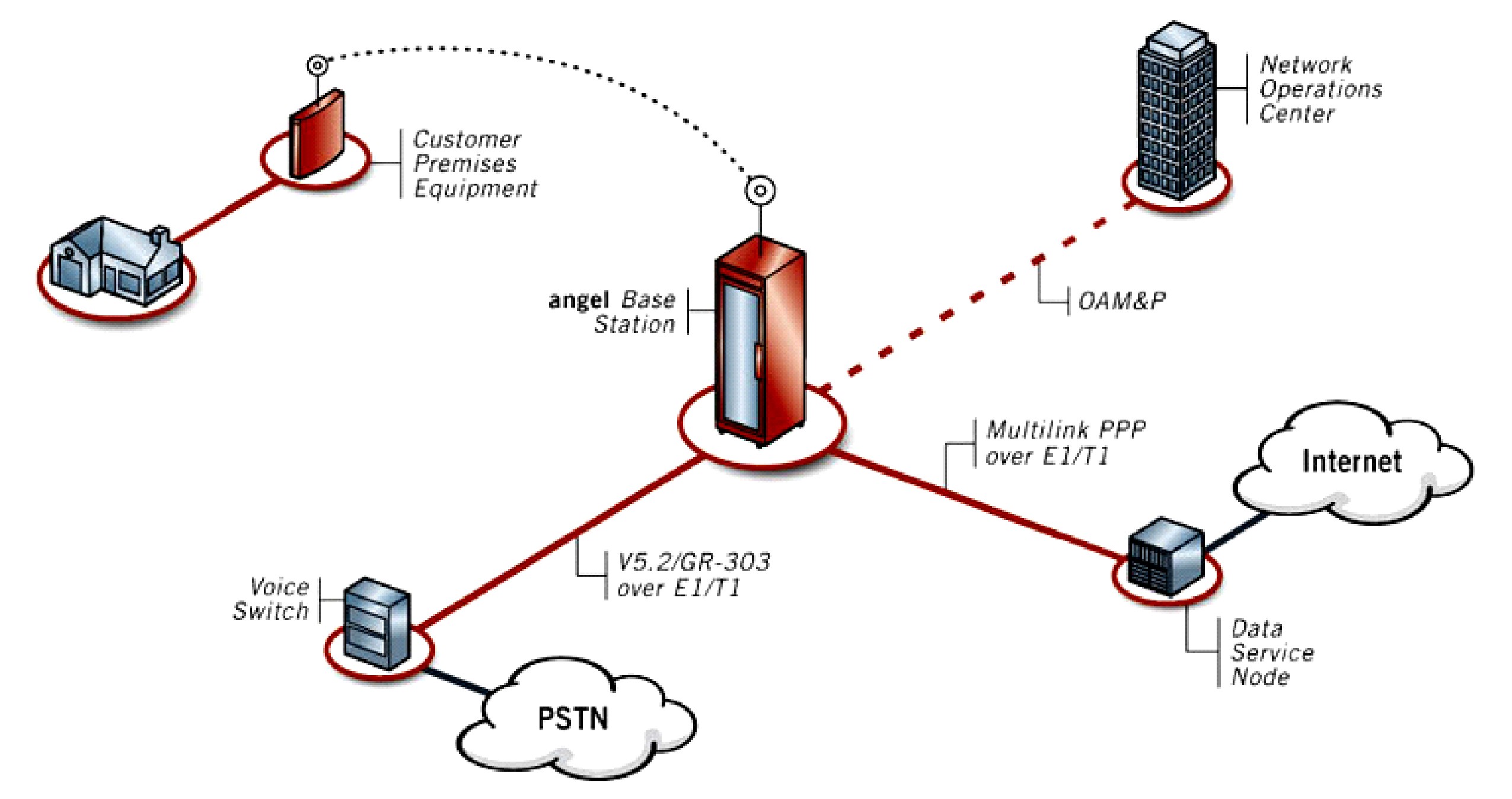
Figure 24 represents an example of the Architecture of angel.
Figure 24 – Angel Architecture
Main features and benefits
• Non-line-of-sight technology to maximize coverage and revenues
OFDM technology enables angel to provide 95% predictability of coverage in a given cell, which ensures high installation success rates and controls deployment costs. Thanks to this NLOS technology there is no requirement for a direct, unobstructed view of the base antenna. More customers can be served and precise alignment of the Customer Premise Equipment (CPE) antenna with the base antenna is unnecessary. High base station antennas are not required, allowing deployments in markets that have zoning restrictions on tower heights.
• High spectral efficiency
The net spectral efficiency of the system is 3.4 bit/s/Hz. For maximum spectral efficiency, the system adapts its modulation to the channel conditions it supports. The maximum throughput is typically available even at the edge of the cell, which enables the system to offer high data rates in smaller 1 MHz channels. Because frequencies can be re-used in adjacent cells, operators can deploy hundreds of base stations in a city or region using only 4 MHz of spectrum.
• Flexible services
The system enables operators to significantly enhance their revenues by providing a variety of voice and broadband data services to subscribers. As well as providing carrier-class voice that is equal to the quality and reliability of wireline service, the system supports revenue generating CLASS services, such as Call Waiting, Call ID, Three-way Calling and Voicemail.
Broadband data connectivity provides Internet access for multiple IP devices from a single subscriber unit, without impacting voice traffic. It also provides broadband data support for PCs and IP devices and enables subscribers to use standard modem and fax protocols for interoperability with legacy devices.
• Grade of Service levels
Service providers can offer multiple Grade Of Services (GOS) that can be customized to meet residential, SOHO or small business customers’ unique needs. The data channel can be partitioned into as many as four sub-channels, called “service grades”. Each service grade utilizes a portion of the available channel and can be tailored to the size that the operator chooses. Each subscriber is provisioned a maximum data rate (such as 64 kbit/s or 128 kbit/s, up to 1 Mbit/s), and is assigned to one of the grades. Thus, rigid, simple Grades of service enable operators to easily develop data “products” that can be targeted to specific segments of their diverse subscriber base. For example, a channel could be divided between business and residential subscriber “products”.
• V90 over Data IP
A unique MAC architecture and voice coding enables the system to transmit modem traffic over packet data portion of the wireless channel. While traditional modem solutions use precious bandwidth even during idle periods, the angelTM solution frees that bandwidth for other modem and data subscribers. The amount of bandwidth used for a voice call and a modem are virtually identical. This means that the voice capacity of the airlink remains constant, regardless of modem usage. Constant capacity is imperative for the delivery of reliable voice service.
Technical characteristics
• Access method:
– Access method:cteristicswidth for other modem and data subscribers. The amount of bandwidth used for a voice call and a modem are virtually identity of coverage in a given cell.
• Modulation: 64-, 16-, 8-QAM, and QPSK:
– Modulation: 64-, 16-, 8-QAM, and QPSK:r modem and data subscribers. The amount of bandwidth used for a voice call and a modem are virtually identity of coverage
– Modulation: 64-, 1annel (NAC/HCC) is always QPSK modulated for robustness.
– Modulation: 64-, 1annel (NAC/HCC) is always QPSK modulated for robustness. ount of bandwidth used for a voice c
– Modulation: 64-, 1annel (NAC/HCC) is always QPSK modulated for robustness. ount of bandink-by-link basis if necessary.
• Frequency bands:
– Frequency bands: 1annel (NAC/HCC) is always QPSK modulated for robustness. ount of bandink-by-li
• Base station capacity:
– Base s3 600 Voice lines or up to 12 Mbit/s of data per Base Station using as little as a single 4 MHz pair of frequency blocks.
– Up to 4 sectors with cell radius of up to 30 km.
– Channels can be configured to support voice-centric, data-centric or combined voice and data networks.
• Customer Premise equipment (CPE):
– Installation without line-of-sight between the base station and the CPE.
– Data rate:
– Over 3 Mbit/s symmetric data rate (aggregate).
– Up to 1 Mbit/s downstream, 256 kbit/s upstream per Customer Premise Equipment.
– Ethernet data interface.
– Voice capacity:
– 1 to 6 POTS per CPE.
– 312 active calls per base station.
– Fax, V90, CLASS services, dial-tone from the V5.2 switch.
– IP access: Up to 5 IP addresses per CPE.
– Battery back-up.
• Power consumption: all lines active:
– Base station: 2000 W, 176-264 VAC or – 48 VDC.
– Subscriber Integrated terminal (SSU 4000): 25W, 85-264 VAC or 176-264 VAC.
• Environmental specifications:
– Indoor equipment operating temperature: –5°C to +50°C (Base station ABS 3000).

|
Из за большого объема этот материал размещен на нескольких страницах:
1 2 3 4 5 6 7 8 9 10 11 12 13 14 15 16 17 18 19 20 21 22 23 24 25 26 27 28 29 30 31 32 33 34 35 36 37 38 39 40 41 42 43 44 45 46 47 48 49 |
