


Партнерка на США и Канаду по недвижимости, выплаты в крипто
- 30% recurring commission
- Выплаты в USDT
- Вывод каждую неделю
- Комиссия до 5 лет за каждого referral
Acknowledgments
Supported in part by grants PO1-HL39707 and RO1-HL60843 from the National Heart Lung and Blood Institute, National Institutes of Health.
ПРИЛОЖЕНИЕ 2
A NEW EFFICIENT METHOD FOR DETECTING PHASE SINGULARITY IN CARDIAC FIBRILLATION
Authors: Young-Seon Lee, Jun-Seop Song, Minki Hwang, Byounghyun Lim, Boyoung Joung, Hui-Nam Pak
Introduction
Ventricular fibrillation (VF) is the most common cause of death for patients with structural heart disease [1, 2], and atrial fibrillation (AF) is associated with 15~25% cause of ischemic stroke [3]. However, mechanisms of cardiac fibrillation remain elusive. The multiple wavelet hypothesis [4] predicates that a continuous wave-break maintains fibrillation by collisions and break-up of wavelets and creation of new rotors. In addition, the focal source hypothesis explains the maintenance of fibrillation by stable periodic sources and centrifugal fibrillatory conduction [5]. Phase singularity (PS) point, which corresponds to a wave-break point [6] or a fibrillatory rotor [7], has been defined as a point that does not have a definite phase while its neighboring sites exhibit phases that change continuously from –р to +р [2]. Pak et al. [8] reported ablation of PS points located at papillary muscle terminated VF, and Narayan et al. [9] observed rotors in AF patients, with rotor ablation effectively terminating AF. However, detecting PS points from fibrillatory spiral waves is a complicated procedure, and thus requires to define a descriptor for time - and space-dependent progression of action potentials, which is defined as a phase [10]. Since earlier studies tracked the spiral wave tip using the concept of isopotential [11, 12], several automatic methods for PS detection have been developed [13, 14]. Iyer and Gray developed an automatic method for calculating PS using the line integration around the PS point [14]. However, one challenging problem is that calculation of PS points is time-consuming when using conventional algorithms in high-dimensional tissue models [15]. Here, we have developed a new efficient location-centric method for identifying PS points. Our new method for detecting PS depends only on the change in voltage at a local site. This feature shows a clear contrast with the conventional method by Iyer-Gray, which requires voltage information at the neighboring sites. Thus, we have called this new method 'local-centric' to represent a method relying on a local value of voltage.
We demonstrate that the proposed location-centric method for calculating PS points is more efficient than the classical Iyer-Gray method, while at the same time yielding almost the same accuracy for a two-dimensional (2D) human atrial tissue model.
Methods
We have developed a new method for identifying PS of spiral waves observed in atrial fibrillation. We tested the method’s performance on two different types of spiral waves: an unstable one (control case) and a stable one (0.3 Ч ICaL). Numerical simulations using a 2D tissue model of human atrial cells were performed for two different model scenarios: a control setting with original parameters, and a setting in which the current due to the model L-type Ca2+ channels was reduced by 70% alone (0.3 Ч ICaL).
Simulation of spiral waves
Action potentials in atrial cells in AF were modeled following Courtemanche et al. [16], and spatiotemporal wave propagation in a 2D tissue was modeled by the following equation [17]:  where Iion denotes the sum of all ionic currents, Istim is a stimulating current, and V denotes the transmembrane potential. The parameter D = 0.001 cm2/ms is the diffusion coefficient [18] and Cm = 1 мF/cm2 is the membrane capacitance. The model 2D tissue had the dimensions of 15 cm Ч 15 cm, with each node representing one cell. The time step was adaptively varied between 0.01 and 0.1 ms, and the data sampling interval was 1 ms [19]. The standard cross-field protocol was used for initiating a spiral wave; the protocol consisted of applying a vertical field stimulation (S1) followed by a horizontal field stimulation (S2), with a coupling interval of 300 ms.
Methods for PS calculation
In 2001, Iyer and Gray presented a method for accurate localization of PS [14]. In fact, their method was based on the previously developed method by Gray [2]. The phase (и) at each site (x, y) was calculated as  where the function arctan calculated the phase difference between the membrane potential at time t (V(t)) and the delayed transmembrane potential at time t+ф (V(t+ф)), with the time delay ф = 30 ms. Gray et al. used a ф value of ф = 25 ms in their original paper [2] for fluorescence measurement from a site.
At each site (x, y), we calculated Vmean(x, y) by averaging the action potential during the whole fibrillation state [15]. Vmean is an important value, that plays a role as the origin point in the phase space V(t) and V(t+ф). Gray et al. used the value of fluorescence signals (Fmean) of transmembrane from a site as a center of the phase space.
In this method, the PS is identified when the following condition is satisfied: 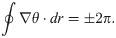
Thus, the line integral of the phase change, along a small-radius path surrounding the site becomes ±2р. In other words, using the Iyer-Gray method we need to calculate the line integral at a probing point with its eight neighbor points. Fig 1A shows the flowchart describing the steps of PS calculation using the Iyer-Gray method: eight neighbor sites around a candidate site denoted by an index (i, j) are needed for computing the line integral, and at each site the phase is determined by conditions that ensure the phase is in the –р to р range.

Fig 1. Schematics comparison of the Iyer-Gray and location-centric method.
A. The Iyer-Gray method calculates phases that range from –р to р and calculates the line integral of the phases at a candidate point with its eight neighbor points. B. The location-centric method searches for a singularity point at a candidate point, subject only to one condition, иn+1—иn < M.
In this study, we propose a novel method for PS calculation. We suggest to call this method ‘location-centric’, because the PS point is selected only based on the phase difference (Ди) at a local site, without checking for phase changes at the site’s neighbor points (Fig 1B). Thus, a candidate site is selected as the PS point if the phase difference (Ди) at the site is below a threshold value:  where иn is the phase in the nth time frame and M is set to - р. The pseudocode of the algorithm is described in the S1 Appendix.
Calculation of similarity metric between two methods
To compare the extent of similarity between the PS trajectories generated by the two methods, we chose the Hausdorff distance [20]. This measure captures the similarity between two sets of PS trajectories by calculating the maximal discrepancy between them. Let A = {p1, p2, …, pn} and B = {q1, q2, …, qm} be two sets of PS points obtained by the Iyer-Gray and the location-centric methods, respectively. The Hausdorff distance is defined as  where h(A, B) = maxp∈A minq∈B ∥p − q∥ and ∥·∥ denotes the Euclidean norm.
We also compared computation times for calculating PS points by the two different methods in the control scenario and scenario of electrical remodeling (0.3 Ч ICaL), respectively. We measured the total computation time required by the Iyer-Gray method and the proposed location-centric method, for the calculation and detection of the same PS points, in the same condition (1 s of simulation time); for this purpose, we used the ‘tic and toc’ commands in MATLAB (MathWorks, Inc.), excluding the data transfer time.
The spatial step size for computation of the model was 0.25 mm. However, when we illustrated the 2D images in the figure, the actual spatial resolution was 0.5 mm. Thus, two adjacent pixels in the result images are 0.5 mm apart. We calculated the Hausdorff distance based on the actual spatial resolution.
Results
Comparison of the location-centric and the Iyer-Gray methods
We compared the PS locations determined by the Iyer-Gray method (red circles in Fig 2) and by the location-centric method (open black diamonds in Fig 2), for the control condition (Fig 2A–2E) and the electrical remodeling condition (0.3 Ч ICaL, Fig 2F–2J), respectively. For plotting the PS points determined by the location-centric method, we calculated PS points with the temporal resolution of 1 ms (Fig 2B and 2G) and sampled the PS points at the phase difference (Ди) below the threshold level of - р (M, Fig 2E and 2J). The PS points calculated at 1,550 ms by both methods almost overlapped on the 2D maps, for the control and electrical remodeling scenarios. The phases (и) are calculated every 1 ms (Fig 2). At a site without a singularity all phases change continuously, except during the activation time of an action potential. During this period, the phase difference (Ди) is positive. However, if a site experiences a PS, the phase difference (Ди) decreases abruptly and yields a large negative value (Fig 2E and 2J). We set the threshold of Ди to –р, and the spatiotemporal locations of the values below the threshold level (M) were marked on the 2D voltage maps as the PS points calculated by the ‘location-centric method’ (Fig 2A and 2F, open black diamonds). Thus, PS detection condition (Ди = иn+1—иn < M) shows a clear distinction of the proposed method from the Iyer-Gray method, because the latter requires integrating around all sites for determining a PS point. We added two zoomed panels (Fig 2B and 2G) to see detailed images of identified PSs, which are shown as a cluster of four PS points (red colored circles) that were obtained by the Iyer-Gray method and one PS point (open black diamond). Fig 2G displayed that an open black diamond, calculated by location-centric method, overlapped with one PS in the cluster of four PS points obtained by the Iyer-Gray method. To show examples where PS points detected by the location-centric method are different from those of the Iyer-Gray method, we added snapshot images of the two cases (control and 0.3ЧICaL cases) near the spiral wave core and their corresponding membrane potentials (S1 Fig).

|
Из за большого объема этот материал размещен на нескольких страницах:
1 2 3 4 5 6 7 8 9 10 11 12 13 14 15 16 17 |
