


Партнерка на США и Канаду по недвижимости, выплаты в крипто
- 30% recurring commission
- Выплаты в USDT
- Вывод каждую неделю
- Комиссия до 5 лет за каждого referral
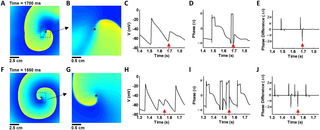
Fig 2. PS detection using the two methods.
PS points calculated using the Iyer-Gray method (red circles) and the location-centric method (black diamonds). Snapshots of model dynamics, showing an unstable (control, panels A–E) and a stable (0.3 Ч ICaL, panels F–J) spiral wave. The PS points calculated by the two methods overlapped in the 2D map. B, G: zoomed images. C, H: Action potentials at PS points. D, I: Phases. E, J: Phase differences.
To compare the spatial distributions of the calculated PS points, the spatial trajectories of the PS points obtained by the two methods were identified and their traces were plotted in the 1,130–2,130 ms time interval (Fig 3). Because electrical remodeling of AF accompanies down-regulation of ICaL, which stabilizes localized reentry, we tested the Iyer-Gray method (red dots in Fig 3) and the location-centric method (black dots in Fig 3) performance on the PS detection in the control condition (Fig 3A–3C) and in the condition of reduced Ca2+ current (0.3 Ч ICaL, Fig 3D–3F). Consistent with the control condition, the PS trajectories calculated by the two methods for the condition of 0.3 Ч ICaL matched satisfactorily, yielding stable spiral waves.
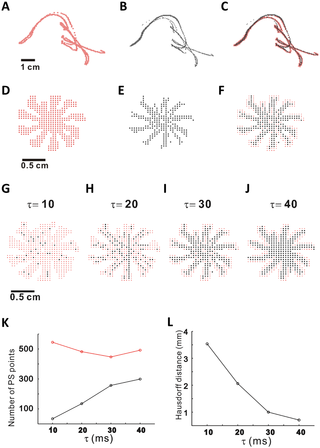
Fig 3. Spatial distributions of PS trajectories and effects of time delay on PS calculation.
PS trajectories for the control scenario: (A) using Iyer-Gray method, (B) using location-centric method, (C) combined image. PS trajectories for the 0.3ЧICaL scenario: (D) using Iyer-Gray method, (E) using location-centric method, (F) combined image. (G-J) PS points were overlapped for different ф (time delay values) = 10 ms (G), 20 ms (H), 30 ms (I), and 40 ms (J). The number of PS points (K), and Hausdorff distance (L) of Iyer-Gray method (red dots) and location-centric method (black dots).
https://doi. org/10.1371/journal. pone.0167567.g003
Effects of model parameters on PS calculation
We explored the effect of time delay on PS calculation using two methods. For four different time delays (ф = 10 ms, 20 ms, 30 ms and 40 ms), we illustrated overlapped images of PS points (Fig 3G–3J) in the case of 0.3ЧICaL calculated by the Iyer-Gray method (red dots) and the location centric method (black dots).
To find the change in the number of calculated PS points, we plotted the number of PS points using the Iyer-Gray method (red dots) and the location-centric method (black dots; Fig 3K). In the Fig 3L, Hausdorff distances were calculated with different time delays. It should be noted that the spatial similarity between the two methods, estimated by small Hausdorff distances (HD), increases for ф = 30 ms (HD = 1 mm) and 40 ms (HD = 0.71 mm).
We performed an additional parameter sensitivity analyses to understand how the new method behaves as parameters change due to sampling time intervals of phase values and electrical remodeling. In Fig 4, panels A and B show overlapped PS points found using the two methods in the control condition (red: Iyer-Gray method; black: location-centric method) in two sampling time intervals of phase values 0.1 ms and 1 ms. We also investigated the effects of electrical remodeling on PS detection: 0.7ЧINa (30% reduction in Na+ channel conductance), AF condition, and 0.7ЧD (30% reduction in gap junctional coupling). For the AF condition, we applied the same condition that was used in our recent paper [19]: INa (−10%), Ito (−70%), ICaL(−70%), IKur (−50%), SR Ca2+ leak (+25%), IK1 1(+100%), and INaCa(max) (+40%). For two time spacings (0.1 ms and 1 ms), the Hausdorff distance showed a small difference between the two times: HD = 2.23 mm (T = 0.1 ms) and HD = 2.69 mm (T = 1 ms). The additional comparisons for T = 0.5 ms, 5 ms, and 10 ms were provided in S2 Fig. For the change in the gap junctional coupling caused by changing 0.3ЧD, we found that HD was 3.9 mm, which was the highest HD value among five examples.
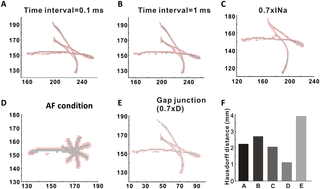
Fig 4. Parameter effects on PS calculation between the two methods.
(A) and (B) show overlapped PS points found using the two methods in control condition (red: Iyer-Gray method; black: location-centric method) at two sampling time intervals (0.1 ms and 1 ms). We investigated the effects of electrical remodeling on PS detection: 0.7ЧINa (30% reduction in Na+ channel conductance) (C), AF condition, and 0.7ЧD (30% reduction in gap junctional coupling). For the AF condition, we applied the same condition that was used in our recent paper [19]: INa (−10%), Ito (−70%), ICaL (−70%), IKur (−50%), SR Ca2+ leak (+25%), IK1 (+100%), INaCa(max) (+40%) (D). For the change in the gap junctional coupling caused by changing 0.3ЧD (E), we found that HD was 3.9 mm, which was the largest among five examples (F).
Robustness of location-centric PS for different threshold levels
We tested the robustness of the two methods with respect to quantitative tracing of meandering trajectories of PS points during a 1-s-long AF recording. We calculated the Hausdorff distance between the PS points measured by the Iyer-Gray method and those measured by the location-centric method, for different phase difference thresholds of the location-centric method (Fig 5). The location-centric method consistently yielded small Hausdorff distances (3.30 ± 0.0 mm) for most of the threshold values M, except the values ≥ –0.4р (Fig 5). For the 0.3 Ч ICaLcondition, the Hausdorff distance was short (1.64 ± 0.09 mm) for the threshold M ≤ –0.6р for the location-centric method (Fig 5B). Therefore, for both conditions, the location-centric method generally exhibited consistently smaller values of the Hausdorff distance compared with the Iyer-Gray method.
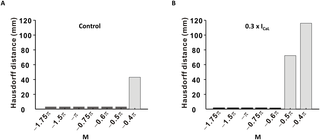
Fig 5. Quantitative comparison of spatial distributions in terms of the Hausdorff distance.
Hausdorff distances between the results obtained by the location-centric method and the Iyer-Gray method were measured for different thresholds (M). (A) Hausdorff distances calculated for the control condition. (B) Hausdorff distances calculated for the 0.3 Ч ICaLcondition.
Efficiency of the location-centric method
Since the location-centric method for locating PS points of spiral waves uses the idea that PS points are points of discontinuity in the phase map, this method is more efficient for detecting PS points than the Iyer-Gray method. For the same condition, with a 1-s-long AF, the location-centric method consistently outperformed the Iyer-Gray method for both the control and electrical remodeling conditions (Fig 6). Therefore, the location-centric method exhibited a ~28-fold performance improvement over the Iyer-Gray method, for both conditions, which was measured by MATLAB simulation, excluding the data input and output time. We also implemented the same algorithms in C++ with the same data set. The results showed that there was a reduction in the factors of increase in speed: for the control (193 s vs. 12 s) and for 0.3ЧICaL (180 s vs. 12 s). Thus, there was ~16-fold increase in the speed of calculating PS when using the location-centric method.

Fig parison of computational times for PS calculations.
PS calculation times when using the two methods for a 1-s simulation: for the control and remodeling (0.3ЧICaL) scenarios. We tested programs with the Matlab package and C++.
Main findings
In this study, we have suggested a novel location-centric method for calculating PS points, which is more efficient and robust compared with the conventional Iyer-Gray method.
We developed a new method (location-centric) while searching for a PS-detecting method in 3D atria. We observed that there is discontinuity in the phase when phase singularity exists. Thus, we empirically found a new method for detecting phase singularity without the calculation of a line integral. Mathematically, the targets of our new approach and the Iyer-Gray method are temporal singularity and spatial singularity of the phase function и(x, y, t), respectively. We only considered negative jump of the phase (иn+1-иn<0), because phase 0 depolarization of action potential causes positive jump of the phase (иn+1-иn>0).
The location-centric method detects the point of phase discontinuity at which PS is located, instead of calculating a phase based on the line integral of the phase. The proposed method yielded results that were very similar to those obtained by the conventional method, as captured by the short Hausdorff distance, thus demonstrating the method’s accuracy. The proposed method’s robustness was demonstrated by comparing the results obtained by the two methods for both the control condition and the condition of electrical remodeling. The location-centric method required a substantially smaller computation time, and performed ~28-fold faster than the Iyer-Gray method.
The importance of PS points in cardiac fibrillation
Cardiac fibrillation is well recognized as the main cause of sudden cardiac death or cardioembolic stroke [21, 22]. Fibrillatory state in the cardiac tissue corresponds to the state of abnormal electrical activity, involving spontaneous and irregular propagation of electrical waves, owing to which the heart loses its ability to contract synchronously [23]. Furthermore, VF or AF might be sustained owing to multiple wavelets [4], which are manifested as multiple fractionated waves; yet, single or several stable rotors can be sufficient for maintaining fibrillation [6]. A phase-space PS, in which spiral waves evolve around a PS point, can occur as a result of the breakage of a wave front [24, 25]. Winfree suggested that the source of fibrillation can be observed in the form of topological defects or PS in the phase map [2, 26]. Thus, tracking of PS points, which leads to rotors, may provide insights on the mechanisms of fibrillation. Gray et al. [2] observed PS on the ventricular surface of the isolated rabbit heart, and they introduced a novel analysis algorithm for reducing the data size to describe spatiotemporal patterns of fibrillation by its phase и(x, y,t) around PS. They successfully demonstrated the formation and termination of rotors by identifying and analyzing PS points.

|
Из за большого объема этот материал размещен на нескольких страницах:
1 2 3 4 5 6 7 8 9 10 11 12 13 14 15 16 17 |
