


Партнерка на США и Канаду по недвижимости, выплаты в крипто
- 30% recurring commission
- Выплаты в USDT
- Вывод каждую неделю
- Комиссия до 5 лет за каждого referral
2. ________Sorting is critical, as there are key differences between the clear and coloured material used in bottles and jars, and the high-grade material used in engineering applications, which contains traces of metals. MORE …
3. _________Scarcity makes recycling especially desirable, and justifies the cost of removing insulation from electric wires, which are a major source of scrap. Pure metal can also be recovered from alloys derived from it, notably brass (which also contains quantities of zinc, and often lead) and bronze (which contains tin). MORE …
4. __________The cost of melting down existing metal is significantly cheaper than the energy-intensive process of electrolyses, which is required to extract new metal from ore. MORE …
5. ___________ Hardwood and softwood can be reused. However, the frequent need to remove ironmongery and saw or plane off damaged edges, can make the process costly. MORE …
6. __________ Tyres are the primary source of recyclable material. These can be reused whole in certain applications. They can also be ground into crumbs which have varied uses. MORE …
7. __________An obstacle to recycling is the need to sort waste carefully. While some types can be melted down for reuse, many cannot, or result in low-grade material. MORE …
2.5 Match the materials from the web page (1-8) in Exercise 2.4 to the definitions (a-h)
1. stainless steel | a. a metal used to make brass, and in galvanised coatings on steel |
2. zinc | b. the predominant metal in steel |
3. iron | c. a type of steel not needing a protective coating, as it doesn’t rust |
4. bronze | d. a dense, poisonous metal |
5.lead | e. rocks from which metals can be extracted |
6. hardwood | f. an alloy made from copper and tin |
7.ore | g. timber from pine trees |
8. softwood | h. timber from deciduous trees |
2.6 Complete the following sentences using from, with or of
1) Bronze contains significant amounts _____ copper.
2) Galvanised steel is steel coated ________ zinc.
3) Steel is an alloy _______ derived.
4) Pure metals can usually be recovered _______ alloys.
5) To produce stainless steel, iron is mixed _______ other metals.
6) Stainless steel contains quantities _________ chromium and nickel.
7) Glass tableware contains traces _______ metals, such as lead.
8) When new metal is extracted _________ ore, the costs can be high.
2.7. In pairs, ask and answer questions about different materials using the following phrases.
- Can … be recycled? | - What’s …. made from? | - Where does …. come from? |
2.8 Irina, an ecological adviser, is talking to a group of engineers on a training course about environmentally friendly design. In pairs, discuss the ideas from her slide and give some examples. |
|
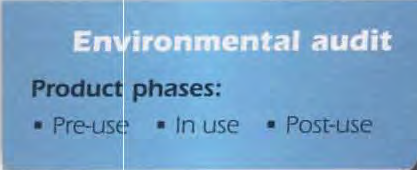
2.9 Ω Listen to an extract from the talk and compare your ideas with what Irina says. What example does she use to illustrate her main point?
Match phases with proper processes
Pre-use phase ________________ ________________ ________________ | In-use phase ________________ ________________ ________________ | Post-use phase ________________ ________________ ________________ |
mining materials recycling environmentally friendly operation manufacturing economically beneficial working process utilization transporting materials |
2.10 Pair work. Consider advantages and disadvantages of energy saving and conventional light-bulbs on all aspects and make a conclusion.
Categorising materials
2.11 Complete the description of how the brakes work using the words from the box and translate them
flywheels slow down gearboxes friction wheel rim disc pads electromagnetic effects clutches |
Brakes are designed to …. vehicles or moving parts. They often work due to ….., by applying pressure to ….. which are pressed against the sides of a ….. , the inside of a ….., or against a …… . Alternatives include systems that use ….. force, systems that exploit the breaking …. of engines or ….. (via …. or …..).
2.12 Complete the sentences using the words from the box. There are a few extra words.
iron-based metals (steel); ceramics; ferrous metals; cement; rubber; compounds of advanced materials; ceramic materials; concrete |
Braking disks are often made of …., or sometimes ….. . Materials used for making pads are as follows …., ……, …….., and …….. .
2.13 What brake pads should be made of if they are used in:
- cars trains bicycles performance car
2.14 Read the article on braking systems. In the title of the article, what do the green and red colours refer to?
GREEN BRAKES
A red hot topic in motor racing
As motor racing goes green, Formula 1 is aiming to lead automotive research in finding hi-tech efficiency gains. One of the keys to this ecological drive is regenerative braking (also known as kinetic energy recovery), which recovers energy generated during deceleration, and stores it as a source of power for subsequent acceleration.
Regenerative brakes limit the energy loss inherent in traditional braking systems. In most vehicles, conventional brakes comprise pads previously made from asbestos-based composites, but now consisting of compounds" of exotic, non-hazardous in motor racing materials, and discs made of ferrous metal. The resulting friction generates heat, which is wasted. In performance cars, this phenomenon is taken to extremes, and due to the high temperatures generated, brake discs are often made out of ceramics.
The carbon discs and pads used on Formula 1 cars generate so much heat that they glow red hot. High temperatures are, in fact, necessary for the effective operation of carbon brakes. But there's still plenty of potential for recovering the kinetic energy, rather than merely dissipating it in the form of heat.
The potential for recovering energy also extends to the heat generated by engines and exhaust systems. This area has also been discussed as a possible area for future exploitation in motor racing. Heat recovery might offer the added benefit of reducing heat soak (thermal absorption by the chassis) as delicate alloy parts and sensitive non-metallic materials, such as polymers, are susceptible to heat damage.
2.15 Pair work. Answer the following questions.
Why do most braking systems waste energy? What are regenerative braking systems, and how do they save energy? What characteristics are required of materials used for the brakes on racing cars? What is meant by heat soak, and why is it a problem in racing cars?
2.16 Match the materials from the text (1-7) to the descriptions (a-g).
1 compounds | a materials that are not metals |
2 exotic | b iron and steel |
3 ferrous | с combinations of materials |
4 ceramics | d mixture of metals |
5 alloy | e plastic materials |
6 non-metallic | f minerals transformed by heat |
7 polymers | g rare or complex |
2.17 Margit, a sales engineer, is describing a high-voltage cable. Before you listen, label the cross-section with the parts (a-e).
a. insulation b. waterproof membrane с. outer jacket d. armoured protection e. conductor |
|
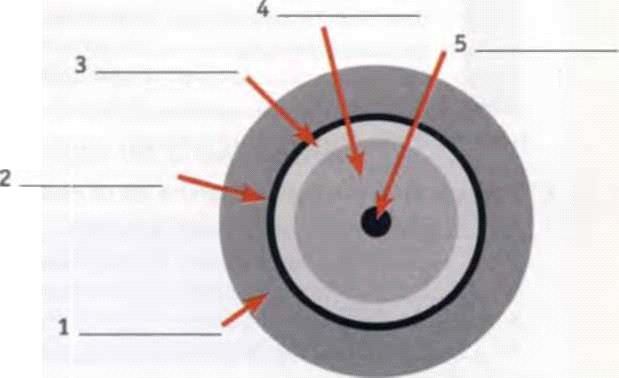
2.18 Ω Listen to the description and check your answers in Exercise 2.17.
2.19 Match the parts of the cable (a-e) in Exercise 2.17 to the following categories of materials (1-5). You will need to use some parts more than once.

|
Из за большого объема этот материал размещен на нескольких страницах:
1 2 3 4 5 6 7 8 9 10 11 12 13 14 15 16 17 18 19 20 21 22 23 24 |
