


Партнерка на США и Канаду по недвижимости, выплаты в крипто
- 30% recurring commission
- Выплаты в USDT
- Вывод каждую неделю
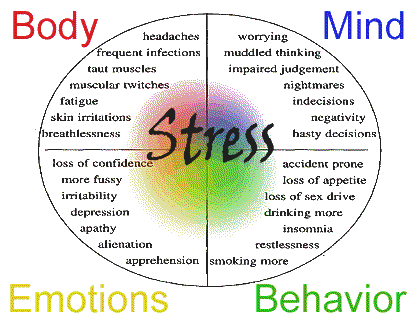
- Комиссия до 5 лет за каждого referral
• You've been asked to baby-sit your 5-year-old nephew. Your sister has promised that he will be sleeping the whole evening so you will have no trouble with him. And now when she has left you are locked in her house with a shrieking child who is having a fit of hysterics and you don't know what to do to calm him down.
4. Answer the questions
1) Why do many people feel stressed at work?
2) What kind of situation can be called stressful?
3) How do many people cope with stress? What mistakes do they usually make?
4) Why is stress dangerous not only to our health but to the health of those around us?
5) Why do people react to stress in different ways?
6) How can we avoid or minimize stress?
7) Why are anti-anxiety medications and anti-depressants dangerous to our health?
8) Do you know any effective ways to cope with stress? Say a few words about them.
5. Much can be said about the negative consequences of stress. But some people are sure that stress can be very useful. Read their opinions and say if you agree with them or not. Fill in the table below and give your own reasons for and against stress
1. 'Stress is inevitable. It goes hand in hand with the work we do. People don't hire us to do easy things, they hire us to do difficult things and to think that you can remove stress from that is a fool's errand. Isn't this pressure why people work in the first place? I work with people who are up for the challenge, focused on being successful and pressure helps them reach their goals.' (Stevan Rolls, head of human resources at Deloitte)
2. 'I don't think you should shy away from stress. It forces you to perform to live up to your full potential. I like to think that even when I am on the verge of retirement I'll still be pushing myself. It's what gets me out of bed in the morning.' (Charlie Bagot Jewitt, a former Royal Naval commander)
3. To live without stress would be to live in a vegetative state. It's just not viable. Even the act of getting up in the morning requires effort. For many workers it is the fact that they feel 'driven' that makes the job worthwhile and that once that feeling is gone, it is time for them to move on. It is this environment that allows them to produce their best work.' (Glynis Kelly, senior lecturer in psychology and sociology at Cornwall College)
4. 'Spikes of stress help us to develop and survive. So view being stressed as being resilient. Resilient people see pressure as a challenge, trust that they have control and don't see themselves as powerless. Those kinds of attitudes are at the root of any career success.' (Dr Wolfgang Seidl, executive director of the Validium Group, which provides employee assistance programmes)
(from the article 'I love stress' by Cath Janes, The Guardian)
Stress
For Against
6. Read the quotations below. Choose any statement and comment on it
• 'Stress is basically a disconnection from the earth, a forgetting of the breath. Stress is an ignorant state. It believes that everything is an emergency. Nothing is that important. Just lie down.' (Natalie Goldberg)
• 'Stress is nothing more than a socially acceptable form of mental illness.' (Richard Carlson)
• Stress is a designer ailment that many of the so-called afflicted suffer from with pride.' (Janet Street-Porter)
• 'Every stress leaves an indelible scar, and the organism pays for its survival after a stressful situation by becoming a little older.' (Hans Selye)
• 'Much of the stress that people feel doesn't come from having too much to do. It comes from not finishing what they've started.' (David Allen)
I believe that stress is a factor in any bad health.' (Christopher Shays)
Find an article about stress and prepare a short speech on the problems raised in it. Speak about the author's attitude to these problems.
Тема 6. Корпоративные развлечения
Negotiations

Word | Meaning |
agent | Person or company that acts for another and provides a specified service. |
agreement | Arrangement between two or more people or companies. |
bargain price | Reduced price |
bedrock price | Lowest possible price. |
commitment | Engagement or undertaking; to commit oneself. |
compromise | Each party gives up certain demands in order to reach an agreement. |
condition | A stipulation or requirement which must be fulfilled. |
contract | Written agreement between two or more parties. |
counter-offer | Offer made in response to an offer by the other party. |
counter-productive | Having the opposite effect to that intended. |
deal | A business transaction. |
discount | Reduction in price. |
estimate | Approximate calculation of the cost. |
facilities | Equipment (e. g. parking facilities). |
feasible | Possible, something that can be done. |
figure out | Find a solution; estimate the cost. |
know-how | Practical knowledge or skill. |
joint venture | A way of entering a foreign market by joining with a foreign company to manufacture or market a product or service. |
negotiate | Discuss a business deal in order to reach an agreement. |
point out | Draw attention to something (e. g. the advantages of your proposal). |
proposal | Course of action, or plan, put forward for consideration; |
quote | Give an estimated price (a quotation). |
range | A selection of products sold by a company. |
rebate | Reduction or discount. |
supply | Provide customers with goods or services. |
supplier | Person or company that supplies goods or services. |
tender | A written offer to execute work or supply goods at a fixed price |
turnkey | Equipment ready for use or operation (e. g. a plant or factory). |
underestimate | Make too low an estimate of something (cost, danger, difficulty). |
work out | Calculate (e. g. price of something); find a solution. |
Negotiations idioms

above board | If business negotiations are described as above board, they are open, honest and legal. |
have an ace up your sleeve | If you have an ace up your sleeve, you have something in reserve with which you can gain an advantage. |
hold all the aces | A person or company who holds all the aces is in a very strong position because they have more advantages than anyone else. |
back to square one | To say that someone is back to square one means that they have not succeeded in what they were trying to do, so they have to start again. |
back to the wall | If you have your back to the wall, you are in serious difficulty. |
beggars can't be choosers | This expression means that you should not reject an offer if it is the only possibility you have. You have no choice. |
bend over backwards | If you bend over backwards, you try very hard to do something, especially to please somebody. |
bide your time | If you bide your time, you wait for a good opportunity to do something. |
blank cheque | If you give someone a blank cheque, you authorize them to do what they think is best in a difficult situation. |
bone of contention | A bone of contention is a matter or subject about which there is |
bring nothing to the table | If you participate in negotiations and bring nothing to the table, you have nothing of interest to offer the other side. |
clinch a deal | In a business relationship, if you clinch a deal, you reach agreement on a proposal or offer. |
drive a hard bargain | A person who drives a hard bargain always makes sure they gain advantage in a business deal. |
keep someone posted | If someone asks you to keep them posted, they want you to keep them informed about a situation. |
leave the door open | If you leave the door open, you behave in such a way as to allow the possibility of further action. |
leave no stone unturned | If you try everything possible in order to achieve something, you leave no stone unturned. |
meet half-way | If you meet someone half way, you accept to make a compromise and give them part of what they are trying to obtain. |
nitty-gritty | When people get down to the nitty-gritty, they begin to discuss the most important points or the practical details. |
play your cards right | If you play your cards right, you do all that is necessary in order to succeed or to obtain what you want. |
play for time | If you play for time, you try to delay or prevent something from happening in order to gain an advantage. |
prepare the ground | When you prepare the ground, you try to make it easier for a future event or action to happen or be accepted. |
sell ice to Eskimos | This expression is used to describe a person who has the ability |
sign on dotted line | If you sign on the dotted line, you formally give your consent to something by signing an official document. |
signed, sealed, and delivered | When an agreement, contract or treaty is signed, sealed and delivered, all the legal documents are in order. |
skating on thin ice | If you are skating on thin ice, you are doing or saying something that could cause disagreement or trouble. |
sticking point | A sticking point is a controversial issue that causes an interruption or blocks progress in discussions or negotiations. |
take stock of the situation | If you take stock of a situation you assess all the aspects in order to form an opinion. |
turn on/up the heat | If you turn on or up the heat on someone, you put pressure on them in order to obtain what you want. |
Writing Business Letters

|
Из за большого объема этот материал размещен на нескольких страницах:
1 2 3 4 5 6 7 8 9 10 11 12 13 14 15 16 17 18 19 20 21 22 23 24 25 26 |
