


Партнерка на США и Канаду по недвижимости, выплаты в крипто
- 30% recurring commission
- Выплаты в USDT
- Вывод каждую неделю
- Комиссия до 5 лет за каждого referral
40. Edvinsson, L., Malone M. “Intellectual Capital”, 1997;
41. Evans D. S. “The Relationship between Firm Growth, Size, and Age: Estimates for 100 Manufacturing Industries” Journal of Industrial Economics. 1987. Vol. 35. N 4. pp.567–581;
42. Ferguson R, Renzler J and Yu S “Does Economic Values added (EVA) improve stock performance or profitability”, Journal of Applied Finance, 2005 № 15
43. Fondas, N., Sassalos, S. “A different voice in the boardroom: How the presence of women directors affects board influence over management”, Global Focus, 12(1), pp. 13–22;
44. Frenstrom, Roos, Pike, “Managing intellectual capital in practice”, Elsevier, 2005;
45. Geroski P., Gugler K. “Corporate Growth Convergence in Europe”, Oxford Economic Papers. 2004. Vol. 56. N 4. pp. 597–620.
46. Geroski P. A., Machine S. J., Walters C. F. “Corporate Growth and Profitability”, Journal of Industrial Economics. 1997. Vol. 45. N 2. pp. 171–189;
47. Ghanbari M и More V “The Relationship between Economic Value Added and Market Value Added: An empirical Analysis in Indian Automobile Industry” The Journal of Accounting Research, 2007, 6 pp.7-22
48. Guzak R., Rasheed A. “Governance and growth of professional service firms”, The service industries journal, 2013. Vol. 34, №4. pp. 295-313.
49. Gill D., Obradovich J. “Corporate governance, institutional ownership, and potential growth of US firms”, International Journal Business and Globalization, 2013. Vol. 10, №3. pp. 278-292;
50. Hall B. H. “The Relationship between Firm Size and Firm Growth in the US Manufacturing Sector”, Journal of Industrial Economics, 1987. Vol. 35. N 4. pp. 583–606;
51. Hess E., “Smart Growth”, Columbia Business School, 2010;
52. Higgins R. C “Analysis for Financial Management.” N. Y.: McGraw-Hill, 1998;
53. Higgins, R. C. “How Much Growth Can A Firm Afford?.” Financial Management, 1977, Vol 6, N. 3, pp. 7–16
54. Higgins, Robert C. “Sustainable Growth under Inflation. Financial Management.” 1981, Vol. 10. pp.36-40.
55. Hirshleifer, D. “Managerial reputation and corporate investment decisions” Financial Management, 1993. 22(2), pp. 145–160.
56. Ivashkovskaya I., Stepanova A., Eliseeva N. “Does Corporate Financial Architecture Contribute to Sustainable Corporate Growth? The Evidence from Russian Companies”, EJournal of Corporate Finance. 2014. No. 4(32). pp. 11-33
57. Jensen M., Meckling W., “Theory of the firm: Managerial behavior, agency costs, and ownership structure”, Journal of Financial Economics, 1976, 3, pp. 305-360
58. Jiraporn, Chintrakarn, Liu, “Corporate Structure, CEO dominance and Corporate performance”, Journal of Finance Serv Research, 2012. 42, pp. 139-158;
59. Jovanovic B. “Selection and the Evolution of Industry”, Econometrica, 1982. Vol. 50. N 3. Pp. 649–670;
60. Irala L “EVA: The Right Measure of Managerial Performance”, Journal of Accounting and Finance, 2005, 19(2) pз.77-87
61. Katchova A, Panel Data Models, 2013
62. Kim, K.-H., Al-Shammari, H. A., Kim, B., & Lee, S.-H. “CEO duality leadership and corporate diversification behavior” Journal of Business Research, 2009. 62(11), pp. 1173–1180.
63. Kirchmaier, T and Stathopoulos, K “From fiction to fact: the impact of CEO social networks” Discussion paper, 2008, Financial Markets Group, London School of Economics and Political Science, London, UK.
64. Krawac W. A., Lewellen W. G., Woo C. Y., “Corporate Growth, Corporate Strategy, and the Choice of Capital Structure”, Managerial and Decision Economics, 1992. Vol. 13. N 6. pp. 515–526;
65. Kramer J and Pushner G “An Empirical Analysis of Of Economic Value Added as Proxy for Market Value Added” Financial Practice and Education, 1997, pp.41-49;
66. Kruger, ME. “Entrepreneurial theory and creativity (chapter 2)”. University of Pretoria, 2004;
67. Lakos – Bujas, D “US Factor Reference Book: What Drives Equity Returns?” North America Research, pp. 1-233;
68. Lefkowitz S “The Correlation between EVA and MVA of Companies” - Working Paper California State University,1996
69. Maditinos D, Sevic Z, Theriou N, Demitriadis E “The Use Of Traditional and Modern Value-Based Performance Measures To Evaluate Companies Implemented and Future Strategies In The Greek Capital Market: The Case of EPS and EVA”, Journal Of International Research Publicatons, 2007 №2, p.35-50
70. Martin, A. D., Nishikawa, T., & Williams, M. A. “CEO gender: Effects on valuation and risk.” Quarterly Journal of Finance and Accounting, 48(3), pp. 23–40;
71. Majdalany G., Henderson J., “Voluntary Disclosure of Intellectual Assets and Intellectual Liabilities: Impact on Financial Performance in Publicly Listed Firms in the United Arab Emirates”, Journal of Knowledge Management, 2013. Vol. 11 (4);
72. Milbourn T, “CEO reputation and stock-based compensation”, Journal of Financial Economics, 2002, 68 pp. 233-262
73. Myers, S., “Financial architecture” European Financial Management, Vol.5, No. 2, pp. 133-141;
74. McEachern W. A. “Corporate Control and Growth: An Alternative Approach”, Journal of Industrial Economics. 1978. Vol. 26. N 3. pp. 257–266;
75. McGrath J., Kroeger F., Traem M., Rockenhaeuser J. “The Value Growers. Achieving CompetitiveAdvantage through Long-Term Growth and Profits”, McGraw-Hill, 2001;
76. Monte A., Papagni E “R&D and the growth of firms: empirical analysis of a panel of Italian firms”, Research Policy, 2003. 32, pp. 1003–1014;
77. Nunes M., Gonçalves P., Serrasqueiro M. “The Influence of Age on SMEs’ Growth Determinants: Empirical Evidence”, Small Business Economics, 2013. Vol. 40, N2, pp. 249-272.
78. O’Byrne S “EVA And Market Value Added”, Journal of Applied Corporate Finance, 1996, 9(1), pp. 116-125
79. O'Donnell, D., O’Regan, P. “The structural dimensions of intellectual capital: Emerging challenges for management and accounting”, Southern African Business Review 2000. 4(2), pp. 14-20;
80. Oliveira, Fortunato “Testing Gibrat’s Law: Empirical Evidence from a Panel of Portuguese Manufacturing Firms. Int. J. of the Economics of Business”, 2006. Vol. 13, N. 1, pp. 65–81;
81. Orens R., Aerts W., Lybaert N. “Intellectual capital disclosure, cost of finance and firm value”. Management Decision, Vol. 47 (10), pp. 1536-1554;
82. Pereiro L. “Valuation of Companies in Emerging Markets. A Practical Approach”. JohnWiley and Sons, 2002;
83. Park, Shin, Kim “Firm size, age, industrial networking, and growth: a case of the Korean manufacturing industry”. Small Business Economics, 2010. Vol. 35 (2). pp. 153–168;
84. Peni E., “CEO and Charperson characteristics and firm performance”, Journal of Management and Governance, 2013. 18, pp. 185-205;
85. Ryan, H., Wiggins, R. “The influence of firm- and manager-specific characteristics on the structure of executive compensation”, Journal of Corporate Finance, 2001. 7(2), pp. 101–123;
86. Sharma A. and Kumar S “Economic Value Added (EVA): Literature Review and Relevant Issues”, International Journal of Economics and Finance, 2010, 2(2) pp. 200-221
87. Stern J, Stewart G and Chew D, “The EVA Financial Management System” Journal of Applied Corporate Finance, 1991, 8(2) p.32-46
88. Stuart T. E. (2000). “Inter organizational Alliances and the Performance of Firms: A Study of Growth and Innovation Rates in a High-Technology Industry”, Strategic Management Journal. 2000. Vol. 21. N 8. pp. 791–811;
89. Singh A., Whittington G. “The Size and Growth of Firms”, Review of Economic Studies, 1975. 1975. Vol. 42. N 1. pp. 15–26;
90. Six, Normann, Stock, Schiereck “Strategic Leaders’ Impact on Corporate Policies and Firm Performance: Insights from CEO s and CFOs of Large Listed Firms in Germany, Strategic Leaders impact on policies and performance”, 2013, pp. 82-111;
91. Stam, E., & Wennberg, K. “The roles of R&D in new firm growth” Small Business Economics, 33, pp. 77–89;
92. Stelter D., Joiner M., Olsen E., Hansel G., Frazis G. “New Perspectives on value creation”. The Boston Consulting Group, 2000;
93. Sveiby, K. E., “The New Organisational Wealth – Managing and Measuring Knowledge-based Assets, Berrett-Koehler”, San Francisco, 1997;
94. The Boston Consulting Group, 2006, The 2006 value creators report;
95. The Boston Consulting Group, 2008, The 2008 value creators report;
96. Vance R J, “Employee Engagement and Commitment”, 2006
97. Varaiya N., Kerin R. A., Weeks D “The Relationship between Growth, Profitability, and Firm Value”, Strategic Management Journal, 1987. Vol. 8. N 5. pp. 487–497;
98. Wu X., Yeung C “Firm growth type and capital structure persistence”, Journal of Banking & Finance, 2012. 36, pp. 3427–3443;
99. Zéghal D., Maaloul A. “Analysing value added as an indicator of intellectual capital and its consequences on company performance”, Journal of intellectual capital, 2010. Vol. 11, Nr. 1, pp. 39–60, ISSN 1469-1930;
Приложения
Приложение 1
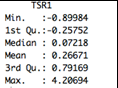
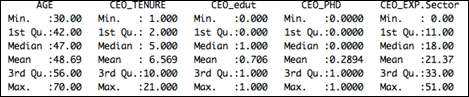
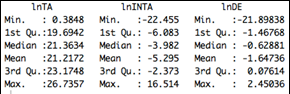
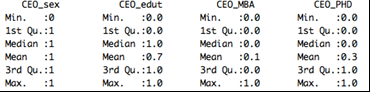
Описательная статистика основных переменных
Приложение 2
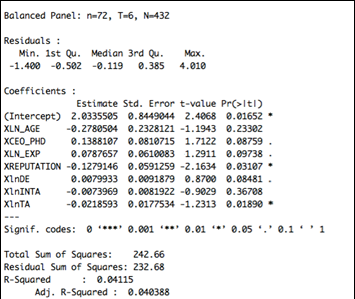
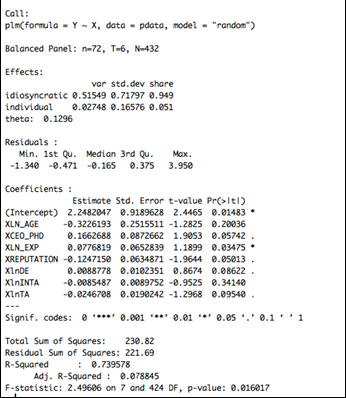
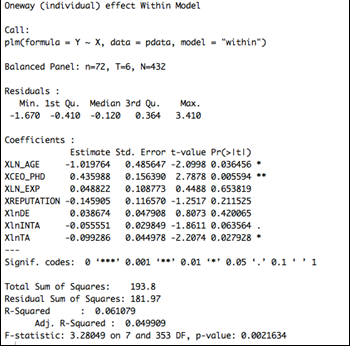
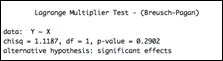
Регрессионный анализ (зависимая переменная – TSR)
2.1 Сквозная регрессия
2.2 Регрессия со случайным эффектом
2.3 Регрессия с фиксированным эффектом
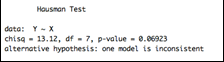
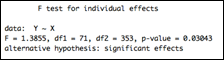
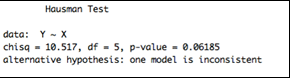
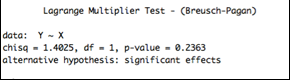
2.4 Тесты для выбора спецификации
Приложение 3
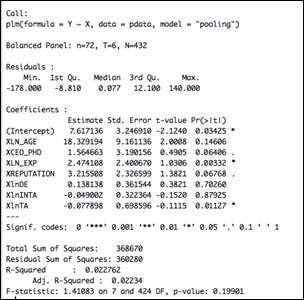
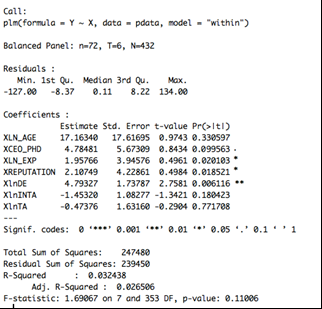
Регрессионный анализ (зависимая переменная – SGI)
3.1 Сквозная регрессия
3.2 Регрессия с фиксированным эффектом
3.3 Регрессия со случайным эффектом
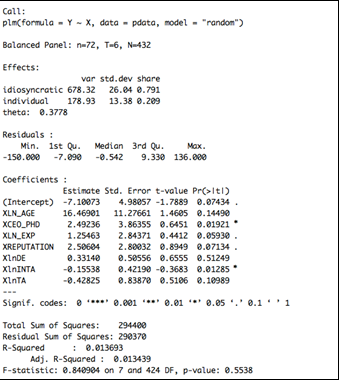
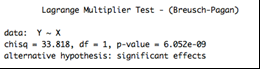
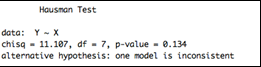
3.4 Тесты для определения спецификации модели
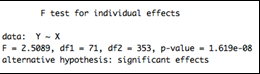
Приложение 4
Регрессионный анализ – индекс профессионализма
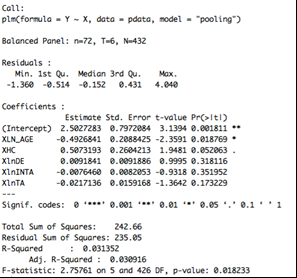
4.1 Сквозная регрессия
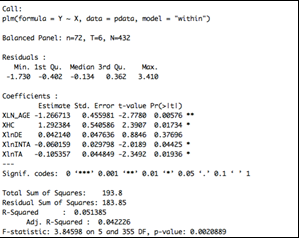
4.2 Регрессия с фиксированным эффектом
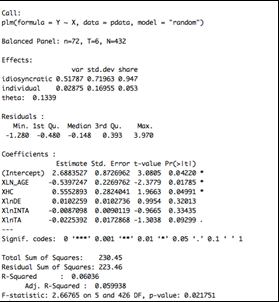
4.3 Регрессия со случайным эффектом
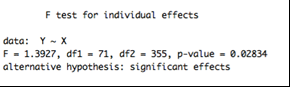
4.4 Тесты для определения спецификации модели

|
Из за большого объема этот материал размещен на нескольких страницах:
1 2 3 4 5 6 7 8 9 10 11 12 13 14 |
