

Партнерка на США и Канаду по недвижимости, выплаты в крипто
- 30% recurring commission
- Выплаты в USDT
- Вывод каждую неделю
- Комиссия до 5 лет за каждого referral
With glass and ferro – concrete as their construction materials and with modern synthetic materials at their disposal for interior decoration, architects and construction workers have to erect structures which must represent a harmonious blend of national and modern style. Architects and building workers realize that the fruits of their labour will serve not only the present generations but future ones as well, and that their talent and creative skills will have to develop the progressive architecture of society.
Exercises
1. Поставьтеглаголы в скобках в Present Passive или в Perfect Passive
1. Many new stadiums (to build) in our country lately. 2. New methods of building (to develop) by Russian engineers. 3. This book (to return) already to the library by me. 4. The old houses (to replace) by new buildings. 5. This paper (to receive) today.
2. Ответьтенаследующиевопросы:
1. Have all kinds of labour – saving devices been used before? 2. Has the art of building been changed greatly in the last few years? 3. What new materials have been used in modern construction lately? 4. How have our modern houses been made more comfortable?
3. Заменитеслова в скобкахнаанглийскиеэквиваленты: sources, art, modern, architecture, major, freezing, devices, conditioning, labour, labour-saving devices, flat, building materials, served to defend.
1. There are different styles in (архитектуре). 2. The use of prefabricated panels has brought great changes in the (искусстве) of building. 3. New (источники) of power have been discovered in the 20th century. 4. Power and heat are the (главный) factors in (современный) industry. 5. (кондиционирование воздуха) is used for the processing of materials in industry and for human comfort. 6. The chemical gas freon is used in (замораживании). 7. The roof of that new building is (плоская). using these new (приспособления) we can save much (труда). 9. Now we are living in the age of machinery, of scientific (достижений), of the discovery of new (источников) of power and new materials. 10. Man`s earliest structures (служили для того, чтобы защищать) him from the weather and from wild animals. 11. All kinds of (строительных материалов) are used in (современной) architecture. 12. What (приспособления, дающие экономию в труде) haveappearedrecently?
Grammarexercises
I. Перепишите и переведите предложения, обращая внимание на перевод Participle 1.
1. Speaking of residential construction we must say that the apartment houses are mostly built to suit urban conditions.
2. Natural stone is used for footing and foundations for external walls carrying the load.
3. Being brittle concrete can`t withstand tensile stresses, and it can`t therefore be used in structures subjected to tensile stresses under load.
II. Перепишите и переведите предложения, обращая внимание на перевод Participle 2.
1. The design adopted for the new bridge simplified the fabrication of steelwork.
2. Large – panel construction consists of reinforced concrete panels one or two storeys high, sometimes made of light – weight insulating concrete.
3. When reconstructed the station looked more beautiful than before.
III. Перепишите и переведите предложения, обращая внимание на перевод независимого причастного оборота.
1. The ancient houses being built without cement, the remains of only a few of them still exist.
2. The Conference building contains a wide range of facilities: three large council chambers, each containing about 400 public and 120 press seats.
3. The country was rich in hard and durable ( прочный ) stone, but poor in timber and metal, the main material used for construction being granite.
Text 2: The House
Man has always been a builder. The kind of house he built depended upon the climate, upon his enemies, and upon the building materials at hand. The first houses in many parts of the world were made of wood, for in those days the greater part of the earth was covered with forests. Man tied together the tops of several trees and covered them with the skins of animals or with leaves and grass. So a tent or hut was the first house of the primitive people.
In other regions the most convenient building material was stone. Man began building houses out of stone very long ago. Although they were built without cement, the remains of a few of them still exist.
It appears that the most ancient homes on the territory of Russia were earthen houses. One such home was discovered near Voronezh in 1927. It consisted of a shallow hole of oval shape. The floor was covered with limestone slabs. The roof was conical and stood on poles covered with branches or animal ch dwellings existed in that part of the country in the Upper Paleolithic Period(from 40,000 to 12,000 years ago).
The ancient Egyptians built very simple houses, by present standards. Having dried the bricks in the sun, they put up four walls, and above these they placed a flat roof. The roof was flat because there was very little rain in Egypt. Although their buildings were simple in construction, the Egyptian art of building was very beautiful. Their pyramids and monuments, sphynxes and palaces arose our admiration to this day. An important part in the history of building has been played by the column, and it was ancient Egypt that gave the world its first lesson in the art of making columns.
The Greeks learned much from Egypt. But they did not borrow the flat roof. They built a slanting roof because there was much rain in their country. The Greeks made the roof slant in two directions from the middle. They also improved on Egypt’ s columns and soon became the teachers of the world in column making.
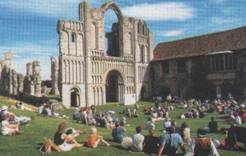 The Romans, in turn, learned much from the Greeks. First of all they borrowed the slanting roof and the columns. But they added the arch, thus adding much strength and beauty to their buildings.
 In Ancient Russia architecture flourished for the first time in Kiev Russ. Unfortunately only a few of the church buildings of that period have remained, among them the famous Cathedral of St Sophia, the Pechenegs. The churches of that time were strong buildings with thick walls and small windows. They often served as fortress against enemy invasions.
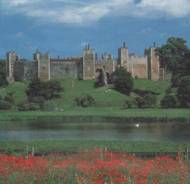
In the Middle Ages in Europe numerous wars between different nations caused great damages to the houses of crowded Medieval towns. Therefore many monarchs and nobles built castles as a form ofdefence. Those castles had very strong walls, narrow windows and projecting fortifications.
The Renaissance, which was a European movement, lasted from the 14th up to 17th century. During this period, arts and sciences underwent great changes. In architecture these changes were marked by a return to classical forms and proportions of Roman buildings.
Buildings of the 19th century are characterized by the use of new materials and by a diversity of architectural styles. From the end of the 18th century iron and steel became widely used as alternatives of wood, for by this time many countries experienced shortage of this material. Later, the Industrial Revolutionbrought mass-production of building parts which were manufactured at a factory and then simply assembled at a site.
The 20th century is notable for widespread use of steel-reinforced concrete. Huge reinforced units manufactured in heated factory premises are brought to the site which becomes something like an assembly shop. This technique has many advantages over other building methods. First of all it cuts the labourneeded for building by 60-70 per centand extends the building season what is very important for the countries where winter lasts for many months. Furthermore, the duration of building is greatly cut. All this makes the building process less expensive and less much labourous. Architecture of the 20th century is characterized by very high buildings-particularly skyscrapers-and by great diversity of styles which completely differ from those of the past.
Text 3: The Artof Building
Прочитайте текст, найдите значения выделенных слов в словаре.
Man’s earliest structures protected him from the weather, from wild animals or from the attacks of other men.
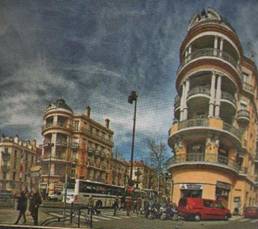
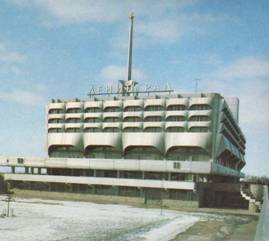 Since that time the art of building has changed greatly, but its main object remains protection. Now we are living in the age of machinery, of scientific achievements, of the discovery of new sourcesof power and new materials.
The three main materials are concrete, together with ferro– concrete (or reinforced concrete), steel and new kinds of glass. Constructions that were not possible before can now bepermitted with the help of these new materials.
Modern architecture is mainly the architecture of steel and concrete. The outer walls and the roof have lost their old importance. They are no longer structural. In the modern building it is the floor and its supports that are structural. The use of a steel framework has made it possible to construct tall buildings.
The walls which no longer have to support the structure, can be of any kind of material. It is possible to build a factory in which the walls are made of any shape we like. The roofs may be flat. Changes in the interiors of building have also been made. Electric light, centralheating, air – conditioning and refrigeration and all kinds of labour –saving devices have been installed. And our modern homes have become much more comfortable that the homes of the past.

|
Из за большого объема этот материал размещен на нескольких страницах:
1 2 3 4 5 6 7 8 9 10 11 12 13 14 15 16 |
