

Партнерка на США и Канаду по недвижимости, выплаты в крипто
- 30% recurring commission
- Выплаты в USDT
- Вывод каждую неделю
- Комиссия до 5 лет за каждого referral
It was a country which had expert mathematicians and engineers, where astronomy and philosophy were known and studied.
The country was rich in hard and durable stone, but poor in timber and metal, so that the main material used for construction was granite, and this was the reason for the durability of the pyramids.
Large blocks of stone were transported over long distances by land and water, and placed into position with the help of the most primitive equipment. That was done by slaves working for thirty or forty years. All this great amount of work was done, masses of material and a large territory sometimes of about 52000 square meters were used only for protecting the body of a dead king and constructing a dwelling place for his happy life in the «other world».
Rome
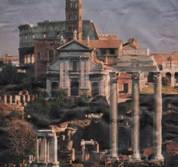 The Romans took nearly all the architectural ideas and decorative motifs of Greek buildings.
As builders and creators of great arches and domes, the Romans developed their own distinctive style. As constructional engineers they surpassed the Greeks.
Greek domestic architecture was based on the simples: a square room with a fireplace in the middle, a smaller undecorated structure in front, a colonnaded courtyard leading off to rooms without windows.
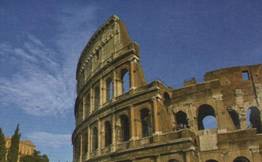 Roman architects had a considerable range of building types to erect: temples, huge meeting halls, theatres, palaces, aqueducts and baths. The arch was the universal motif used for the most insignificant doorway and for great triumphal arches commemorating major political events alike.
In Roman times, any large-scale public building – public concourse, covered market or warehouse was called a basilica. Today the work is used only for a certain kind of church, the interior of which is split into three of five naves with rows of supporting columns. The side naves are always lower than the main central ones.
Text 3: Ancient Wonders of the World
Кроме мифов, как необъясненных, так и научно доказанных, в мире есть много чудес, сотворенных человеком. Прочитайте о некоторых из них и скажите, считаете ли вы их действительно чудесами или нет.
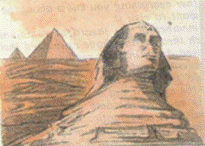 The Great Pyramids is the only one of the Seven Wonders of the Ancient World that still stands. It was built at the order of the Pharaoh Cheops who once ruled Egypt. More than 100,000 slaves laboured for twenty years to build it. They hadno machines, not even carts - all the work was done by human strength alone. Yet each huge block was so well laid that the Pyramid has stood for 5,000 years. Near the Great Pyramid in Egypt stands a huge sculptured rock called the Sphynx. The face is that of man, perhaps the Pharaoh Khafre who had built it almost 5,000 years ago. But the body is that of a lion, and between its great stone paws is a smalltemple. Since no one knows exactly why the Sphynx was built, it remains a symbol of mystery - a riddle.
In Babylon, one of the great cities of the Ancient World, there was a famous garden which amazed visitors for hundreds of years. It was called the Hanging Gardens, because it was built along arches and towers and looked like a wall of flowers and green shrubs. The garden was kept alive by a hidden pool on the highest terrace, from which the water was drawn to appear in a series of fountains. The gardens were built by King Nebuchodnozzor, who is mentioned in the Bible as the cruel conqueror of Jerusalem.
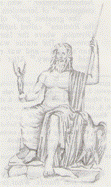 The greatest god of the ancient Greeks was Zeus, whom the Romans called Jupiter. The greatest statue of Zeus was at Olympia, where the famous Olympic Games were held in its honour. The statue was 40 feet high - about seven times a man's hight - and was made of marble, decorated with pure gold and ivory. After 1,000 years, an earthquake tumbled it down.
Notes:
1. pyramid - пирамида; 2. pharaoh - фараон; 3. Cheops - Хеопс; 4. to rule Egypt управлятьЕгиптом; 5. slave-раб; 6. cart - повозка; 7. huge - огромный;
8. Khafre - Хафре; 9. paw - л а п а ;10. temple - храм; 11. Babylon-Вавилон; 12.Hanging Gardens –висячиесады; 13.arch - арка; 14. shrub - куст; 15. hidden pool –скрытыйбассейн; 16. to draw (drew, drawn)—тащить, протянуть;17. Nebuchodnozzor — Навуходоноссор; 18.The Bible - Библия; 19.cruel conqueror –жестокийзавоеватель; 20. Jerusalem-Иерусалим; 21.God - бог; 22.Zeus - Зевс; 23.the Romans - римляне; 24.Jupiter - Юпитер; 25.inhonour - в честь; 26.marble - мрамор; 27. pure - чистый; 28. ivory–слоноваякость; 29. earthquake - землетрясение; 30. to tumble down – разрушать
Text: Ancient Wonders of the World
 The temple of Artemis is one of the most famous temples of the ancient world. It stood for 600 years in Ephesus, a great city of Syria. The temple was sacred to Artemis, also called Diana, goddess of the moon. The finest sculptors and painters of Greece decorated this beautiful building, which was destroyed by the barbaric Goths. Only a few pieces of statues and columns remained. They were dug up by modern scientists.
Few remember the tiny kingdom of Caria, which once flourished in what is now southwestern Turkey. But the name of its king, Mausolus, is known because of the word "mausoleum" - a massive tomb. The original Mausoleum, built in memory
of this king by his widow, Queen Artemisia, was so magnificent that it was one of the Wonders of the Ancient World.
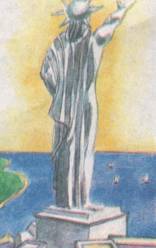
 Rhodes, an island near Greece, was one of the richest and busiest towns of the ancient world. Standing across the entrance to its big harbour, was a huge statue of the sun god Helios, famous as the Colossus of Rhodes. Although ships sailed beneath these giant feet, the Colossus was not as large as the American Statue of Liberty.
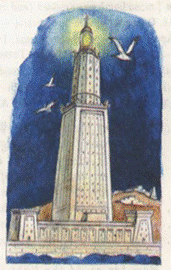
The most famous lighthouse in ancient times was the Pharos of Alexandria built by Alexander the Great. It guarded the harbour of Alexandria, in Egypt, and light from a high tower could be seen for sixty miles. To keep the beacon shining, the light-house keepers had to feed a bright fire unceasingly, for the powerful electric lamps behind glass lenses used in our lighthouses were not yet invented.
Notes:
1. Artemis - Артемида; 2. Ephesus - Эфес; 3. Syria - Сирия;4. to be sacred to –бытьпосвященным, построенным в честького-л.; 5. goddess - богиня; 6. to destroy - разрушать; 7. barbaric - варварский; 8. Goths - готы; 9.to dig (dug, dug) - копать; 10. tiny - крошечный; 11. Caria- Кария; 12.to flourish - цвести;13.Mausolus - Мавзол (имя)-14. tomb - могила, гробница; 15. Mausoleum - мавзолей (видгробницы)', 16.Queen Artemisia –королеваАртемизия; 17 .entrance - вход; 18. harbour-гавань; 19.Helios - Гелиос (богСолнца) 20.the Colossus of Rhodes –Родосскийколосс; 21. beneath - под;22. lighthouse - маяк; 23. the Pharos of Alexandria –Александрийскиймаяк; 23. to guard - охранять, сторожить; 24. to keep the beacon shining –чтобымаяк (сигнальныйогонь) горел; 25. to feed - зд. подбрасыватьтопливо в огонь; 26. unceasingly - непрерывно; 27. lenses - линзы; 28. to invent - изобретать
After-texttasks
1. В древние времена упоминали 7 чудес света. Прочитайте список и найдите «чудо», о котором не упоминается в тексте:
The Pyramids, the Gardens of Babylon, the Temple of Artemis, the Statue of Zeus of Olympia, the Mausoleum, the Colossus of Rhodes, the Pharos of Alexandria, the Sphynx. Что Вы знаете о нем?
2. Ответьте на вопросы, используя текст:
1. Why was the greatest statue of Zeus destroyed?
2. Who was the Artemis destroyed by?
3. Where did the word “mausoleum” originate from?
4. What do you thing is larger: the Colossus of Rhodes or the Statue of Liberty?
5. How far was the light of the Pharos seen?
3. Скажите, какое из чудес поразило Вас больше всего. Объясните почему.
4. В мире осталось несколько древнейших чудес. Найдите в интернете информацию о них и подготовьте устное сообщение.
WhatWasthe Probable Origin of Some English Towns?
Text 4: From the history of towns and cities in England
Прочитайте текст и расскажите об истории появления первых городов в Англии.
The origins of towns and cities differ according to race and place. Man, in the early days of history, lived his life with his family, he protected his wife and children, he hunted for food, and attacked the enemy. When a young man got married, he carried his wife away to another cave or shelter, and there established a home. As people become more civilized and understood the art of living better, collections of houses grew up in one spot and the communal life of a town began.
To the Greek the city was his homeland; he spoke with pride of the town which was his birthplace. He built house and temples there, which were full of grace and beauty.
The Romans, too, more than any other people, prized their city, and to be a citizen of Rome was to be honored amongst men. When the Romans came to Britain, they found it a land of forests and swamps. In order to move their troops about rapidly, they made roads and camps for soldiers constructed them at road junctions. These sites of old Roman camps became centers of trade, and today still exist as towns and cities.
After the Romans’ departure (in 410 B. C.), the Anglo – Saxons swept over the country and destroyed almost all the civilization which Romans established. They disliked to live in towns; they lived in small agricultural villages and built houses mainly of wood.
When the English became Christians, they built monasteries and abbeys in different parts of the country. In time these holy buildings became centers of trade, and towns grew up around them. Then the English had to fight the Danes who came over to harry the English. Alfred the Great ordered each county of England to fortify one place as a city of refuge and a center against attack. The English borough of today has its origin in these old fortified places.

|
Из за большого объема этот материал размещен на нескольких страницах:
1 2 3 4 5 6 7 8 9 10 11 12 13 14 15 16 |
