

Партнерка на США и Канаду по недвижимости, выплаты в крипто
- 30% recurring commission
- Выплаты в USDT
- Вывод каждую неделю
- Комиссия до 5 лет за каждого referral
Thousands of visitors come to Great Britain every year. Some come on business, others simply as tourists, but none misses the opportunity to see the capital of Great Britain.
London is grand and attractive. It is certainly very old and full of historic associations. It has strong links with the past. Its old customs and traditions have survived. They are a strange mixture of past and present, of old-fashioned and very modern. London consists of many parts and they are all very different from each other. There is the West End and the East End, Westminster and the City. The City is not only the centre of business, it is the birthplace of London.
2. What did the Romans do for the development of London?
In 43 A. D. the Romans conquered Britain and for 400 years it remained a Roman province. The Romans built long straight roads along which the Roman soldiers marched. Many of them met at the point where London bridge now stands. The Romans made London, which they calledLondinium, a large and rich city with good streets, beautiful palaces, shops and villas. Trade was growing. A lot of goods:skins, copper and iron ore, silver and gold were sent to Rome. And many strong blue-eyed boys were sent to Rome, too, to be sold as slaves. In the 5th century the Romans left Britain, but other invaders came to the British shores. They almost ruined the city and it remained in this poor state for almost 400 years. Only in the 9th century the Saxon kings rebuilt the city. They started the building of Westminster Abbey.
3. How did the Norman influence Britain’s civilization?
In 1066 came William the Duke of Normandy or William the Conqueror who settled in London which became the capital of Norman Britain. For 500 years the Normans were masters of Britain. They brought with them Latin and French civilization, the laws and the organization of the land. They did their best to make the city beautiful. The Westminster Abbey was finished and William was the first king to be crowned there. Since then, all English kings have been crowned in the Abbey. At that time the Tower of London was built on the Thames and it stands there still merce and trade grew very quickly, but the population grew even faster. London became a busy, rich and crowded city. The old city looked very picturesque with its tall houses of wood and plaster and its narrow streets.
4. What were the consequences (последствия) of two great tragedies that London suffered?
 But then London suffered two awful tragedies, at first – the Great Plague and then the Great Fire. In a few months nearly 100,000 people, that is 1/5th of the population died because of the Plague. Sorrow and sadness sat upon every Londoner. And only winter and its cold saved the city and the people.
The Great Fire happened through carelessness of a young baker who left a small bundle of wood near a very hot oven. In a few hours all the houses made of wood were burning like paper. This fire destroyed 3000 houses and at least 97 churches. Fortunately, the wind soon stopped and then heavy rain fell. Thus London was saved.
5. What is the City notable for?
Bit by bit London was being reconstructed until it has become the city which is now one of the most beautiful and attractive places of the word. The oldest part of it is the City which is the business and financial centre of London. During the day it is full of people, but at the end of the day businessmen, clerks and secretaries go home and it becomes silent and almost empty. Besides the City there are many other attractions such as Trafalgar Square with the Nelson column in the centre, the Houses of Parliament with the famous Big Ben, a lot of beautiful parks and gardens among which is Hyde Park well known all over the world.
Text 8: Barbican Centre
Barbican is a district of the City of London. It was greatly destroyed by bombing during the Second World War. Great construction has started since the end of the war. Nowadays Barbican is one of the most beautiful districts of London. It is also famous for the Barbican Centre.
The Barbican Centre is an enormous complex which contains two theatres, an art gallery, a library, three cinemas, two restaurants and two exhibition halls.
The building itself is very interesting. It is built on eight levels. Four of these levels are underground. On the 5th level there is a lake, decorated with 45 fountains, and air terrace where you can have coffee. There are two resident companies who are now based in the Barbican Centre. They are the London Symphony Orchestra and the Royal Shakespeare Company. It is these two companies which are providing a good part of the cultural programme for the public. At the same time there is a variety of exhibitions, musical and other entertainment.
Text 9: The Great Fire of London
Прочитайте текст и дайте краткий письменный пересказ.
The London of the middle of the 17th century was a city of narrow, dirty streets. Indeed, the streets were so narrow that it was often possible for a person at a window on one side of the street to shake hands with a neighbour on the other side. There was little light and air. Rubbish lay piled up in dark corners. It is no wonder that epidemics were common.
The greatest epidemic of the plague broke out in 1665. It was a sad time for London. The streets were empty, shops were closed and there were few boats on the Thames. Every house in which there were sick people was shut up, and no one was allowed to go in or out, and the door of the house was marked with a red cross.
The following year the Great Fire took place. It broke out late on a Saturday night in a street not far from London Bridge. The summer was dry, a hot east wind blew and the fire spread quickly. This is what we read in the diary of John Evelyn, who saw the terrible fire with his own eyes.” The Thames was covered with boats full of people. On the other side one could see carts carrying out the saved goods out into the fields and people putting up tents. At night the fire could be seen ten miles away.”
The fire burned for five days and destroyed the greater part of the city. But it did the city good, as it cleared away the old wooden houses and dirty, narrow streets.
A monument near London Bridge still marks the spot where the fire broke out. Sir Christopher Wren, the famous architect of that day, took part in rebuilding the city. The greater part of it was made of wood, but after the fire wider streets and brick houses were built. The old church of St. Paul was among the buildings destroyed by the fire. In its place Wren built the present St. Paul`s Cathedral. He lies buried under the roof of his own great work. These words are written on his grave : “Reader, if you want to see his monument, look around.”
Grammarexercises
1.Прочитайте текст и выпишите из текста перевод следующих словосочетаний:
там было мало света и воздуха; это было печальное время для Лондона; улицы были пусты; пожар был виден за десять миль от города; известный в те дни архитектор; он лежит под крышей своего собственного творения.
2. Вставьте в предложенияследующиеслова: youth, war, among, peace, celebrate, anniversary, competition, scientist, success, honour, progress :
1. Oleg has many friends. . . the classmates. 2. The film was a. . . , all the villagers saw it. 3. Ann is going to. . . . her birthday next Saturday. 4. We all took part in swimming. . . . 5. On April 23rd English people. . . the. . . of Shakespeare`s birth.6.We have had two world. . . in this century. 7. The peoples of our country want to live in. . . with other countries. 8. The Russian. . . take part in international festivals. 9. Newton is a great English. . . . 10. The teacher of English was pleased with the. . . of the pupils.
3.Подберите антонимы к следующим словам:
Finish, thin, forget, peace, buy, early, remember, war, thick, sell, late, start.
Text 10: BritishHouses
Переведите текст по специальности:
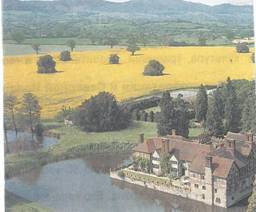 Most houses in Britain are still built with bricks but house building is very much more mechanized that it used to be. Contemporary bricklayers, plasters, tillers, glaziers, painters, electricians and plumbers use modern techniques, and work with new kinds of materials and standardized components. The unit-construction of blocks of flats, using large prefabricated concrete panels, is not yet widespread in Britain, however.
The outer walls of most houses and ever many blocks of flats are built of brick; stone and wood are used chiefly for decorative purposes. The facades of houses and flats are mostly not cement – rendered, or, if they are, only partly.
 Some flats and the great majority of houses – even those being built today – are heated wholly or partly by means of open fireplaces, in which large amounts of coal are burnt. The open coal – fire is not a very efficient way of heating a house, and it is hardly surprising to find that British people employ a wide variety of auxiliary heaters, such as electric fires, space heaters, and night storage heaters. As a rule British bedrooms remain unheated, and in winter are notoriously cold. For this reason hot – water bottles and electric blankets are standard equipment in most homes. 25 years ago central heating was virtually unknown in ordinary dwelling houses, but today it is becoming more common.
Grammarexercises
I. Перепишите и переведите предложения, обращая внимание на перевод Participle 1.
1. The framework is intended for safety carrying the loads imposed.
2. Having taken into account aerodynamic stability engineers started to erect economic and graceful bridges.

|
Из за большого объема этот материал размещен на нескольких страницах:
1 2 3 4 5 6 7 8 9 10 11 12 13 14 15 16 |
