

Партнерка на США и Канаду по недвижимости, выплаты в крипто
- 30% recurring commission
- Выплаты в USDT
- Вывод каждую неделю
- Комиссия до 5 лет за каждого referral
Министерство профессионального образования,
подготовки и расстановки кадров Республики Саха (Якутия)
ГАПОУ РС (Я) « Южно – Якутский технологический колледж »
Учебно – методическое пособие
АНГЛИЙСКИЙ ЯЗЫК
ENGLISH FOR STUDENTS OF CIVIL CONSTRUCTION INDUSTRY
Для специальностей:
270802 «Строительство и эксплуатация зданий и сооружений»
270802.13 «Мастер жилищно – коммунального хозяйства»
270802.10 «Мастер отделочных строительных работ»
Составитель: ,
преподаватель английского языка АУ РС (Я) «ЮЯТК»,
высшая квалификационная категория
Нерюнгри, 2014
Рассмотрено:
Предметно цикловой комиссией
«Гуманитарных дисциплин»
Утверждено
на заседании Научно – методическом совета колледжа
30.01.2014 г.
Протокол №4
Автор:
,
преподаватель иностранных языков АУ РС (Я) «ЮЯТК»,
высшая квалификационная категория
Рецензенты:
, кандидат философских наук,
доцент кафедры социальных наук ТИ (ф) СВФУ
им. , г. Нерюнгри
, преподаватель АУ РС (Я) «ЮЯТК»,
высшая квалификационная категори
Unit 1 Human Dwellings
Text 1:From the History of Human Dwelling
Из истории человеческого жилья
I.Прочитайте следующие слова:
[ ] – within, weather, themselves, them
[ ] – wall
[ ] – building
[ ] – large, branch
[ ] – purpose
[ ] – wild
[ ] – other
[ ] – branch, chose, picture, structure, chief
[ ] – civilization, ancient
II. Чтение и устная речь
Прочитайте текст и письменно ответьте на поставленные вопросы
Fromthehistoryofhumandwellings
1) Where did primitive people look for protection?
Most of the time of a modern man is spent within the walls of some building. Houses are built for dwelling; large building are constructed for industrial purposes; theatres, museums, public and scientific institutions are built for cultural activities of the people. The purposes of modern buildings differ widely, but all of them originate from the efforts of primitive (первобытный) men to protect themselves from stormy weather, wild enemies and human enemies. Protection was looked for everywhere. In prehistoric times men looked for protection under the branches of trees; some covered themselves with skins of animals to protect themselves from cold and rain; others settled in caves (пещеры).
2) What are the earliest types of human dwellings?
When the Ice Age had passed, Europe remained very cold, at least in winter, and so the people of the Old Stone Age had to find some warm and dry place to shelter from bad weather. They chose caves, dwelling places that storm and cold could not destroy. On the walls of their caves ancient people painted ch decorated caves are found in Europe, Asia and Africa.
When man began to build a home for himself, caves were imitated in Stone structures, these were taken as a model for huts built o branches; skins were raised on poles and formed tens.
3) Why were the houses in town higher than in the country?
In the days of early civilization, once men had learnt how to build Simple houses for their families, they began to feel a need to have a number of different kinds of houses in one place. At first the difference was mainly in size-the chief or leader had a larger hut or tent than the rest of the people. Much later, when men began to build towns, there grew up a difference between town houses and country houses. The streets in towns were very narrow and there was not much place for building within the town walls, and therefore houses had to be built higher than they were in the country. A typical town house consisted of a shop opening on the street where the man did his work or sold his goods, with a kitchen behind and a bedroom above.
4) What were the houses in ancient Egypt built of?
In the country ordinary people lived in simple one-storey cottages, which did not differ much from the mud and stone huts earlier age. The rich people in the country, on the other hand, built huge castles with thick walls and narrow windows. These castles were built not only as dwellings, but also to stand up to enemy attack and to be strong bases in time of war. The earliest houses of which anything is known are those of ancient Egypt. They were built of bricks dried in the sun. Some of them were built around a courtyard or garden with rooms opening into it.
5) How did the light come into early English houses?
Greek houses, too, had a courtyard in the middle and round their courtyard ran a covered walk (аллея), its ceiling supported by pillars. There were special women’s quarters, usually upstairs on the second storey. In Rome bricks were used for building, and houses were often finished with plaster over bricks on both inside and outside walls. The centre of family life was a garden-courtyard, surrounded by columns and with rooms opening out into it. The earliest houses in Britain were round, built of wood or wicker basket work (плетение из прутьев) plastered over with clay. In the centre of the house was the hearth (очаг) and light came in through the hole in the roof above it and through the door because there were no windows.
Pre-text exercises:
1. Изучите слова к тексту:
Verbs (глаголы)
build (built, built) – строить
construct, erect
originate from – происходить
protect – защищать
cover – закрывать
settle – поселятся
choose (chose, chosen) – выбирать
find (found, found) – искать
serve – служить
differ – отличаться
surround – окружать
Adjectives and Adverbs
(Прилагательные и наречия)
ancient – древний
modern – совершенный
warm – теплый
dry – сухой
simple – простой
mainly – главным образом
narrow – узкий
high – высокий
behind – позади
above – наверху
huge – огромный
thick – толстый
dried – высушенный
around – вокруг
Nouns (существительные)
building – строение, здание
house – дом
dwelling – жилище, жилье, проживание
theatre – театр
purpose – цель
branch – ветвь
cave – пещера
hut – хижина
pole – шест
tent – палатка
kind – вид
country – сельский, деревенский
storey – этаж
courtyard – двор
brick – кирпич
plaster – штукатурка
root – крыша
wall – стена
stone – камень
shop – цех
2. Переведите предложения
1) Most of the modern man is spent within the walls of some building.
2) Houses are built for dwelling, large buildings are constructed for industrial purposes, theatres and museums are built for cultural activities of the people.
3) Protection was looked for everywhere (look for-искать).
4) Such decorated caves are found in Europe, Asia and Africa.
5) When man began (begin-начинать) to build a home for himself, caves were imitated (imitate-представлять)in stone structures, trees were taken (take-брать) as a model for huts built of branches; skins were raised (raise-поднимать) on poles and formed tents.
6) Castles (замки) were built to stand up (противостоять) to enemy attract and to be strong bases in war time.
7) In Rome bricks were used (use-использовать) for building, and houses were often finished (finish-отделывать)with plaster over bricks.
After-text exercise
3. Закончите предложения и переведите их
1) Houses are built for…
2) The purpose of any building is…
3) Primitive men looked for protection…
4) On the walls of their caves ancient man…
5) When men began to build towns, these grew up…
6) A typical town house consisted of…
7) These castles were built not only as…
8) Some Egyptian houses were built around…
9) Greek houses had…
10) The earliest houses in Britain were…
Сделайте письменный перевод, пользуясь общим англо-русским словарем:
The New District
There is a broad straight avenue from the House of Culture to the district centre. Beyond the avenue there is a big park. There is a beautiful lake in the park. On the central square of the district there is a wide – screen cinema, a hotel, a department store, dressmaking and tailoring establishments, cafes and a metro station. That is in short what the new district looks like.
Text 2: History of the Houses
History of the houses can be divided into some stages, such as primitive houses, Egypt period, Greek period, Roman period, etc.
First people lived in caves, tents, huts or earthen houses. Basic building materials were wood and stone.
 An important peculiarity of Egyptian houses was a flat roof. Egyptians built many monuments, sphinxes, pyramids and columns. Construction required many workers, large expenses and a lot of time.
Greek improved Egypt’s architecture. The roofs of their houses were slanting.
Romans made architecture more various and beautiful. They decorated their houses improving columns and arches.
In the Middle Ages in Europe many castled and fortresses were built. They defended population from enemy.
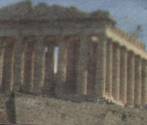
Парфенон
Egyptian pyramids
There were many different styles or kinds of architecture in the past and there are many different styles today in various parts of the world.
The older monuments which are met within architecture are the colossal pyramids of Egypt most of which were constructed about 6000 years ago.
The pyramids are large triangular buildings which were placed over the tombs of Egyptian kinds. The pyramids tell us about the advanced civilization of ancient Egypt which is much spoken about even in our days.

|
Из за большого объема этот материал размещен на нескольких страницах:
1 2 3 4 5 6 7 8 9 10 11 12 13 14 15 16 |
