

Партнерка на США и Канаду по недвижимости, выплаты в крипто
- 30% recurring commission
- Выплаты в USDT
- Вывод каждую неделю
- Комиссия до 5 лет за каждого referral
Round the large manor houses, however, many towns began to flourish. The Normans built castles inside old boroughs. Towns sprang up round other Norman castles.
Notes:
1.было почетным среди людей – to be honoured amongst men
2.перекресток – roadjunctions
3.дом феодала – manor
Pre – textexercises
1. Изучите слова к тексту:
according to – согласно
abbey – аббатство
against – против
around – вокруг
art – искусство
as – как, в качестве
be fond of – любить
build = construct – строить
building – здание
borough – небольшой город
carry away – увозить
cave – пещера
castle – крепость
depart – уходить
destroy – разрушать
differ – отличаться
establish – устраивать
flourish – процветать
fortify – укреплять
growup – расти, вырастать
harry – разорять, опустошать
home – дом
inside – внутри
mainly – главным образом
order – приказывать
origin – происхождение
prize – хвалить
protect – защищать
refuge – убежище
road – дорога
shelter – укрытие
spot = place – место
springup – появляться, возникать
temple – храм
village – деревня
2.Grammar “TheSimplePast”
Объясните следующие символы:
Ved / V2
Didnot + V1
Did…. V1…?
Найдите в словаре первоначальную форму следующих глаголов и переведите их:
lived built
got grew up
attacked came
become ordered
understood sprang up
began spoke
carried were
found harried
was swept
After – textexercises
3. Ответьте на вопросы, используя текст;
1. Do the origins of towns and cities differ, and if they do, according to what?
2. Were woman and children protected by man in the early days of history?
3. What did a man usually do when he got married?
4. How did communal life begin?
5. What did the Greek understand by the word “city” ?
6. What was a “ citizen of Rome” to a Roman?
7. Why did the Romans have to build roads and where did they build them?
8. What did these sites soon become?
9. When did the Romans leave England?
10. Did the Anglo – Saxons like living in towns?
11. Where did they usually live?
12. When were monasteries and abbeys built?
13. Did the English have to fight with the Danes?
14. Under what king was each county of England ordered to fortify one place as a city of refuge?
15. Did the Normans build castles inside old boroughs?
16. Where did towns spring up?
4. Перескажите текст, используя следующий план:
1. Early homes of man (cave, shelter)
2. The Greeks (cities and towns, houses and temples full of grace and beauty)
3. The Romans (roads, camps for soldiers, became centers of trade…)
4. The Anglo – Saxons (destroyed, lived in villages, houses built of wood)
5. The Danes (fortified places: refuges and centers against attacks, boroughs)
6. The Normans ( lived in villages, built castles).
5. Напишите сочинение об истории возникновения вашего города
Text 5:EgyptianPyramids
Прочитайте текст и выскажите свое мнение по содержанию. Если вы согласны или не согласны с автором, подтвердите свою точку зрения.
Architecture is the art which makes buildings beautiful to look at as well as useful. A man who designs (проектировать) buildings and makes the plans for them is called an architect. He has to think not only of what he want the building to look like when it is finished, but also what it is to be used for. He must not forget the sort of material to be used in the building. This may be stone, brick, wood or steel and concrete.
There have been many different styles or kinds of architecture in the past and there are many different styles today in different parts of the world.
The oldest monuments which are met within architecture are the colossal pyramids of Egypt most of which were constructed about 6,000 years ago.
The pyramids are large triangular (треугольный) buildings which were placed over the tombs (могилы) of Egyptian kings. The best known of the pyramids are a group of these built at Giza southward of Cairo. The largest of them is 482 feet high. They tell us of the advanced civilization of ancient Egypt which is much spoken about even in our days.
It was a country which had expert mathematicians and engineers, where astronomy and philosophy were known and studied.
The country was rich in hard and durable (прочный) stone, but poor in timber and metal, so that the main material used for construction was granite, and this is the reason for the durability of the pyramids.
Large blocks of stone were transported over long distances by land and water, placed into position with the help of the most primitive equipment. That was done by slaves (рабы) working for thirty or forty years. All this great amount of work was done, masses of material and a large territory sometimes of about 52,000 square meters were used only for protecting the body of a dead king and constructing a dwelling place for his happy life in the “other world”.
Text 6: Stones of Pyramids
Прочитайте текст и кратко письменно передайте его содержание.
Egyptian pyramids are huge structures which are almost 4.600 years old. The Pyramid of Cheops, for example, consists of 2.300.000 stones. Each of the stones weighs about 2.5 tones.
According to the usual explanation large blocks of stone were cut in the mountains and then transported with the help of the most primitive equipment. So about 100 thousand people had to take part in the construction.
But the experiments of one of the research institutes show that the stone of pyramids were not transported to the construction site. Twelve years of research in the field of chemistry and archeology have given quite a definite answer. The stones of pyramids were made synthetically. Egyptians produced some special solution. Later they mixed it with one of the minerals. It took them several hours to transform this mixture into very hard rock. This rock was produced just on the construction site and so there was no need of transporting heavy stones.
Now scientists and engineers know how to produce hard materials synthetically. At present similar materials are used in industry. The synthetic rock looks like limestone granite or any other rock.
The Egyptians had a great knowledge of mathematics and chemistry and they could know this technique. The necessary minerals could be found everywhere. Only the use of this technique can explain some strange facts. First of all, the presence of huge monolithic stones inside the pyramids which are too large for the entrance door and the presence of a human hair which is 21 cm long inside one of the stones.
Unit 2 Places of Interest
Text 1: Cities, Towns, Villages. PlacesofInterest
Большие и малые города, села и деревни.
Достопримечательности городов.
1. Прочитайте слова по транскрипции
[ ] house, town, about
[ ] building
[ ] club, other, front, bus, another
[ ] other, together, their, there, either
[ ] [ ] city, cars, cities, can, motor – cycle
[ ] cycle, bicycle, either, drive
[ ] few, communication
2. 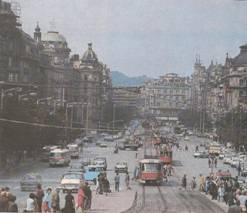 Прочитайте текст, выпишите из текста и переведите предложения со словами:building, house, city, town, village, street, pavement, road, means of communication, either… or…
CitiesTowns Villages
Houses are buildings. Schools and clubs are buildings, too. A shop is a building or a part of a building. When there are many houses and other buildings together, they make a town. A city is a very big town. When there are few houses and other buildings together, they make a village.
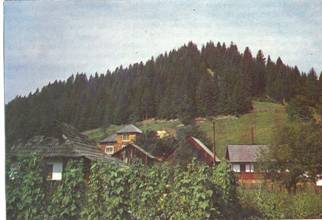
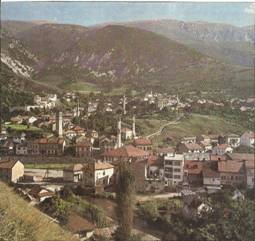 Cities, towns and villages have names. Moscow, St. Petersburg, Kiev, Minsk, London, Cambridge, Oxford, etc. are the names of cities. Cities, towns and villages have streets between their buildings, that is, the buildings are on each side of streets. On each side of the street, in front of the buildings there is a pavement. Between the pavements there is the road. People walk on the pavements, buses and cars drive on the roads.
We can get from one place to another by different means of communication. We can go by train, by airplane (or plane), by ship, by bus, by car, etc.
How can we get from Moscow to Vladivostok? We can get there either by train or by airplane. If we go by train it takes us about seven days. If we go by airplane it takes us about 12 hours only.
How can we get to the nearest town? We can get there either by bus or train.
How can we get from one village to another? We usually use a bicycle, a motor – cycle or a bus to get from one village to another.
3.Sightseeing
Прочитайте диалоги и составьте свои собственные по аналогии
Wordsandexpressions:
sightseeing– осмотр достопримечательностей
togosightseeing – осматривать достопримечательности
placesofinterest – достопримечательности
getoff – выходить
theBolshoitheatre – Большой театр
farfromhere - далеко от сюда
to turn on the right – свернуть направо
notatall – Не стоит благодарности
Dialogue 1
Sightseeing
A: I am in Moscow for the first time and I want to go sightseeing.
So, where shall I go first?
B: It`s really very difficult to say. There are so many places of interest here. I advise you first of all to visit the Kremlin on Red Square. Take trolley - bus 2 and get off in the center of Moscow at Revolution Square.
A: Thank you very much.
Dialogue 2
A: Я приехал в Лондон впервые, и мне хочется осмотреть достопримечательности этого города.
B: Лондон – большой и красивый город. Это один из самых больших городов Европы (Europe). Трудно сказать, куда пойти, прежде всего. Я советую вам посетить Британский музей (Britishmuseum) и Вестминстерский дворец (WestminsterPalace) и побывать на Трафальгарской (Trafalgarsquare) площади.

|
Из за большого объема этот материал размещен на нескольких страницах:
1 2 3 4 5 6 7 8 9 10 11 12 13 14 15 16 |
