

Партнерка на США и Канаду по недвижимости, выплаты в крипто
- 30% recurring commission
- Выплаты в USDT
- Вывод каждую неделю
- Комиссия до 5 лет за каждого referral
В настоящее время развитие промышленности и рост населения определяют дальнейшее развитие города.
Несмотря на развитие полицентричной системы города, исторический центр сохраняет свое значение как политический и культурный центр.
1. In the early 19th century the prominent Russian historian NikolayKaramzin said: «If you want to know Russia, go to Moscow». By the end of the 20th century we have every reason to repeat these words.
It is the city where every stone breathes history.
Moscow was founded in 1147 by the Prince of Suzdal, JuryDolgoruky. Although there were settlements on the site of modern city long before 1147, this was the year when Moscow was first mentioned in the written records. Moscow has the priority right to be the capital of the Russia State. Its wise founder built it in the middle of a densely populated country. It is protected by rivers and a fortress. In the opinion of many scientists the city will never lose its significance and the leading role in the development of the country.
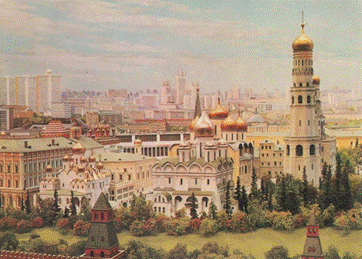 Moscow, like ancient Rome, stands on seven hills. The principle is the Borovitsky, the hill on which the Kremlin stands.
2. Moscow’s early architecture was simple but expressive. The larger part of the city was occupied by private houses made of wood. But such city’s structures as fortress walls, bridges, churches and cathedrals were made of brick and white stone decorated with ceramic. Eventually these buildings crested Moscow’s architectural image of a city of white stone.
Large-scale stone construction was performed during the reign of Catherine the Great. Several first-class foreign architects were invited to build a number of architectural monuments in Western style. Some of them have survived to our days and are carefully preserved by the city authorities.
3. In 1812 during Napoleon’s invasion a terrible fire raged in the city for several days. It was calculated that more than 7,000 buildings were destroyed and the city’s central area was completely gone. This disaster, however, prompted a real housing boom. Standard projects had to be used to facilitate rapid restoration of the city and preserve the city’s architectural uniformity. This task was successfully carried out. As a result a great number of stone houses with much better facilities appeared in the city. They were completely different from those of the previous years.
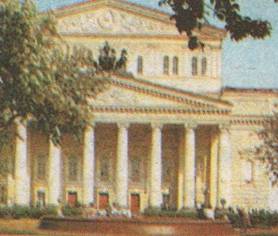 As the time passed, the city’s boundaries expanded considerably. New dwelling districts and industrial enterprises were built on the outskirts of the city.
4. A major feature of Moscow’s present development is the establishment of the industries requiring highly-skilled labour, and the branches producing high-quality apparatus, as well as the development of new technologies and know-how.
Alongside industrial development much attention is paid by the city administration to the construction of cultural, educational institutions and sports facilities.
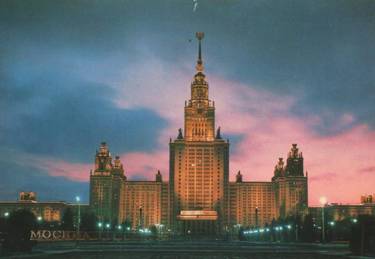 5. In recent years the population of Moscow reached 10 million and it is still growing. This resulted in large-scale migration of people. Muscovites move from one district to another, when they get new flats and for other reasons. All that calls for further development and improvement of the city’s transport services. Transport is a serious problem for all large cities of the world. The capitals of major states are often unable to solve it. Moscow also has a transport problem. The most convenient means of transport in Moscow is, of course, the Metro. Besides it there are buses, trolley-buses and trams. The total length of their routes is constantly increasing. But nevertheless there is permanent need for new and more comfortable means of transport.
6. Roads constitute another aspect of the transport problem. Having reconstructed many of the existing streets and roads the city authorizes started to build new roads which are to link several city districts between the Moscow Circular Highway and the Sadovoye Ring Road.
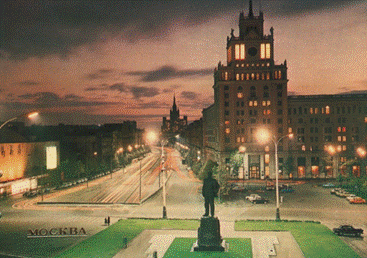 So instead of the traditional monocentric system the city gets polycentric planning to which Moscow complex zones are united by a system of general city centre.
7 .The territory within Sadovoye Ring Road will retain its significance as a historical, cultural, educational and administrative public centre, the seat of the Government and the Parliament. All the valuable architectural monuments as well as parks and old streets with their unique buildings will remain untouched.
Moscow today is an enormous city whose infrastructure is traditional for every megapolis with first-rate hotels, restaurants, theatres, exhibition halls, shops and gigantic transport arteries. But in sprit Moscow remains its old self, open, hospitable and festive, and, consequently, has the right, as ever, to be called the heart of Russia.
Задания к тексту:
1. Найдите в тексте и зачитайте предложения, рассказывающие о современной планировке Москвы.
2. Переведите письменно высказывания русского историка Николая Карамзина о Москве.
3. Переведите на русский язык абзац, в котором рассказывается о нашествии Наполеона на Москву.
б) Скажите:
1. Кем и когда были построены эти сооружения? Подберите соответствующие факты.
The building When Builder/architect
1) St. Basil’s Cathedral 1555 – 1562 Konstantin Melnikov
2) The house at 15, 1927 -1929 Barma and Postnik
Krivoarbatskypereulok
3) Radio Mast 1922 Vladimir Shukhnov
2. Прочитайте и перескажите.
1) 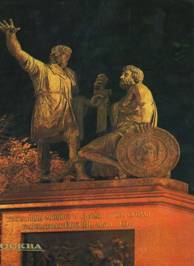 St. Basil’s Cathedral is the pride of the Russian people; it has graced Red Square for more than four centuries. It was designed by the great architects Barma and Postnik.
2) Vladimir Shukhov was born on the 16th of August, 1863, not far from Kursk. In 1876 he graduated from one of the most outstanding technical schools in Russia. He was sent on business to the World’s fair celebrating the 100th anniversary of the United States of America. There he became acquainted with the engineer Bari.
In 1878 Bari organized in Russia an engineering firm. Since 1880 Shukhnov was the main engineer of the firm.
In November of 1989 at John Hopkins University in Washington D. C. at the conference «Reconstruction of Russia» (1880-1940) Shukhov was called «the Edison of Russia: a great engineer».
3) Konstantin StepanovichMelnikov, an outstanding Russian architect, was born in Moscow in 1890.
He was one of the authors of the project of Moscow reconstruction. In 1920-1930 he designed new types of public building: clubs, palaces. He designed the monument to Christopher Columbus in Santo-Domingo. Melmikov’s house, the house he owned, can still be seen in Krivoarbatskypereulok in Moscow. All his buildings are famous for unusual architectural decisions. It was a great and gifted master.
Along the Cities of the United States of America
Text 4: Washington – the Capital of the USA
The White House
The White House is the residence of the president of the United States off America. It is situated in Washington. The White House was the first public building which was built in the capital of the USA. Its cornerstone was laid in 1792 nearly one year before George Washington laid the cornerstone for the Capitol Building.
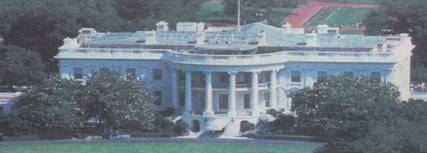
Architect James Hoban submitted plans for the building and received a 500 dollar prize for his work.
In 1800 President John Adams and his wife moved into the building. At the beginning of the 19th century it was a light-grey structure made of sandstone. The construction of the building hadn’t been completed by that time. There were almost no conveniences in the house. There were no bathrooms and water was carried by hand into the house from a spring which was five blocks away.
Work continued on the structure when Thomas Jefferson was elected President. In 1814 the building caught on fire. The interior was reduced to ashes, part f outer walls were destroyed and the remaining walls were blackened. Later the building was reconstructed in 1818. Its light-grey sandstone exterior was painted white to cover the effects of fire. It has been white ever since. Some people think it was from its white walls that the home of the president of the USA got its name. Other people believe that it got its name earlier, when it was still grey. Even then its grey sandstone walls looked white next to the red brick walls of other public buildings. Nevertheless the president’s home was officially named the White House in 1902.
In designing a building, a bridge or any other structure the choice of construction materials is of vital importance. There are some structures in the world that got their names from the material they are made of. The White House in Washington is one of them.
1. Проверьте понимание текста, ответив на следующие вопросы:
1. When was the cornerstone of the White House layed?
2. What did the White House look like before the fire?
3. What happened to the building during the fire?
4. How was the building reconstructed after the fire
5. How did the White House get its name?
6. When was the President’s home named theWhite House officially?
7. What do you thick of the architecture of this building?
2. Перескажите кратко текст
3. Ситуация: вы – гид, который ведет экскурсию к Белому дому.
Расскажите историю постройки Белого дома.
Text 5: NewYork

|
Из за большого объема этот материал размещен на нескольких страницах:
1 2 3 4 5 6 7 8 9 10 11 12 13 14 15 16 |
