


Партнерка на США и Канаду по недвижимости, выплаты в крипто
- 30% recurring commission
- Выплаты в USDT
- Вывод каждую неделю
- Комиссия до 5 лет за каждого referral
Mr Smith: | Well here we are. What do you think? |
Mrs Smith: | It's lovely Jack. Are you sure we can afford it? |
Mr Smith: | Well I may have to do some washing up, but you're worth it. |
The waiter arrives. | |
Waiter: | Good evening sir, madame. |
Mr Smith: | Good evening. We have a reservation for a table for two in the name of Smith. |
Waiter: | Yes sir. May I take your coats? |
Waiter takes their coats and hangs them up. | |
Mr & Mrs Smith: | Thank you. |
Waiter: | Your welcome. Would you like to come to the table or would you prefer to order in the bar? |
Mr Smith: | I wouldn't mind an aperitif. We'll order in the bar. |
Waiter: | Please follow me, I'll bring you the menu in a moment. Mr & Mrs Smith order their drinks at the bar and sit down to look at the menu. |
Mrs Smith: | Oh dear Jack, it's all in French! |
Mr Smith: | Well that's what we're paying for. Don't worry I've got an idea. |
Waiter: | Are you ready to order sir? |
Mr Smith: | Not really. Could you recommend something. |
Waiter: | Certainly sir. The fresh lobster is particularly good this evening, and for starters may I recommend a light consomme? |
Mr Smith: | Sounds lovely, what do you think dear? |
Mrs Smith: | Oh yes, I love lobster. |
Waiter: | So, that's two consomme and two lobsters. Would you like to look at the wine menu? |
Mr Smith: | Why don't you bring us what you think will go best. Nothing too expensive though. |
Waiter: | No problem sir. I'll call you as soon as your table is ready. |
The waiter walks away. | |
Mrs Smith: | You are clever Jack, but what about dessert. |
Mr Smith: | Don't worry, they bring round a sweet trolley, so we just point at what we fancy! A while later Mr & Mrs Smith have finished eating and are drinking their coffee. |
Waiter: | Was everything to your satisfaction? |
Mr & Mrs Smith | Yes, lovely thank you. |
Mr Smith: | The whole meal was delicious, our compliments to the chef. Unfortunately we have to be back for the baby-sitter so could we pay now? |
Waiter: | Certainly sir, I'll bring you the bill. Would you like me to order you a taxi. |
Mr Smith: | Yes that would be great, thank you. |
Mrs Smith: | What a nice man, we must leave him a good tip. |
Mr Smith: | Yes of course. |
Exercise on Eating Out
Use the following words to complete the sentences below.
bill, bottle, dessert, drinks, fish and chips, hungry, menu, non-smoker, order, restaurant, table
Guest: A  for two, please.
Waiter: Smoker or  ?
?
Guest: Non-smoker, please.
Waiter: Here you go. Would you like to see the  ?
?
Guest: Yes, please. We are very  .
.
The guests look at the menu.
Waiter: Are you ready to  ?
?
Guest: We'd like  , please.
Waiter: Would you like any  ?
?
Guest: An orange juice, a coke and a  of red wine.
The guests have finished their meals.
Waiter: Would you like a  ?
?
Guest: No, thank you. Could we have the  , please?
Life Skill: Restaurant Bills and Tips
Read the bill. Read the sentences.
DOWNTOWN CAFE
Number of people: 2 May 7, 2007
1 salad $ 4.55
1 sandwich $ 3.50
1 hamburger $ 7.35
1 order of french fries $ 2.25
1 piece of pie $ 3.45
2 cups of coffee $ 1.50
Subtotal $22.60
Sales Tax @8.25% $ 1.87
TOTAL $24.47
What is a tip?
Customers leave tips for servers. A tip is a “thank you” for good service. A tip is between 15% and 20% of the subtotal. (tip)
Exercise : Read the bill and sentences again. Write the answers.
1. How much is a hamburger at the Downtown Cafe? _______
2. How much is a cup of coffee at the Downtown Cafe? _______
3. How much is the tax on this bill? _______
4. How much is the total? _______
5. Look at the picture. How much is the tip? _______
Practice the Conversations
Exercise: Complete the conversation. Use the words in the box.
am bring drink some order Would Yes you me
1. Server: Are you ready to ___________ ?
2. Customer: Yes, I _____ . Please bring _____ a sandwich.
3. Server: ____________ you like a salad?
4. Customer: No, thank _________ .
5. Server: Anything to _______________ ?
6. Customer: ________ . Please ________ me ________ milk.
7. Server: Yes, of course.
Exercise : Put the conversation in the correct order.
_____ Would you like a salad?
_____ Are you ready to order?
_____ No, thank you.
_____ Yes, I am. Please bring me a sandwich and some coffee.
Exercise : Complete the conversation. Use YOUR information.
1. Server: Are you ready to order?
2. YOU: Yes, I _____. Please bring me_______________ .
3. Server: Anything to drink?
4. YOU Yes. Please bring me ______________________ .
5. Server: Yes, of course.
Etiquette at the Table
Practice these tips whenever you are at the meal table.
- Do not put your elbows on the table. Help set the table. A traditional table setting has the napkin and fork to the left of the plate, and the knife (the blade facing the plate), the spoon, and the cup to the right of the plate. Fancier table settings can include many different forks, knives, and spoons for different courses. Just remember that the utensil furthest from the plate is for the first course, and moving towards the plate for the later courses. Finish chewing and swallowing before you start talking. Try not to chew with your mouth open. Eat with your silverware, not your hands (unless it is finger food). If you cannot reach something, politely ask someone else at the table to hand it to you – don't reach for it. Put you napkin on your lap. Don't play with your food. If you have to sneeze, cover your mouth with your napkin and say, "Excuse me." If you notice someone has something in his or her teeth, let him or her know quietly, but do not make a big deal out of it. If you spill something, help clean it up. Sit tall and interact with the other people at the table. If you are at home or a guest at someone's house, help clear the table once the meal is finished. Before you leave the table, make sure the meal is finished and it is appropriate to leave.
VOCABULARY PRACTICE: Manners and Etiquette
Match the words with their defintions:
punctuality cultural literacy impolite etiquette offensive table manners taboo customary |
- 1)
 rules for polite behavior when eating with others
 - 2)
 not polite, rude
 - 3)
 the habit of being on time
 - 4)
 knowing about and respecting the culture of others
 - 5)
 extremely rude or impolite
 - 6)
 the rules for polite behavior in society or in a particular group
 - 7)
 usual or traditional in a particular culture
 - 8)
 not allowed because of very strong cultural or religious rules
 Informal Dining – Seated
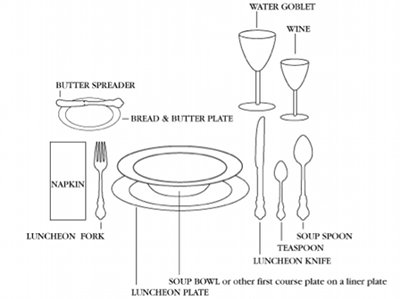
Formal Dining
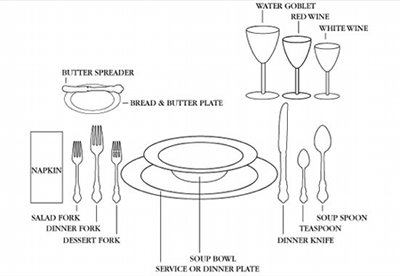
Polite Requests with English Modal Verbs
In spoken English, We can express our ideas in formal and informal speech. To do this well, we need to learn about the polite requests in English. Below are some common ways of polite requests with modal verbs.
1. Polite Requests with " I " as The Subject

|
Из за большого объема этот материал размещен на нескольких страницах:
1 2 3 4 5 6 7 8 9 10 11 12 13 14 15 16 17 18 19 20 21 22 23 24 25 26 27 28 29 30 31 32 33 34 35 36 37 38 39 40 41 |
