


Партнерка на США и Канаду по недвижимости, выплаты в крипто
- 30% recurring commission
- Выплаты в USDT
- Вывод каждую неделю
- Комиссия до 5 лет за каждого referral
2. Which word goes before each of these?-gnome-shed-salad-party
 green
green prior
prior in
in garden
Which word goes before each of these?-base-cooking-sick-page
 home
home house
house pre
pre blank
blank
Which word goes before each of these? - sink-appliance-garden-knife
 kitchen
 solar
solar green
green sharp
sharp
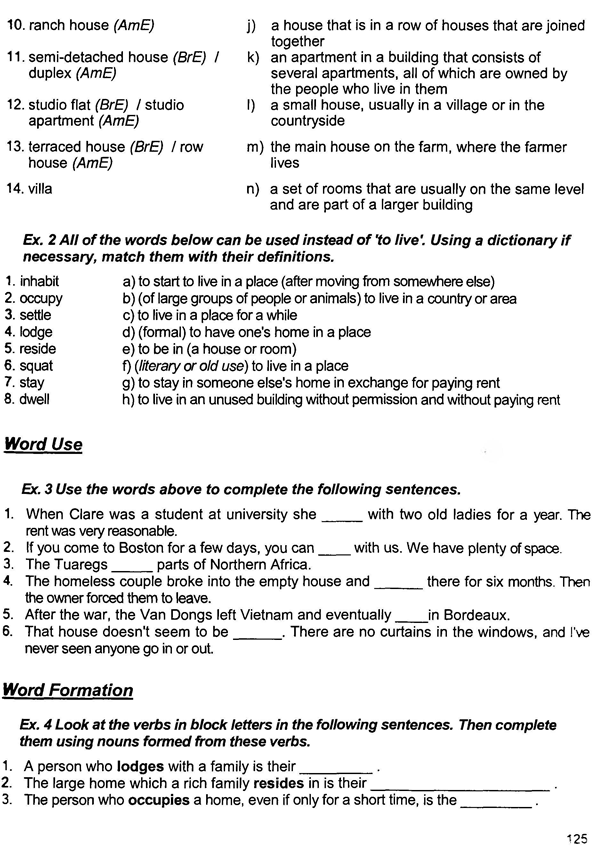
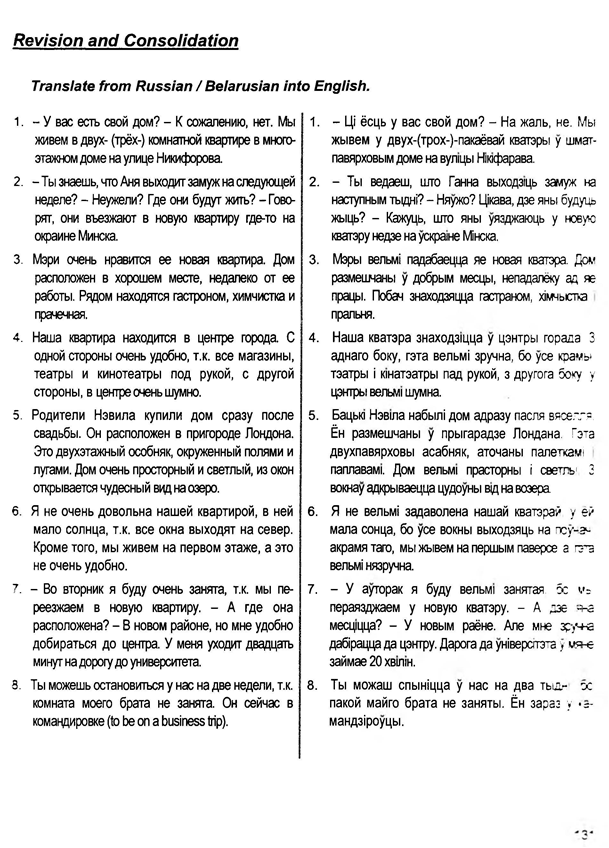
Ex. Describe the type of house you live in.
The house that I live in is in the capital of London, I do like it very much as it is right across from the public park were I like to go running after work. My house as three bedrooms, just one bathroom with a bath and shower, a living room for all the family, a kitchen, a downstairs toilet, every room is very well furnished. Although my house is very nice it does take a lot of time to clean everyweek
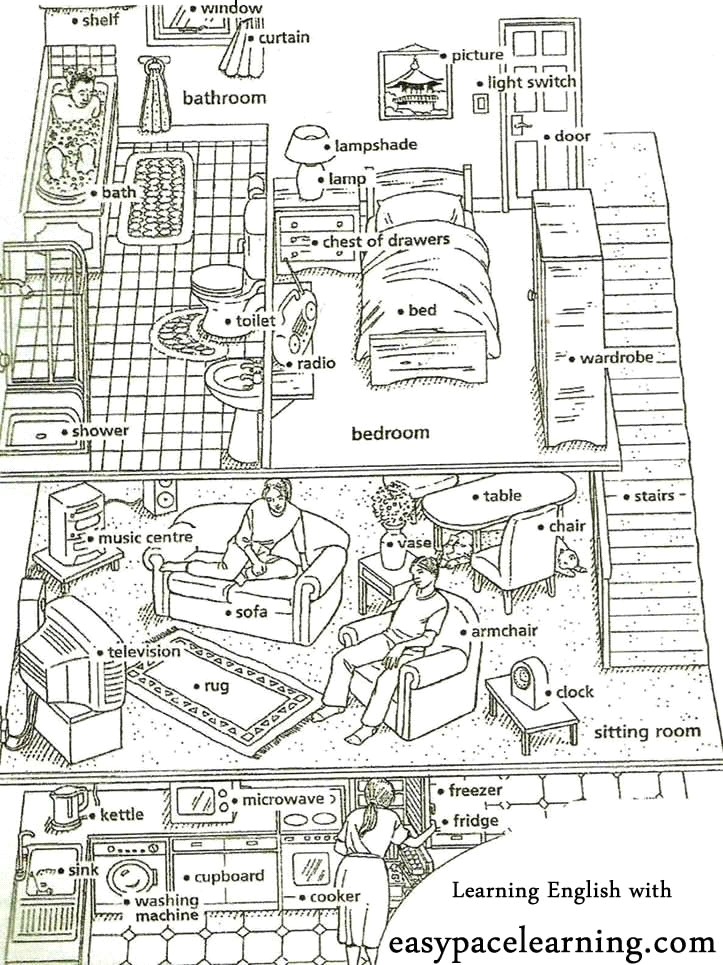
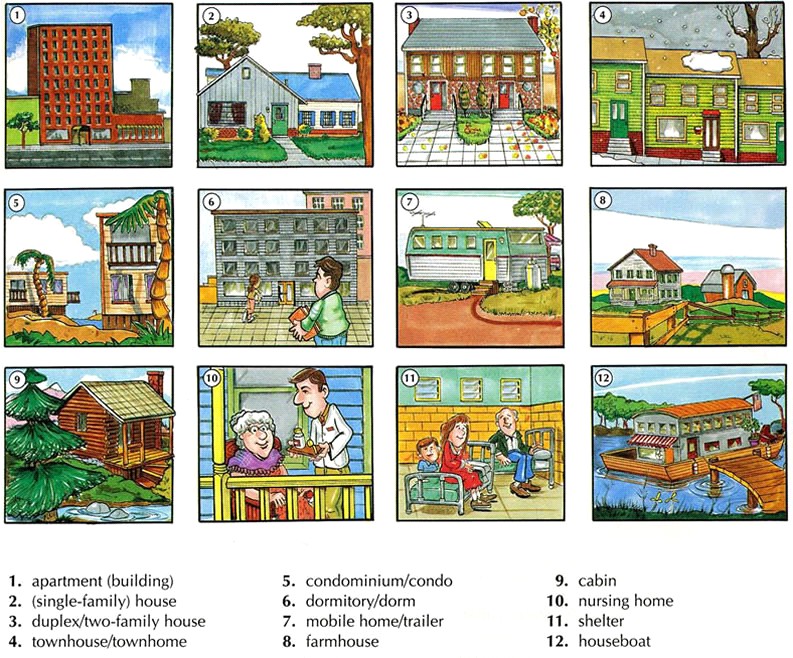
Walk around and find a partner. Ask these questions and note down their answers. Then move on and find a different student to talk to. Try to talk to as many students as you can!
Questions:
Write students’ names here | student 1 | tudent 2 | student 3 |
1. What type of accommodation do you live in? | |||
2. Who do you live with? | |||
3. How many rooms does your home have? | |||
4. How many bedrooms does your home have? | |||
5. Does your home have a garden? | |||
6. Does your home have a balcony? | |||
7. Does your home have a garage? | |||
8. Can you tell me some other interesting information about your home |
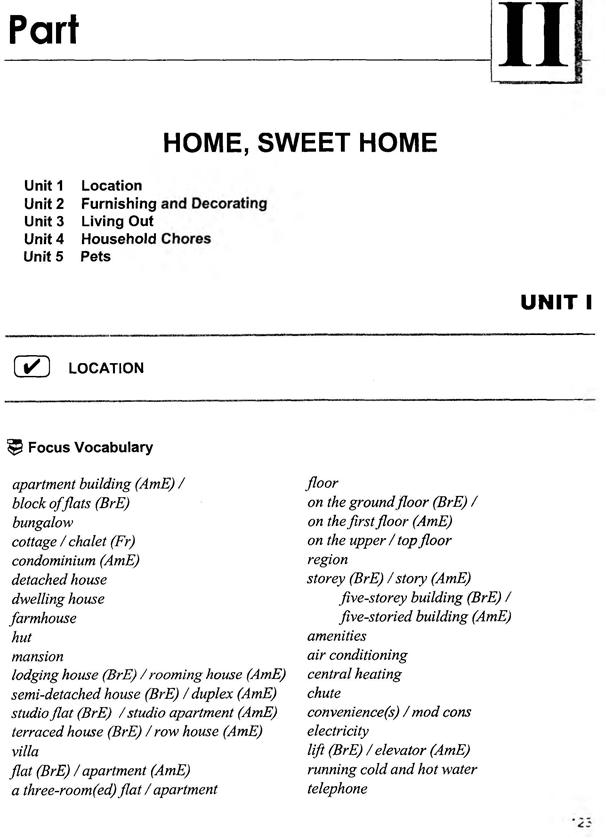
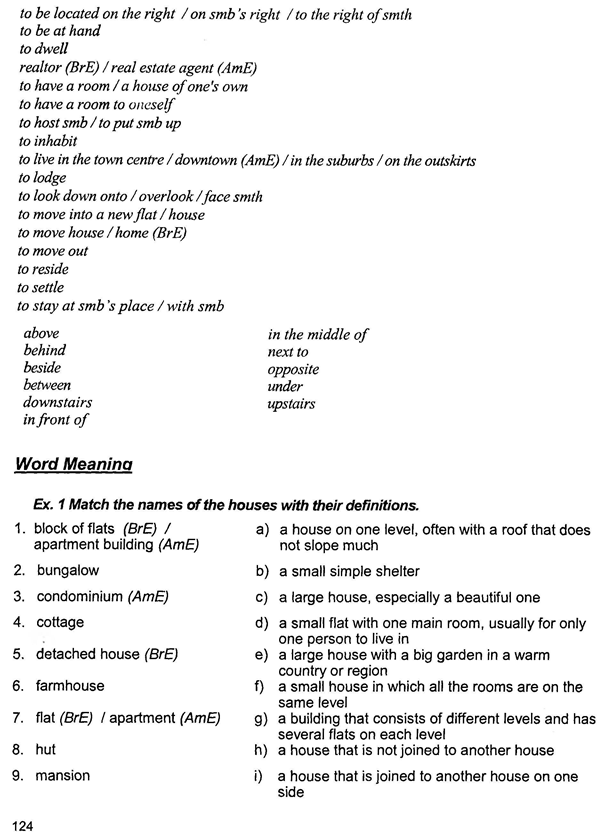
The past indefinite (The simple past)
The affirmative forms of the past indefinite are synthetic, the interrogative, negative and negative-interrogative forms are analytic.
Affirmative (synthetic) forms are represented by the second of the basic verb forms.
Interrogative forms are built by means of the auxiliary to do in the past indefinite (did), which is placed before the subject, and the infinitive stem of the notional verb, which follows the subject.
Negative forms are built by means of the negative form of the auxiliary, which has two varieties: a) didn't (used in the spoken language) and b) did not (used in the written language) and the infinitive of the notional verb that follows it.
The auxiliary did also occurs in affirmative forms in cases when the speaker wishes to emphasize his statement, as in:
But I assure you, he did tell me of it himself. Actually, I did see him once last week.
There are a few verbs which form their past indefinite differently from the way described above. These are:
The verb to be, which has synthetic forms not only in the affirmative, but also in the interrogative, negative and negative-interrogative. It also distinguishes the category of number. The interrogative is formed by placing the verb before the subject.
The verb to have, which also has synthetic forms for all structures.
When having meanings other than 'possess' or when used as part of a phrasal verb (to have a look), to have forms its interrogative and negative in the ordinary way with the auxiliary to do.
The past indefinite is used:
1. To state simple facts in the past.
The house stood on the hill. She was beautiful. I did not know who the man was. I did not hear your question. I did not see you at the theatre. What did you say?
The past indefinite, never the present perfect, is used in questions beginning with when, even though no indication of past time is made, because when implies a certain moment in the past. The answer can be either in the past indefinite or in the present perfect, depending on the situation: When did you see him? - I saw him two days ago. -1 have just seen him.
Likewise, the past indefinite, not the present perfect, is used in questions beginning with where because in such questions the reference to some past moment is implied: Where did you buy that hat? The implication is: when you were at the place where the action was performed.
2. To denote habitual actions in the past.
All summer I got up at 7.
On Sunday evening he took her to the pictures.
He usually took the first morning train.
3. To denote a succession of past actions.
He got up, put on his hat, and left.
The car stopped, the door opened, and a very pretty girl got out of it.
4. To denote actions in progress at a certain moment in the past, with verbs that cannot be used in continuous forms.
He was not listening but still heard what they were speaking about. At that time he was on the watch.
5. To denote future actions in subordinate adverbial clauses of time and condition depending on principal clauses with the predicate verb in a past tense.
She said she would come when the film was over.
She said she would do it if nothing unexpected happened.
Put the verbs into the simple past:
Last year I (go) to England on holiday. It (be)
  fantastic. I (visit)
  lots of interesting places. I (be)
  with two friends of mine. In the mornings we (walk)
  in the streets of London. In the evenings we (go)
  to pubs. The weather (be)
  strangely fine. It (not / rain)
  a lot. But we (see)
  some beautiful rainbows. Where (spend / you)
  your last holiday?
 Write the past forms of the irregular verbs.
Infinitive | Simple Past | |
1. | meet |
|
2. | drive |
|
3. | speak |
|
4. | put |
|
5. | write |
|
6. | sing |
|
7. | do |
|
8. | sit |
|
9. | stand |
|
10. | run |
|
 .
. .
. .
. .
. .
. .
. .
. .
. .
. .
.Complete the table in simple past.

|
Из за большого объема этот материал размещен на нескольких страницах:
1 2 3 4 5 6 7 8 9 10 11 12 13 14 15 16 17 18 19 20 21 22 23 24 25 26 27 28 29 30 31 32 33 34 35 36 37 38 39 40 41 |
